
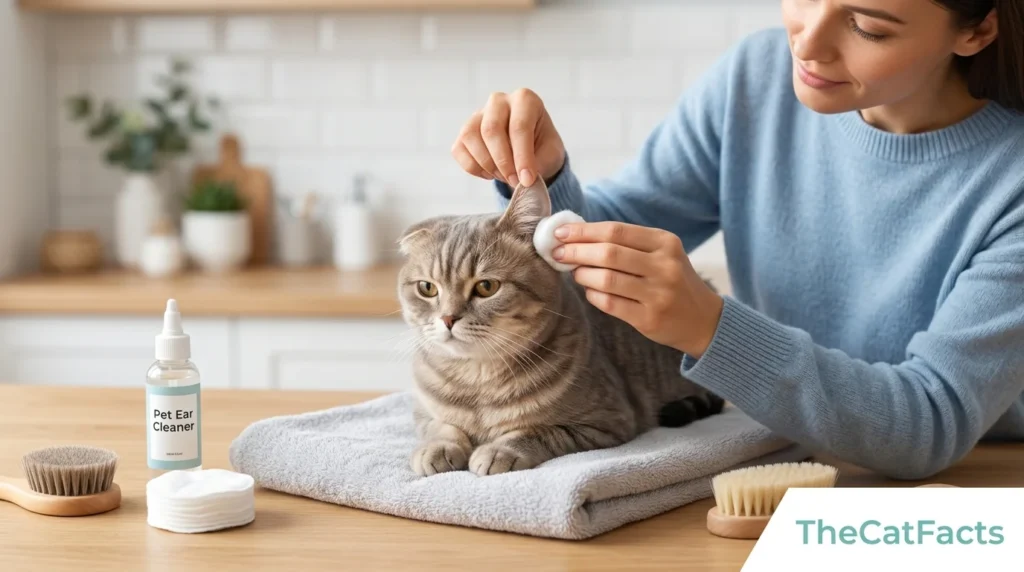
Scottish Fold cats are known for their adorable folded ears, round faces, and gentle personalities. However, those distinctive ears require special attention. Because of their unique ear shape, Scottish Folds may be more likely to trap wax, moisture, and debris than many other cat breeds. Learning how to clean Scottish Fold ears safely at home helps reduce the risk of ear infections, discomfort, and hearing problems.
Regular ear checks are just as important as grooming, nail trimming, and dental care. Cleaning should never be done too frequently or with unsafe products, as excessive cleaning can irritate the sensitive ear canal. Instead, owners should learn how to recognize when cleaning is necessary and how to perform the process gently and safely.
This comprehensive guide explains everything you need to know, including when to clean your Scottish Fold’s ears, what supplies to use, step by step cleaning instructions, common mistakes to avoid, and when veterinary care is necessary.
Why Do Scottish Fold Cats Need Special Ear Care?
Scottish Fold cats need regular ear care because their folded ears can reduce airflow, allowing wax, moisture, and dirt to accumulate more easily than in many other breeds.
While not every Scottish Fold experiences ear problems, their unique ear structure makes routine ear monitoring an essential part of preventive healthcare.
Understanding Scottish Fold Ear Anatomy
The folded appearance results from a genetic mutation that affects cartilage throughout the body. This mutation causes the ear cartilage to bend forward instead of standing upright.
Although the fold itself does not automatically cause disease, it can create conditions that encourage:
- Wax buildup
- Reduced air circulation
- Moisture retention
- Dirt accumulation
- Growth of bacteria or yeast
- Hidden inflammation
The tighter the fold, the more difficult it becomes to inspect the inside of the ear without gently lifting the ear flap.
How Folded Ears Differ from Straight Ears
| Feature | Scottish Fold | Cats with Straight Ears |
| Air circulation | Reduced | Better airflow |
| Wax visibility | Harder to see | Easier to inspect |
| Moisture retention | More likely | Less common |
| Cleaning difficulty | Moderate | Easy |
| Need for routine checks | Weekly | Every few weeks |
Not every Scottish Fold has tightly folded ears. Some have a single fold, while others have double or triple folds that cover more of the ear opening. Cats with tighter folds usually benefit from more frequent inspections.
Are Scottish Fold Ears More Prone to Problems?
Yes, they can be.
The folded ear does not directly cause infections, but it creates an environment where wax and moisture may remain trapped. Ear mites, allergies, skin disorders, or excessive wax production can further increase the risk.
Routine inspections help owners identify small problems before they become painful infections.
How Often Should You Check a Scottish Fold’s Ears?
Most Scottish Fold cats should have their ears checked once a week, but they only need cleaning when wax, dirt, or debris is present.
Cleaning healthy ears too often can remove protective oils and irritate the skin inside the ear canal.
A simple weekly inspection usually takes less than a minute.
Recommended Ear Check Schedule
| Cat Type | Ear Inspection | Cleaning Frequency |
| Healthy adult | Once weekly | Only when needed |
| Senior cat | Once weekly | As recommended |
| Outdoor cat | Weekly | May require more frequent cleaning |
| Cat with allergies | Weekly or as advised by a veterinarian | Follow veterinary instructions |
| Cat with previous ear infections | Weekly | Based on veterinary guidance |
Signs Your Cat May Need an Ear Check Sooner
Inspect your cat’s ears immediately if you notice:
- Frequent scratching
- Head shaking
- Ear rubbing against furniture
- Unpleasant odor
- Dark discharge
- Redness
- Swelling
- Sensitivity to touch
- Changes in balance
- Tilting the head
These signs may indicate more than simple wax buildup and could require veterinary evaluation.
What Healthy Scottish Fold Ears Should Look Like
Healthy ears are clean, pale pink, odor-free, and contain only a small amount of light-colored wax.
Knowing what normal ears look like makes it easier to recognize early signs of disease.
Normal Ear Appearance
Healthy ears usually have:
- Pale pink skin
- Very little wax
- No strong smell
- Smooth skin surface
- No swelling
- No discharge
- No pain when touched
A small amount of light brown or yellow wax is generally normal.
Signs of an Unhealthy Ear
Contact your veterinarian if you notice:
- Thick black debris
- Coffee ground-like material
- Yellow or green discharge
- Bloody discharge
- Bad odor
- Bright red skin
- Crusts
- Excessive wax
- Swollen ear canal
- Bleeding
- Pain when touched
These symptoms often indicate ear mites, bacterial infections, yeast infections, allergies, or injuries.
Common Causes of Dirty Ears in Scottish Fold Cats
Ear wax is normal, but excessive buildup usually has an underlying cause that should be identified before repeated cleaning.
Cleaning removes debris, but it does not treat the reason it developed.
Normal Ear Wax
Every cat naturally produces ear wax to protect the ear canal from dust, bacteria, and small particles.
Healthy wax is:
- Light yellow
- Light brown
- Thin
- Mild in amount
- Odor-free
Excess Wax Production
Some Scottish Folds naturally produce more wax than others.
Possible reasons include:
- Genetics
- Aging
- Skin conditions
- Allergies
- Chronic inflammation
Repeated heavy wax buildup should be evaluated by a veterinarian.
Ear Mites
Ear mites are tiny parasites that commonly affect kittens and outdoor cats.
Typical signs include:
- Intense itching
- Constant scratching
- Black debris resembling coffee grounds
- Head shaking
- Irritated ears
Ear mites require prescription treatment rather than simple cleaning.
Yeast Infections
Yeast thrives in warm, moist environments.
Signs include:
- Brown discharge
- Musty odor
- Red skin
- Persistent scratching
Veterinary medication is needed to eliminate the infection.
Bacterial Ear Infections
Bacterial infections often develop after inflammation or excessive moisture.
Symptoms include:
- Thick discharge
- Pain
- Swelling
- Foul smell
- Warm ears
These infections require veterinary diagnosis and treatment.
Allergies
Food allergies and environmental allergies can cause chronic ear inflammation.
Cats with allergies may also have:
- Itchy skin
- Hair loss
- Excessive grooming
- Skin redness
- Recurring ear infections
Managing the underlying allergy helps reduce recurring ear problems.
Supplies You Need Before Cleaning
Using the correct supplies protects your cat’s ears from injury and makes the cleaning process easier and safer.
Never improvise with household products that are not designed for feline ear care.
Essential Ear Cleaning Supplies
Gather everything before bringing your cat to the cleaning area.
Recommended supplies include:
- Veterinarian-approved cat ear cleaner
- Soft cotton balls
- Sterile gauze pads
- Clean towel
- Treats for positive reinforcement
- Good lighting
- Disposable gloves (optional)
Optional Supplies
Depending on your cat’s temperament, you may also find these helpful:
- Non-slip mat
- Helper to gently hold the cat
- Blanket for wrapping nervous cats
- Small flashlight for better visibility
Products You Should Never Use
Some common household products can seriously damage a cat’s ears and should never be used for cleaning.
The skin inside the ear canal is delicate and easily irritated.
Avoid These Products
Never use:
- Cotton swabs inside the ear canal
- Hydrogen peroxide
- Rubbing alcohol
- Vinegar solutions
- Essential oils
- Baby oil
- Coconut oil inside the ear canal
- Human ear medications
- Human antibiotic creams
- Soap
- Shampoo
- Homemade ear cleaners unless specifically recommended by a veterinarian
These products may cause burns, irritation, allergic reactions, or push debris deeper into the ear canal.
Choosing a Safe Ear Cleaner
Look for products that are:
- Specifically formulated for cats
- Recommended by veterinarians
- Alcohol-free
- Gentle on sensitive skin
- Designed to dissolve wax safely
If your cat has an active ear infection, do not use over-the-counter ear cleaners unless your veterinarian has confirmed they are appropriate.
Preparing Your Scottish Fold for Ear Cleaning
A calm environment makes ear cleaning safer, faster, and less stressful for both you and your cat.
Many cats tolerate ear cleaning surprisingly well when introduced gradually and rewarded afterward.
Choose the Right Time
Plan ear cleaning when your cat is naturally relaxed, such as:
- After a meal
- Following playtime
- During an afternoon nap
- While sitting comfortably on your lap
Avoid cleaning ears when your cat is frightened, excited, or highly energetic.
Create a Comfortable Cleaning Space
Prepare a quiet area with:
- Good lighting
- Minimal distractions
- A stable surface
- All supplies within easy reach
- A towel to keep your cat secure if needed
Speaking softly and handling your cat gently helps build trust and makes future ear care much easier.
Step-by-Step Guide to Cleaning Scottish Fold Ears Safely
Cleaning your Scottish Fold’s ears should be gentle, slow, and stress-free. Never force the process or insert anything deep into the ear canal.
If your cat becomes frightened or aggressive, stop and try again later. A calm experience helps your cat accept future ear care.
Step 1: Wash Your Hands
Clean hands reduce the chance of introducing bacteria into your cat’s ears.
Before starting:
- Wash your hands with soap and water.
- Dry them thoroughly.
- Prepare all supplies within easy reach.
Step 2: Examine the Ear Carefully
Before using any ear cleaner, inspect both ears.
Look for:
- Normal light-colored wax
- Dirt or debris
- Redness
- Swelling
- Cuts or scratches
- Strong odor
- Thick discharge
- Parasites
If you notice severe redness, pus, bleeding, or your cat cries when touched, do not continue cleaning. Contact your veterinarian instead.
Step 3: Hold Your Cat Comfortably
Support your cat without restraining too tightly.
Helpful positions include:
- Sitting on your lap
- Resting on a table with a towel underneath
- Wrapped loosely in a towel if nervous
- Assisted by another adult if necessary
Avoid grabbing the ears or holding your cat forcefully.
Step 4: Lift the Ear Flap
Gently lift the folded ear to expose the ear canal.
Do not stretch the ear.
Simply hold the ear flap so you can clearly see inside.
Good lighting makes this much easier.
Step 5: Apply the Ear Cleaner
Place the recommended number of drops into the ear according to the product instructions.
Do not touch the bottle tip directly against the ear.
Keeping the bottle clean helps prevent contamination.
Step 6: Massage the Base of the Ear
Massage the base of the ear for about 20 to 30 seconds.
This helps loosen:
- Ear wax
- Dirt
- Debris
You may hear a soft squishing sound. This is normal.
Step 7: Allow Your Cat to Shake
Most cats naturally shake their heads after the cleaner is applied.
This movement helps push loosened debris toward the outer ear where it can be removed safely.
Step 8: Wipe the Outer Ear
Use a clean cotton ball or gauze pad to wipe away loosened wax and debris.
Only clean areas you can clearly see.
Never push the cotton into the ear canal.
Step 9: Reward Your Cat
Offer praise, gentle petting, or a favorite treat.
Positive reinforcement helps your Scottish Fold associate ear cleaning with a pleasant experience.
What If Your Scottish Fold Resists Ear Cleaning?
Many cats dislike having their ears touched at first. Patience and gradual training usually improve cooperation.
Never punish or yell at your cat.
Tips for Nervous Cats
Try these strategies:
- Begin by touching the ears briefly each day.
- Reward calm behavior immediately.
- Keep sessions under five minutes.
- Clean one ear if your cat becomes restless.
- Take breaks when needed.
- Stay calm and move slowly.
For Very Anxious Cats
If your cat becomes aggressive, bites, scratches excessively, or cannot be safely handled, ask your veterinarian or professional groomer for assistance.
Some cats with painful ears should not be cleaned until a veterinarian has treated the underlying problem.
Common Ear Cleaning Mistakes
Most ear injuries happen because owners clean too aggressively or use unsafe products.
Avoid these common mistakes.
| Mistake | Why It Is Dangerous | Better Choice |
| Using cotton swabs inside the ear | Pushes wax deeper and may damage the ear canal | Use cotton balls or gauze |
| Cleaning too often | Irritates the skin and removes protective oils | Clean only when needed |
| Using alcohol | Causes burning and dryness | Use a feline ear cleaner |
| Using hydrogen peroxide | Irritates sensitive tissue | Veterinary-approved cleaner |
| Pouring excessive liquid | May trap moisture | Follow product directions |
| Ignoring foul odors | May delay treatment of infection | Schedule a veterinary exam |
| Cleaning infected ears repeatedly | Can worsen inflammation | Seek veterinary treatment |
Ear Wax vs Ear Infection
Normal wax is usually harmless, while infections require veterinary treatment. Knowing the difference can prevent serious complications.
| Feature | Normal Wax | Ear Infection |
| Color | Light yellow or light brown | Yellow, green, dark brown, or bloody |
| Smell | Little or no odor | Strong unpleasant odor |
| Amount | Small | Moderate to heavy |
| Pain | None | Often painful |
| Swelling | No | Common |
| Scratching | Occasional | Frequent |
| Head shaking | Rare | Common |
| Veterinary visit | Usually not needed | Recommended |
Ear Mites vs Wax Buildup
Ear mites often resemble dirty ears, but they require medication instead of routine cleaning.
| Feature | Ear Wax | Ear Mites |
| Appearance | Smooth brown wax | Coffee ground-like debris |
| Itching | Mild | Severe |
| Odor | Usually absent | May be present |
| Spread to other pets | No | Yes |
| Treatment | Routine cleaning | Veterinary medication |
If one pet has ear mites, other cats and dogs in the household may also need treatment.
Signs That Require Immediate Veterinary Care
Some ear problems cannot be treated at home. Prompt veterinary care helps prevent hearing loss and chronic pain.
Contact your veterinarian immediately if your Scottish Fold has:
- Bleeding from the ear
- Thick yellow or green discharge
- Severe swelling
- Strong foul odor
- Constant crying when the ear is touched
- Head tilt
- Loss of balance
- Walking in circles
- Sudden hearing changes
- Repeated vomiting with head shaking
- Large wounds around the ear
- Persistent scratching that causes bleeding
These symptoms may indicate infection, injury, parasites, or disease affecting the middle or inner ear.
How Often Should You Clean Scottish Fold Ears?
There is no single schedule that fits every cat. Most Scottish Folds only need cleaning when visible wax or debris is present.
General Cleaning Schedule
| Cat Condition | Suggested Cleaning |
| Healthy indoor adult | Every 4 to 8 weeks if needed |
| Heavy wax producer | Every 2 to 4 weeks, following veterinary advice |
| Outdoor cat | As needed after weekly inspections |
| Senior cat | Monitor weekly and clean when necessary |
| Cat with chronic ear disease | Follow your veterinarian’s treatment plan |
Weekly inspections are usually more important than frequent cleaning.
Preventing Ear Problems
Preventive care is easier than treating infections. Regular monitoring helps catch problems early.
Healthy Ear Care Habits
Make these practices part of your routine:
- Check ears once a week.
- Keep bedding clean.
- Feed a balanced, high-quality diet.
- Control fleas and parasites.
- Treat allergies promptly.
- Schedule regular veterinary checkups.
- Groom your cat regularly.
- Keep indoor humidity at a comfortable level.
Healthy skin often means healthy ears.
Expert Veterinary Tips
Experienced veterinarians recommend focusing on prevention rather than excessive cleaning.
Some helpful tips include:
- Always compare both ears during inspections.
- A sudden difference between ears often signals a problem.
- Never diagnose ear mites based only on appearance.
- Follow medication instructions exactly if your veterinarian prescribes treatment.
- Record recurring ear issues in a pet health journal.
- Schedule follow-up visits for chronic infections.
Early treatment is usually simpler, less expensive, and more comfortable for your cat.
Quick Ear Care Checklist
Use this checklist during each ear inspection.
Do:
- Check ears every week.
- Use a cat-safe ear cleaner.
- Wipe only the visible parts of the ear.
- Reward your cat afterward.
- Contact a veterinarian if you notice unusual changes.
Don’t:
- Insert cotton swabs into the ear canal.
- Use alcohol or hydrogen peroxide.
- Ignore foul odors.
- Force your cat to stay still.
- Continue cleaning painful or bleeding ears.
Proper ear care is a simple habit that can help keep your Scottish Fold comfortable and reduce the risk of preventable ear problems.
Aftercare Following Ear Cleaning
Most Scottish Fold cats return to normal immediately after ear cleaning. Proper aftercare helps keep the ears healthy and allows you to spot any unusual reactions early.
Your cat may shake its head briefly after cleaning. This is a normal response as the ear cleaner loosens remaining wax and debris.
What to Expect After Cleaning
For the next few hours, your cat should:
- Behave normally
- Eat and drink as usual
- Show little or no ear irritation
- Stop shaking its head after a short time
A small amount of cleaner or loosened wax coming out of the ear is also normal.
Monitor for Unusual Reactions
Contact your veterinarian if you notice:
- Persistent head shaking for several hours
- Increased redness
- Swelling
- Bleeding
- Signs of pain
- Loss of balance
- Thick discharge
- A strong odor that develops after cleaning
These signs may indicate an underlying ear condition rather than a reaction to the cleaning itself.
Long-Term Ear Care for Scottish Fold Cats
Healthy ears depend on regular monitoring, not frequent cleaning. A simple routine can prevent many common ear problems.
Weekly Ear Health Routine
Follow this basic schedule:
| Task | Frequency |
| Inspect both ears | Once each week |
| Check for odor | Weekly |
| Look for wax buildup | Weekly |
| Clean if needed | Only when necessary |
| Veterinary wellness exam | At least once a year |
If your cat has chronic ear problems, your veterinarian may recommend more frequent examinations.
Maintain Overall Health
Healthy ears are closely linked to overall wellness.
Support ear health by:
- Feeding a balanced, complete diet
- Providing fresh drinking water daily
- Keeping vaccinations current
- Using veterinarian-recommended parasite prevention
- Managing allergies promptly
- Maintaining a healthy body weight
- Scheduling routine veterinary checkups
Ear Care During Different Life Stages
Scottish Fold cats have different ear care needs as they grow. Adjust your routine based on your cat’s age and health status.
Kittens
Scottish Fold kittens should become familiar with gentle ear handling from an early age.
Focus on:
- Weekly ear checks
- Gentle handling
- Positive reinforcement
- Avoiding unnecessary cleaning
Early training helps kittens become more cooperative as adults.
Adult Cats
Most healthy adults only require:
- Weekly inspections
- Cleaning when visible wax accumulates
- Prompt veterinary care if abnormalities develop
Senior Cats
Older Scottish Folds may experience:
- Increased wax production
- Reduced grooming ability
- Chronic medical conditions affecting skin and ears
Senior cats often benefit from more careful monitoring during routine health checks.
Myths vs Facts About Cleaning Scottish Fold Ears
Many misconceptions can lead to unnecessary cleaning or unsafe practices.
| Myth | Fact |
| Scottish Fold ears must be cleaned every week. | Weekly inspections are recommended, but cleaning is only needed when wax or debris is present. |
| Cotton swabs are the best way to clean ears. | Cotton swabs can push debris deeper into the ear canal and increase the risk of injury. |
| Dark wax always means infection. | Some wax is naturally darker. A veterinarian should evaluate wax that is excessive, foul-smelling, or accompanied by pain or discharge. |
| Homemade cleaners are just as safe as veterinary products. | Homemade solutions may irritate the ear canal or worsen existing problems. |
| Ear cleaning cures ear infections. | Cleaning removes debris but does not eliminate bacteria, yeast, or ear mites. Medical treatment is often required. |
| Every Scottish Fold develops ear disease. | Many Scottish Fold cats have healthy ears throughout their lives with proper monitoring and routine care. |
Quick Summary
If you remember only a few points from this guide, keep these in mind:
- Check your Scottish Fold’s ears once a week.
- Clean only when wax or debris is visible.
- Use a veterinarian-approved ear cleaner.
- Never insert cotton swabs into the ear canal.
- Stop cleaning if your cat appears to be in pain.
- Watch for signs of infection such as odor, swelling, redness, or discharge.
- Seek veterinary care promptly if you notice unusual symptoms.
Conclusion
Cleaning your Scottish Fold’s ears safely at home is an important part of routine pet care, but it should always be done gently and only when necessary. Their unique folded ears can make it easier for wax and moisture to accumulate, which is why regular inspections are more valuable than frequent cleaning.
Using a cat-safe ear cleaner, following proper cleaning techniques, and recognizing early warning signs can help prevent many common ear problems. Equally important is knowing when home care is no longer appropriate. Pain, swelling, discharge, foul odors, or balance problems require prompt veterinary attention.
With consistent monitoring, patient handling, and routine veterinary checkups, most Scottish Fold cats can enjoy healthy ears throughout their lives.
FAQs
How often should I clean my Scottish Fold’s ears?
Only clean your Scottish Fold’s ears when you notice visible wax or debris. Most healthy cats benefit from weekly ear inspections, but actual cleaning is often needed only every few weeks or even less frequently. Overcleaning can irritate the ear canal and remove its natural protective oils.
Can I use cotton swabs to clean my cat’s ears?
No. Cotton swabs should never be inserted into your cat’s ear canal. They can push wax deeper, damage delicate tissues, and increase the risk of injury. Use a soft cotton ball or sterile gauze to wipe only the visible outer part of the ear.
What ear cleaner is safest for Scottish Fold cats?
Choose a veterinarian-approved ear cleaner made specifically for cats. Alcohol-free formulas are generally preferred because they are gentle on the sensitive skin inside the ear. Avoid homemade cleaners unless your veterinarian specifically recommends one.
Why does my Scottish Fold have dark ear wax?
A small amount of darker wax may be normal in some cats. However, black, coffee ground-like debris can indicate ear mites, while foul-smelling or excessive dark discharge may suggest an infection. If you notice these changes, schedule a veterinary examination.
Can I clean my cat’s ears if they have an ear infection?
It is best to consult your veterinarian first. Some infections require prescription medications, and improper cleaning may worsen inflammation or delay healing. Your veterinarian can recommend the safest treatment plan based on the underlying cause.
What are the signs of ear mites in cats?
Cats with ear mites often scratch their ears intensely, shake their heads frequently, and develop dark debris that resembles coffee grounds. Ear mites are contagious between pets and require veterinary-approved medication rather than routine ear cleaning alone.
Why does my cat shake its head after ear cleaning?
A brief period of head shaking is normal because the ear cleaner loosens wax and debris. However, if your cat continues shaking its head for several hours or appears uncomfortable, contact your veterinarian for further evaluation.
Can dirty ears affect my cat’s hearing?
Yes. Excessive wax buildup, severe infections, or inflammation can temporarily reduce hearing. Chronic or untreated ear disease may lead to more serious complications. Regular ear checks help identify problems before they become severe.
Should Scottish Fold kittens have their ears cleaned?
Kittens should have their ears inspected regularly, but cleaning is only necessary when visible wax or debris is present. Gentle handling during kittenhood helps them become comfortable with ear examinations as adults.
When should I take my Scottish Fold to the veterinarian for ear problems?
Seek veterinary care if your cat develops persistent scratching, swelling, redness, bleeding, foul-smelling discharge, loss of balance, head tilt, severe pain, or repeated ear infections. Early diagnosis and treatment can prevent complications and improve your cat’s comfort.

Isabella Morgan is a Veterinary Content Researcher with more than 12 years of experience researching companion animal health, preventive veterinary care, pet nutrition, and animal welfare. She specializes in translating complex veterinary information into clear, accurate, and reader friendly content that helps pet owners make informed decisions about the health and well being of their animals.