
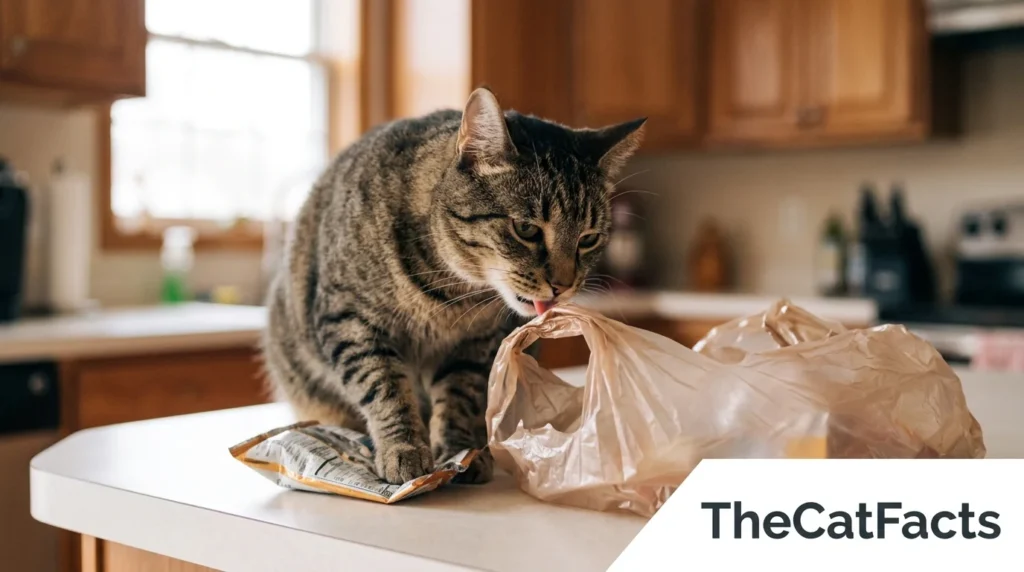
Cats may lick plastic bags and wrappers because they are attracted to their smell, texture, or leftover food residue. In some cases, this behavior is harmless curiosity, but frequent or obsessive plastic licking can signal stress, boredom, nutritional deficiencies, dental pain, or an underlying medical condition. Since swallowing plastic can cause life-threatening intestinal blockages, it is important to identify the cause and prevent access to plastic items.
Many cat owners are surprised to find their pet licking grocery bags, snack wrappers, food packaging, bubble wrap, or even plastic storage containers. Some cats only do it occasionally, while others actively seek out plastic whenever they get the chance.
Understanding why your cat behaves this way can help you determine whether it’s simply a quirky habit or a sign that your cat needs veterinary attention. This guide explains the science behind plastic licking, the most common causes, health risks, and practical ways to keep your cat safe.
What Does It Mean When a Cat Licks Plastic?
Cats lick plastic for several different reasons, ranging from normal curiosity to medical or behavioral problems. The behavior itself is known as plastic licking, and when a cat begins chewing or eating plastic, it may be considered a form of pica, a condition where animals consume non-food objects.
Not every cat that licks plastic has pica. Many simply enjoy certain smells or textures without swallowing the material.
Common objects cats may lick include:
- Grocery bags
- Bread bags
- Potato chip packets
- Candy wrappers
- Plastic food containers
- Plastic utensils
- Plastic toys
- Bubble wrap
- Packaging materials
- Garbage bags
If your cat only sniffs or briefly licks plastic, it is usually less concerning than persistent licking or chewing.
Is Plastic Licking Normal?
Occasional licking can be normal, especially in curious kittens and young cats exploring their environment.
However, the behavior becomes abnormal when your cat:
- Licks plastic every day
- Searches the house for plastic items
- Chews or tears plastic apart
- Swallows pieces of plastic
- Ignores food in favor of plastic
- Shows other unusual behaviors
Repeated plastic licking deserves closer attention because it may indicate an underlying health or behavioral issue.
Why Do Cats Like Plastic Bags and Wrappers?
Many plastic products contain scents or textures that naturally appeal to cats. What seems like an ordinary shopping bag to us may provide a fascinating sensory experience for a cat.
Food Residue on Plastic
One of the most common reasons is leftover food residue.
Plastic packaging often carries tiny amounts of:
- Meat juices
- Fish oils
- Butter
- Cheese
- Cooking grease
- Food flavorings
A cat’s sense of smell is far stronger than a human’s. Even if a wrapper appears clean, your cat may detect microscopic food particles.
This explains why snack wrappers, frozen meat bags, and takeout containers often attract cats.
Animal-Based Ingredients in Plastic
Some plastic products contain compounds derived from animal fats or gelatin during manufacturing.
These ingredients can leave scents that cats find attractive.
Examples include:
- Gelatin coatings
- Animal fat lubricants
- Fish-based flavor residues
- Corn starch coatings used in biodegradable plastics
Although not every plastic product contains these materials, they can contribute to your cat’s interest.
Interesting Texture
Cats explore the world using both their mouths and paws.
Some cats enjoy:
- Smooth surfaces
- Crinkly sounds
- Flexible materials
- Cool textures
Plastic bags create sounds and movement that stimulate a cat’s natural curiosity.
Novel Smells
Plastic easily absorbs odors from:
- Groceries
- Human hands
- Other pets
- Outdoor environments
- Household cleaning products
Your cat may investigate these unfamiliar scents through licking.
Why Do Cats Lick Plastic Instead of Eating It?
Many cats are interested only in the smell or texture.
They may:
- Lick repeatedly
- Rub their face on plastic
- Bite gently
- Carry bags around
These cats usually do not swallow plastic.
However, some eventually begin chewing and ingesting pieces, which significantly increases the risk of intestinal obstruction.
Common Causes of Plastic Licking
Plastic licking can have more than one cause. Some cats develop the habit because of environmental factors, while others have underlying health conditions.
Curiosity and Natural Exploration
Young cats often investigate unfamiliar objects using their mouths.
Kittens may lick:
- Shoes
- Boxes
- Plastic
- Paper
- Fabric
This behavior usually decreases as they mature.
If your kitten only occasionally licks plastic and quickly loses interest, it is generally considered normal exploration.
Boredom
Indoor cats need regular mental and physical stimulation.
Without enough enrichment, some cats develop repetitive habits, including plastic licking.
Signs your cat may be bored include:
- Excessive sleeping
- Overgrooming
- Constant meowing
- Chasing imaginary objects
- Plastic licking
- Knocking items off shelves
Increasing daily play sessions often reduces these behaviors.
Stress and Anxiety
Cats often develop repetitive behaviors when they feel anxious.
Stress can result from:
- Moving to a new home
- Introducing another pet
- Loud noises
- Construction work
- Changes in routine
- Separation from owners
- Lack of hiding places
Some cats cope by repeatedly licking plastic because the repetitive action has a calming effect.
Learned Habit
Cats quickly learn behaviors that produce enjoyable experiences.
For example:
- Your cat licks a meat wrapper.
- The wrapper smells rewarding.
- The cat repeats the behavior.
- Eventually, the habit becomes routine.
Even after the food smell disappears, the behavior may continue.
Medical Reasons Cats Lick Plastic
Although many cases are behavioral, medical problems should never be overlooked.
Persistent plastic licking can be an early warning sign of illness.
Pica
Pica is a condition where cats repeatedly eat non-food items.
Common objects include:
- Plastic
- Fabric
- Wool
- String
- Cardboard
- Paper
- Rubber
- Electrical cords
Pica may develop because of:
- Nutritional deficiencies
- Medical illness
- Stress
- Genetics
- Behavioral disorders
Cats with pica require veterinary evaluation because swallowing foreign materials can become life-threatening.
Nutritional Deficiencies
A poor-quality diet or certain medical conditions may prevent a cat from receiving adequate nutrients.
Possible deficiencies include:
- Iron
- Fiber
- Vitamins
- Trace minerals
Although research is still ongoing, nutritional imbalances are considered one possible contributor to pica-like behaviors.
If your cat suddenly begins licking unusual objects, consult your veterinarian before changing diets or adding supplements.
Dental Disease
Pain inside the mouth can lead to unusual chewing or licking behaviors.
Dental problems include:
- Gingivitis
- Broken teeth
- Tooth root infections
- Mouth ulcers
- Periodontal disease
Your cat may lick plastic because the texture temporarily distracts from oral discomfort.
Watch for additional signs such as:
- Bad breath
- Drooling
- Pawing at the mouth
- Difficulty eating
- Bleeding gums
- Preferring soft food
A veterinary dental examination can identify these problems early.
Gastrointestinal Disorders
Digestive discomfort sometimes causes unusual licking behaviors.
Possible conditions include:
| Condition | How It May Affect Behavior |
| Inflammatory bowel disease | Nausea may increase licking behaviors |
| Chronic gastritis | Cats may lick unusual objects when feeling sick |
| Food intolerance | Digestive discomfort may alter normal behaviors |
| Intestinal parasites | Can contribute to poor nutrition in some cats |
| Chronic nausea | May trigger excessive licking of various surfaces |
If plastic licking is accompanied by vomiting, diarrhea, weight loss, or reduced appetite, veterinary evaluation is recommended.
Anemia
Iron deficiency and other forms of anemia may occasionally contribute to abnormal eating behaviors.
Signs of anemia include:
- Weakness
- Pale gums
- Reduced activity
- Rapid breathing
- Poor appetite
Anemia has many possible causes, including parasites, chronic disease, blood loss, and certain immune disorders. A veterinarian can determine the underlying cause through a physical examination and blood tests.
Are Certain Cats More Likely to Lick Plastic?
Yes. While any cat can develop this habit, some are more prone to it because of genetics, age, personality, or lifestyle.
Kittens and Young Cats
Young cats naturally investigate objects with their mouths. Plastic bags, wrappers, and packaging often become part of their exploration. Most kittens outgrow this behavior with proper enrichment, although some continue the habit into adulthood.
Indoor Cats
Indoor cats generally live longer and safer lives, but they may also have fewer opportunities for natural hunting and exploration. Without enough environmental enrichment, some indoor cats develop repetitive behaviors, including licking or chewing plastic.
Highly Intelligent Cats
Curious and active cats often seek mental stimulation. If their environment lacks toys, climbing areas, puzzle feeders, or interactive play, they may invent their own activities, including investigating plastic items around the home.
Cats With Anxiety
Cats that are naturally nervous or sensitive to changes may use repetitive licking as a coping mechanism. Identifying and reducing sources of stress can significantly improve this behavior over time.
Is Licking Plastic Dangerous for Cats?
Yes, licking plastic can become dangerous if your cat begins chewing or swallowing it. While a few harmless licks are unlikely to cause problems, ingesting even small pieces of plastic may lead to choking, intestinal blockages, poisoning from chemicals, or internal injuries.
The level of risk depends on:
- The type of plastic
- The amount swallowed
- Your cat’s age and size
- Whether the plastic has sharp edges
- Whether it contains toxic residues
Why Swallowing Plastic Is So Dangerous
Unlike food, plastic cannot be digested. Once swallowed, it may pass safely through the digestive tract, but it can also become lodged in the stomach or intestines.
An intestinal blockage is a medical emergency. Without prompt treatment, it can cut off blood supply to the intestines, leading to severe illness or even death.
Common plastic items that pose a high risk include:
- Grocery bags
- Bread bag ties
- Food wrappers
- Plastic film
- Shrink wrap
- Balloon pieces
- Plastic strings
- Bubble wrap
- Plastic ribbon
Even soft plastic can bunch together inside the intestines and create a blockage.
Signs Your Cat May Have Swallowed Plastic
A cat that has swallowed plastic may not show symptoms immediately. In some cases, signs develop over several hours or days.
Watch closely for:
- Repeated vomiting
- Loss of appetite
- Lethargy
- Hiding more than usual
- Abdominal pain
- Constipation
- Diarrhea
- Straining in the litter box
- Drooling
- Gagging
- Difficulty swallowing
- Weight loss
- Dehydration
Emergency Warning Signs
Seek veterinary care immediately if your cat:
- Cannot keep food or water down
- Vomits repeatedly
- Has a swollen or painful abdomen
- Cries when picked up
- Stops eating for more than 24 hours
- Has difficulty breathing
- Collapses
- Has plastic hanging from its mouth or rectum
Never pull plastic string, ribbon, or similar material from your cat’s mouth or anus. It may be wrapped around the intestines and pulling it could cause serious internal injuries.
Types of Plastic That Are Most Dangerous
Not all plastics carry the same level of risk.
| Plastic Item | Risk Level | Main Concern |
| Plastic bags | High | Intestinal blockage, suffocation |
| Food wrappers | High | Blockage and food residue |
| Plastic wrap | High | Easily swallowed |
| String-like plastic | Very High | Linear foreign body injury |
| Balloon pieces | Very High | Choking and obstruction |
| Bubble wrap | Moderate | Small pieces may be swallowed |
| Plastic toys | Moderate | Broken fragments can be ingested |
| Hard plastic containers | Low to Moderate | Sharp edges if broken |
Why Some Cats Develop Pica
Pica is more than simple curiosity. It is a behavioral or medical condition in which a cat repeatedly eats non-food materials.
Plastic is one of the most commonly consumed items, but cats with pica may also eat:
- Wool
- Blankets
- Socks
- Paper
- Cardboard
- Rubber
- Foam
- Wood
- Houseplants
- Electrical cords
Pica often develops because several factors occur together rather than from a single cause.
Possible Causes of Pica
Behavioral causes:
- Chronic boredom
- Anxiety
- Stress
- Lack of enrichment
- Early weaning
- Compulsive behaviors
Medical causes:
- Nutritional deficiencies
- Gastrointestinal disease
- Dental pain
- Neurological disorders
- Chronic illness
- Certain medications that increase appetite
A veterinarian can help determine whether your cat’s behavior is behavioral, medical, or a combination of both.
How Veterinarians Diagnose Plastic Licking
If your cat frequently licks or eats plastic, your veterinarian will perform a thorough examination to identify the underlying cause.
Diagnosis may include:
Medical History
Your veterinarian may ask:
- When did the behavior begin?
- How often does it happen?
- Does your cat chew or swallow plastic?
- Has your cat vomited recently?
- Have there been changes at home?
- What diet does your cat eat?
- Has your cat lost weight?
These answers help narrow down possible causes.
Physical Examination
A complete physical exam may include checking:
- Teeth and gums
- Body condition
- Abdomen
- Mouth
- Hydration status
- Weight
- Heart and lungs
This helps identify obvious signs of illness or pain.
Laboratory Tests
Depending on your cat’s symptoms, your veterinarian may recommend:
- Complete blood count (CBC)
- Blood chemistry profile
- Urinalysis
- Fecal examination
- Vitamin or mineral testing when appropriate
These tests help detect infections, anemia, metabolic disorders, or nutritional problems.
Imaging
If plastic ingestion is suspected, imaging may include:
- X-rays
- Contrast radiographs
- Ultrasound
- Endoscopy in selected cases
Imaging helps determine whether plastic is present and whether surgery may be necessary.
Treatment for Cats That Lick Plastic
Treatment depends entirely on the underlying cause. There is no single solution that works for every cat.
If the Cause Is Boredom
Your veterinarian may recommend increasing environmental enrichment.
Helpful strategies include:
- Interactive play twice daily
- Puzzle feeders
- Cat trees
- Window perches
- Rotating toys
- Food hunting games
Many cats stop seeking plastic once they have more appropriate outlets for their energy.
If the Cause Is Stress
Reducing stress often decreases repetitive licking behaviors.
Stress management may include:
- Maintaining a consistent routine
- Providing quiet resting areas
- Adding extra litter boxes
- Increasing vertical climbing spaces
- Gradual introductions to new pets
- Using calming techniques recommended by your veterinarian
In severe cases, a veterinarian or veterinary behaviorist may recommend behavior modification plans or medication.
If the Cause Is Medical
Treatment focuses on correcting the underlying condition.
Depending on the diagnosis, treatment may involve:
- Dental care
- Dietary changes
- Parasite treatment
- Medication for digestive disease
- Treatment for anemia or other illnesses
- Nutritional support
Never give supplements or medications without veterinary guidance, as inappropriate treatment can delay the correct diagnosis.
If Your Cat Swallowed Plastic
Treatment depends on where the plastic is located.
Possible options include:
- Careful monitoring if the plastic is expected to pass safely
- Endoscopic removal from the stomach
- Surgery to remove an intestinal blockage
- Hospitalization with intravenous fluids and pain relief
Prompt treatment greatly improves the chances of recovery.
Can Cats Recover After Eating Plastic?
Yes, many cats recover completely when the problem is recognized early.
Recovery depends on:
- How much plastic was swallowed
- The location of the blockage
- How quickly treatment begins
- Your cat’s overall health
- Whether surgery is required
Cats treated before serious complications develop generally have a much better prognosis than those with delayed treatment.
How to Prevent Plastic Licking
Prevention is the safest and most effective approach.
Keep Plastic Out of Reach
Store the following in closed cabinets or containers:
- Grocery bags
- Food packaging
- Bread bags
- Plastic wrap
- Snack wrappers
- Garbage bags
Never leave plastic packaging on countertops where curious cats can access it.
Provide Mental Enrichment
Cats need opportunities to express their natural hunting instincts.
Daily enrichment ideas include:
- Feather wand games
- Treat puzzles
- Climbing shelves
- Scratching posts
- Cardboard boxes
- Rotating toys every few days
Even 15 to 20 minutes of interactive play each day can reduce unwanted behaviors.
Feed a Complete and Balanced Diet
Choose a nutritionally complete cat food appropriate for your cat’s:
- Age
- Health status
- Activity level
A balanced diet supports overall health and reduces the risk of nutritional deficiencies that may contribute to abnormal behaviors.
Schedule Regular Veterinary Checkups
Routine wellness exams can identify:
- Dental disease
- Weight changes
- Digestive disorders
- Nutritional problems
- Chronic illnesses
Early treatment may prevent abnormal behaviors from becoming long-term habits.
Common Mistakes Cat Owners Make
Avoid these common mistakes when dealing with plastic licking:
- Assuming the behavior is always harmless
- Punishing the cat for licking plastic
- Leaving plastic bags within easy reach
- Ignoring repeated vomiting
- Trying to pull swallowed plastic from the mouth
- Waiting several days before seeking veterinary advice
- Replacing one unsafe plastic item with another
Positive management and identifying the root cause are much more effective than punishment.
Daily Care Tips for Cats That Lick Plastic
Cats that frequently lick plastic benefit from a combination of environmental enrichment, routine veterinary care, and careful household management. Small changes in your cat’s daily routine can make a significant difference.
Create a Stimulating Environment
Cats are natural hunters that need opportunities to stalk, chase, climb, and explore.
Try to provide:
- At least two interactive play sessions each day
- A variety of toys with different textures
- Cat trees or climbing shelves
- Window perches for bird watching
- Scratching posts in multiple locations
- Puzzle feeders or treat-dispensing toys
Rotate toys every week to keep them interesting.
Maintain a Consistent Routine
Cats feel more secure when they know what to expect.
Try to:
- Feed meals at the same time each day.
- Schedule regular play sessions.
- Keep litter boxes clean.
- Avoid sudden changes whenever possible.
- Introduce new pets or family members gradually.
A predictable routine can reduce stress-related behaviors.
Monitor Your Cat’s Behavior
Keep an eye on how often your cat interacts with plastic.
Ask yourself:
- Is the behavior becoming more frequent?
- Is my cat chewing instead of just licking?
- Has my cat started eating plastic?
- Are there changes in appetite or weight?
- Has anything changed at home recently?
Tracking these patterns can help your veterinarian identify the underlying cause.
Plastic Licking Prevention Checklist
Use this checklist to reduce your cat’s risk of developing plastic-related problems.
Home Safety Checklist
- Keep grocery bags in closed cupboards.
- Throw away food wrappers immediately.
- Store garbage in covered bins.
- Keep balloon pieces away from pets.
- Avoid leaving plastic wrap on countertops.
- Put away packaging after opening deliveries.
- Supervise kittens around plastic objects.
Health Checklist
- Feed a complete and balanced diet.
- Schedule annual or semiannual veterinary exams.
- Watch for signs of dental disease.
- Monitor your cat’s weight.
- Treat intestinal parasites as recommended.
- Address stress early.
- Seek veterinary advice if unusual behaviors develop.
Myths vs Facts
| Myth | Fact |
| Cats lick plastic because they like the taste. | Most cats are attracted to smells, textures, or food residue rather than the plastic itself. |
| Plastic licking is always harmless. | Frequent licking or chewing can indicate stress or an underlying medical condition. |
| Every cat that licks plastic has pica. | Some cats simply investigate plastic without swallowing it. Pica involves repeatedly eating non-food items. |
| If my cat seems normal, swallowed plastic will always pass safely. | Some intestinal blockages develop slowly and may not cause symptoms immediately. |
| Punishing a cat will stop plastic licking. | Punishment may increase anxiety and worsen the behavior. Positive management works much better. |
When Should You Call a Veterinarian?
Occasional licking without chewing is usually not an emergency, but repeated or worsening behavior should not be ignored.
Contact your veterinarian if your cat:
- Frequently licks or chews plastic
- Eats any amount of plastic
- Vomits after chewing plastic
- Stops eating
- Appears painful
- Becomes unusually tired
- Has persistent diarrhea or constipation
- Begins eating other non-food items
- Shows signs of dental pain
- Loses weight unexpectedly
Early diagnosis often prevents more serious complications.
Expert Veterinary Advice
Veterinarians generally recommend focusing on the cause of the behavior rather than the behavior itself.
Some practical recommendations include:
- Remove access to plastic whenever possible.
- Increase daily physical and mental enrichment.
- Feed a complete, balanced commercial cat food unless otherwise advised.
- Never assume repeated plastic licking is simply a quirky habit.
- Seek veterinary evaluation if the behavior is new, frequent, or accompanied by other symptoms.
- Avoid home remedies or supplements unless prescribed by a veterinarian.
If your cat has swallowed plastic, do not wait for symptoms to become severe before seeking professional advice.
Quick Summary
Here is a quick overview of the most important points.
| Question | Answer |
| Why do cats lick plastic? | They may be attracted to smells, textures, food residue, or may have behavioral or medical issues. |
| Is plastic licking normal? | Occasional licking can be normal, but frequent licking or chewing should be investigated. |
| Is eating plastic dangerous? | Yes. It can cause choking or life-threatening intestinal blockages. |
| Can stress cause plastic licking? | Yes. Anxiety and boredom are common behavioral causes. |
| Should I stop my cat from licking plastic? | Yes. Prevent access to plastic and identify the underlying cause. |
| When should I see a veterinarian? | If your cat swallows plastic, frequently licks plastic, or develops vomiting, loss of appetite, or other concerning symptoms. |
Conclusion
Plastic bags and food wrappers may seem harmless, but they can pose serious health risks to curious cats. While many cats are simply attracted to the smell of food residue or the crinkly texture, frequent plastic licking can also signal boredom, anxiety, dental disease, digestive problems, or pica.
The safest approach is to prevent access to plastic, provide plenty of environmental enrichment, and ensure your cat receives a balanced diet and regular veterinary care. Never ignore persistent plastic chewing or eating, as swallowing plastic can quickly become a life-threatening emergency.
By understanding why your cat is attracted to plastic and addressing the underlying cause, you can protect their health while encouraging safer, healthier behaviors.
FAQs
Why does my cat lick plastic bags but not eat them?
Many cats are attracted to the scent of food residue, animal-based compounds used during manufacturing, or the smooth, crinkly texture of plastic. If your cat only licks and does not swallow plastic, the behavior is often related to curiosity or sensory stimulation. However, frequent licking should still be discussed with your veterinarian.
Is it normal for kittens to lick plastic?
Yes, occasional plastic licking is fairly common in kittens because they explore new objects using their mouths. Most kittens outgrow this behavior as they mature. If your kitten begins chewing or swallowing plastic, remove access immediately and consult your veterinarian.
Can stress make a cat lick plastic?
Yes. Stress and anxiety can lead to repetitive behaviors, including plastic licking. Changes in routine, moving house, new pets, or lack of mental stimulation may contribute. Reducing stress and providing enrichment often helps decrease the behavior.
Why does my cat lick chip bags and food wrappers?
Food wrappers often contain tiny amounts of grease, oils, meat juices, or flavorings that are easily detected by a cat’s sensitive nose. Even empty packaging may still carry attractive scents that encourage licking.
What is pica in cats?
Pica is a condition in which cats repeatedly chew or eat non-food objects such as plastic, fabric, paper, or rubber. It may be associated with behavioral issues, nutritional deficiencies, stress, or certain medical conditions and requires veterinary evaluation.
Can licking plastic make my cat sick?
Licking alone usually causes few problems, but chewing or swallowing plastic can lead to choking, intestinal blockages, vomiting, and digestive injuries. Any suspected plastic ingestion should be taken seriously.
How can I stop my cat from licking plastic?
Keep plastic items out of reach, increase daily play and enrichment, provide puzzle feeders, maintain a consistent routine, and schedule a veterinary examination if the behavior persists. Avoid punishment, as it may increase stress.
Which cats are most likely to develop plastic licking habits?
Kittens, indoor cats, highly curious breeds, and cats experiencing stress or boredom are generally more likely to develop this behavior. Cats with underlying medical conditions may also be at greater risk.
Should I let my cat play with plastic bags?
No. Plastic bags present risks of suffocation, choking, and intestinal blockage if pieces are swallowed. Choose cat-safe toys specifically designed for feline play instead.
What should I do if my cat swallows plastic?
Contact your veterinarian immediately, especially if your cat begins vomiting, refuses food, seems lethargic, or has abdominal pain. Do not induce vomiting or attempt to pull plastic from your cat’s mouth unless instructed by a veterinary professional.

Isabella Morgan is a Veterinary Content Researcher with more than 12 years of experience researching companion animal health, preventive veterinary care, pet nutrition, and animal welfare. She specializes in translating complex veterinary information into clear, accurate, and reader friendly content that helps pet owners make informed decisions about the health and well being of their animals.