
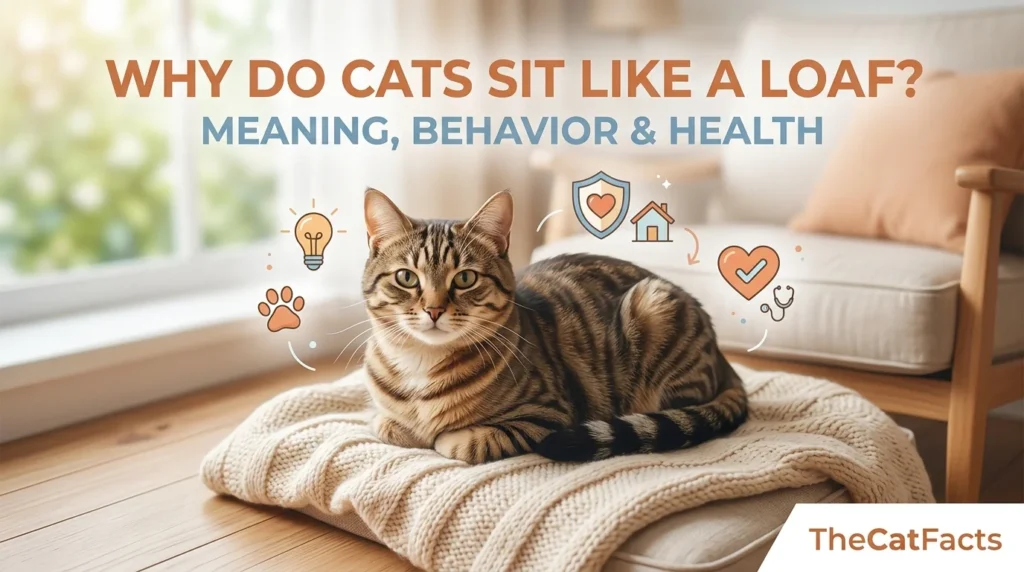
Cats are famous for many unusual sleeping and resting positions, but one of the most recognizable is the “cat loaf.” In this position, a cat tucks its paws beneath its body, keeps its tail wrapped close, and resembles a loaf of bread.
Most of the time, loafing is a normal and positive behavior. It usually means your cat feels comfortable, relaxed, warm, and secure in its environment. However, loafing can sometimes provide clues about your cat’s mood, health, and overall well-being.
Understanding why cats loaf can help you better interpret your pet’s body language and recognize when a resting posture is normal versus when it may signal discomfort or illness.
What Is a Cat Loaf?
A cat loaf is a resting position where a cat sits upright with its front paws tucked completely under its chest and body.
The cat’s body appears compact and rounded, resembling a loaf of bread. In a classic loaf, none of the legs are visible from the front or sides.
Common characteristics include:
- Front paws tucked underneath
- Back legs folded beneath the body
- Tail wrapped around the body or tucked close
- Relaxed facial expression
- Upright but comfortable posture
Unlike lying down, a loafing cat remains partially alert and can quickly stand if necessary.
What a Perfect Cat Loaf Looks Like
A textbook cat loaf typically includes:
| Feature | Description |
| Paws | Completely hidden under the body |
| Spine | Neutral and relaxed |
| Head | Upright and comfortable |
| Ears | Relaxed and facing normally |
| Eyes | Soft, blinking slowly, or partially closed |
| Tail | Wrapped neatly around the body |
Why Do Cats Sit Like a Loaf?
Cats loaf primarily because it is comfortable, energy-efficient, and helps them feel secure.
This position allows cats to relax while remaining ready to react if something catches their attention.
Several factors contribute to loafing behavior.
They Feel Safe and Comfortable
One of the biggest reasons cats loaf is because they feel secure.
When a cat trusts its environment, it can relax without needing to stay fully defensive. Loafing indicates a balance between rest and awareness.
Signs your cat is comfortably loafing include:
- Slow blinking
- Relaxed whiskers
- Soft facial muscles
- Calm breathing
- Loose body posture
They Want to Stay Warm
Cats naturally seek warmth.
Tucking their paws underneath their bodies helps reduce heat loss from the paws and limbs. This allows them to conserve body heat efficiently.
You may notice more loafing:
- During winter
- Near heaters
- On warm blankets
- In sunny spots
- After meals
It Conserves Energy
The loaf position requires very little muscular effort.
Instead of stretching out completely, the cat uses its body structure to support itself comfortably.
This allows the cat to:
- Rest without sleeping deeply
- Recover energy
- Monitor surroundings
- React quickly if needed
They Are Relaxed but Not Fully Asleep
Loafing often occurs during light rest.
Many cats choose this posture when they want to relax without entering deep sleep.
In this state, a cat can:
- Observe activity around the house
- Listen for sounds
- Watch people or pets
- Quickly stand and move
They Are Observing Their Territory
Cats are naturally territorial animals.
Loafing allows them to watch their environment while remaining comfortable.
You may see your cat loaf:
- Near windows
- On cat trees
- In hallways
- Near family members
- In favorite resting spots
Is Loafing a Sign of Happiness?
Yes, loafing is often associated with contentment and emotional comfort.
A relaxed loaf usually indicates that a cat feels safe and trusts its surroundings.
Signs of a happy loaf include:
- Slow blinking
- Gentle purring
- Relaxed ears
- Normal breathing
- Soft body posture
However, loafing alone should not be used as the only indicator of happiness. Body language must always be evaluated as a whole.
Different Types of Cat Loaves
Not all loaves look exactly the same.
Cats often modify the position based on comfort, temperature, and mood.
The Classic Loaf
This is the traditional bread-loaf shape.
Characteristics:
- Both front paws hidden
- Body symmetrical
- Tail tucked neatly
- Relaxed expression
The Partial Loaf
In a partial loaf, one or both paws remain visible.
Cats may use this variation when:
- They are slightly alert
- They are preparing to move
- The surface is uneven
The Croissant Loaf
Some cats curve their bodies slightly while loafing.
This creates a crescent or croissant-like appearance.
It is especially common in flexible cats and kittens.
The Elevated Loaf
Cats sometimes loaf on:
- Cat trees
- Shelves
- Window perches
- Furniture
This allows them to monitor their territory from above.
The Sleepy Loaf
In this version:
- Eyes are mostly closed
- Head may droop slightly
- Breathing is slow
The cat is often transitioning into sleep.
Why Do Kittens Loaf?
Kittens loaf for many of the same reasons as adult cats.
The behavior helps them:
- Stay warm
- Feel secure
- Conserve energy
- Rest between play sessions
Young kittens may loaf frequently because growing bodies require significant rest and energy conservation.
Is Loafing Normal in Kittens?
Yes.
Healthy kittens often loaf several times throughout the day.
As long as they are:
- Eating normally
- Playing normally
- Growing properly
- Using the litter box
Loafing is considered completely normal.
Do All Cat Breeds Loaf?
Most cat breeds loaf, although some may do so more frequently than others.
Breeds Commonly Seen Loafing
- British Shorthair
- Persian
- Ragdoll
- Scottish Fold
- American Shorthair
- Exotic Shorthair
- Maine Coon
- Siberian
Breed differences are generally minor. Personality and environment have a greater influence on loafing frequency.
What Does a Cat’s Loaf Position Reveal About Its Mood?
A loaf can provide valuable clues about a cat’s emotional state.
Relaxed Loaf
Usually indicates:
- Comfort
- Security
- Mild sleepiness
- Contentment
Alert Loaf
Characteristics:
- Eyes open
- Ears rotating frequently
- Head elevated
This suggests the cat is monitoring its surroundings.
Nervous Loaf
Signs include:
- Dilated pupils
- Tense muscles
- Flattened ears
- Rapid scanning
The cat may be uncertain or stressed.
When Is Loafing a Sign of Pain?
Although loafing is usually normal, it can occasionally indicate discomfort.
Cats instinctively hide signs of illness, making subtle posture changes important.
The Pain Loaf Position
A cat experiencing pain may appear loafed but show additional symptoms.
Warning signs include:
- Hunched back
- Head lowered
- Squinted eyes
- Lack of movement
- Withdrawal from family
- Reduced appetite
- Unusual quietness
Common Medical Causes
| Possible Condition | Additional Signs |
| Arthritis | Difficulty jumping |
| Fever | Lethargy and warmth |
| Abdominal pain | Tense belly |
| Pancreatitis | Vomiting and poor appetite |
| Gastrointestinal illness | Diarrhea or nausea |
| Injury | Limping or sensitivity |
If loafing is accompanied by illness symptoms, veterinary evaluation is recommended.
Cat Loaf vs Pain Loaf
Understanding the difference can help owners identify potential problems.
| Feature | Normal Loaf | Pain Loaf |
| Eyes | Soft and relaxed | Squinted or dull |
| Breathing | Normal | Rapid or shallow |
| Appetite | Normal | Reduced |
| Activity | Normal | Decreased |
| Body | Relaxed | Tense |
| Social behavior | Friendly | Withdrawn |
Why Does My Cat Loaf on Me?
Many cats loaf directly on their owners.
This behavior often reflects trust and bonding.
Reasons include:
- Warmth
- Security
- Affection
- Familiar scent
- Comfort
When a cat chooses to loaf on your lap, chest, or legs, it usually feels safe in your presence.
Why Do Cats Loaf in Boxes?
Boxes provide:
- Security
- Warmth
- Protection
- Stress reduction
Combining a loaf position with an enclosed space creates an ideal resting environment for many cats.
Benefits of Box Loafing
- Reduced environmental stress
- Better temperature retention
- Increased sense of safety
- Easier observation of surroundings
Why Do Cats Loaf in Sunny Spots?
Cats naturally seek heat.
Sunlit areas provide:
- Comfort
- Warmth
- Muscle relaxation
- Energy conservation
A sunny windowsill is often the perfect loafing location.
How Temperature Influences Loafing
Environmental temperature can significantly affect resting posture.
| Temperature Condition | Likely Behavior |
| Cool room | Frequent loafing |
| Mild room | Mixed resting positions |
| Warm room | More stretching |
| Hot weather | Sprawling positions |
Common Cat Loaf Myths
Myth: Every Loaf Means a Cat Is Happy
Not always.
Most loafs indicate comfort, but illness and pain can sometimes mimic the position.
Myth: Cats Only Loaf When Sleeping
False.
Many loafing cats remain fully awake and observant.
Myth: Certain Breeds Never Loaf
False.
Nearly all domestic cats can loaf.
Myth: Loafing Means a Cat Trusts Everyone
Not necessarily.
A cat may loaf because it feels safe in the environment, even if it remains cautious around certain people.
How to Encourage Healthy Resting Habits
Providing comfortable resting spaces encourages natural loafing behavior.
Create Warm Resting Areas
Offer:
- Soft blankets
- Heated beds (approved for pets)
- Window perches
- Cozy cat beds
Reduce Stress
Cats loaf more comfortably when stress is minimized.
Helpful strategies include:
- Consistent routines
- Quiet resting areas
- Predictable feeding schedules
- Adequate hiding spots
Provide Vertical Spaces
Cats enjoy elevated resting locations.
Consider:
- Cat trees
- Wall shelves
- Window hammocks
- Elevated beds
When Should You Contact a Veterinarian?
Seek veterinary advice if loafing occurs alongside:
- Loss of appetite
- Vomiting
- Diarrhea
- Difficulty walking
- Hiding behavior
- Weight loss
- Breathing changes
- Lethargy
- Signs of pain
A sudden change in posture combined with illness symptoms deserves prompt evaluation.
Expert Tips for Understanding Cat Loafing
- Observe your cat’s normal resting habits.
- Pay attention to changes in body language.
- Look at the entire cat, not just the loaf posture.
- Monitor appetite and activity levels.
- Provide multiple comfortable resting locations.
- Schedule regular veterinary wellness exams.
Quick Checklist: Is My Cat’s Loaf Normal?
- Eyes relaxed
- Breathing normal
- Eating normally
- Playing normally
- Comfortable movement
- Friendly behavior
- No signs of pain
If most of these boxes are checked, your cat’s loaf is likely perfectly normal.
Conclusion
The cat loaf is one of the most common and adorable feline resting positions. In most cases, it signals comfort, warmth, relaxation, and a sense of security. Cats loaf because it helps conserve body heat, save energy, and remain alert while resting.
While loafing is usually a healthy behavior, owners should pay attention to the cat’s overall body language and health. A relaxed loaf is typically a sign of contentment, but a tense or unusual loaf accompanied by other symptoms may indicate discomfort or illness. Understanding the difference helps you better interpret your cat’s needs and supports responsible pet care.
FAQs
Why do cats sit like a loaf instead of lying down?
Cats loaf because it allows them to rest comfortably while staying partially alert. The position conserves body heat, protects the paws, and lets the cat stand up quickly if needed. It is often a sign that the cat feels safe and relaxed.
Is loafing a sign that my cat is happy?
Usually, yes. A relaxed loaf with soft eyes, normal breathing, and calm body language often indicates comfort and contentment. However, loafing should be interpreted alongside other behaviors and overall health.
Why does my cat loaf with one paw sticking out?
This is called a partial loaf. Some cats keep one paw visible because they are slightly more alert, preparing to move, or simply find the position more comfortable than a full loaf.
Do sick cats sit like a loaf?
Sometimes. Cats experiencing pain or illness may adopt a loaf-like posture called a pain loaf. Unlike a normal loaf, the cat may appear tense, withdrawn, lethargic, or unwilling to move. Veterinary attention may be needed.
Why do cats loaf on their owners?
Cats often loaf on people because they feel safe, warm, and secure. Your body heat, scent, and presence can provide comfort, making loafing on your lap or chest an expression of trust.
Why does my cat loaf in a box?
Boxes provide security and insulation. When combined with the loaf position, they create a protected resting space that helps cats feel safe while conserving body heat.
Do kittens loaf more than adult cats?
Kittens often loaf frequently because they need substantial rest for growth and development. As long as they are eating, playing, and growing normally, loafing is considered healthy behavior.
Can outdoor cats loaf too?
Yes. Outdoor cats loaf just like indoor cats. They may choose sheltered, warm, or elevated areas where they can rest comfortably while still keeping an eye on their surroundings.
Why does my cat stop loafing during hot weather?
In warm temperatures, cats often stretch out instead of loafing. Sprawling increases body surface area exposure and helps release excess heat more effectively.
Should I wake a cat that is loafing?
Generally, no. Loafing is a normal resting behavior. Unless there is a medical concern or a necessary reason, it is best to let your cat rest undisturbed.

Amelia Scott is a Cat Breed Specialist with more than 12 years of experience researching feline breeds, cat behavior, breed characteristics, and responsible cat ownership. She specializes in studying the history, temperament, appearance, health considerations, and unique traits of different cat breeds to create accurate and informative resources for cat lovers.
3 thoughts on “Why Do Cats Sit Like a Loaf? Meaning, Behavior & Health”