
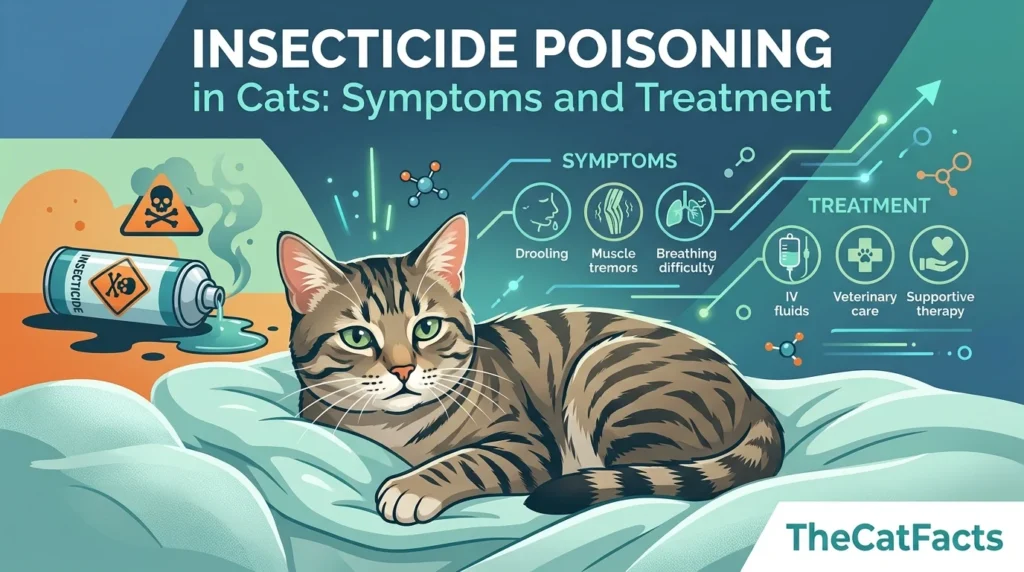
Insecticide poisoning in cats is a medical emergency that can become life threatening within minutes or hours, depending on the type of chemical involved and the amount of exposure. Cats are especially sensitive to many insecticides because of their unique liver metabolism, smaller body size, and meticulous grooming habits. Even products labeled as safe for dogs can be highly toxic to cats.
Knowing how to recognize the early signs of poisoning and acting quickly can make a significant difference in your cat’s recovery. While some cats experience mild symptoms such as drooling or vomiting, others may develop seizures, breathing difficulties, or collapse without prompt treatment.
This guide explains the causes, symptoms, diagnosis, treatment options, recovery process, and prevention strategies for insecticide poisoning in cats. It also highlights when immediate veterinary care is essential and how to reduce your cat’s risk of accidental exposure.
What Is Insecticide Poisoning in Cats?
Insecticide poisoning occurs when a cat is exposed to toxic chemicals designed to kill insects, leading to harmful effects on the nervous system, digestive system, skin, or other organs.
Cats can become poisoned by swallowing insecticides, inhaling fumes, absorbing chemicals through their skin, or grooming contaminated fur. Because cats groom themselves frequently, even a small amount of insecticide on their coat can lead to serious poisoning.
Many insecticides interfere with the normal function of nerve cells. Some overstimulate the nervous system, while others block essential enzymes that nerves need to communicate properly. This disruption causes symptoms ranging from mild tremors to severe seizures and respiratory failure.
Why Cats Are More Sensitive Than Other Pets
Cats process many chemicals differently from dogs and humans, making them more vulnerable to insecticide toxicity.
Several factors increase their risk:
- Their liver lacks certain enzymes needed to break down chemicals efficiently.
- Their smaller body weight means even tiny doses can be dangerous.
- Frequent grooming increases the chance of swallowing toxins.
- Thin skin allows some chemicals to be absorbed more easily.
- Curious behavior may expose them to treated plants, floors, or insect baits.
For these reasons, products intended for dogs should never be used on cats unless specifically approved by a veterinarian.
Common Types of Insecticides That Poison Cats
Not all insecticides contain the same active ingredients. Some are relatively low risk, while others can be extremely toxic to cats.
| Insecticide Type | Common Uses | Risk to Cats | Possible Effects |
| Pyrethrins | Flea sprays, garden products | Moderate | Tremors, drooling, vomiting |
| Pyrethroids (Permethrin) | Dog flea treatments | Extremely high | Severe tremors, seizures, high fever |
| Organophosphates | Agricultural pesticides | Very high | Muscle weakness, breathing problems, seizures |
| Carbamates | Lawn and garden insecticides | High | Excessive salivation, muscle twitching |
| Neonicotinoids | Plant insecticides | Low to moderate | Vomiting, weakness |
| Insect bait products | Homes and gardens | Varies | Digestive upset or neurological signs |
Among these, permethrin poisoning is one of the most common and severe emergencies seen in cats. Even grooming another pet recently treated with a concentrated dog product may expose a cat to dangerous levels.
How Cats Become Exposed to Insecticides
Most poisonings happen accidentally during routine household or garden pest control.
Common exposure sources include:
- Dog flea and tick spot-on products
- Household insect sprays
- Foggers or bug bombs
- Ant and cockroach killers
- Garden pesticides
- Lawn treatments
- Tick control chemicals
- Agricultural products
- Mosquito sprays
- Flea collars intended for dogs
Cats may also walk across recently treated surfaces and later ingest chemicals while grooming themselves.
Skin Contact
Chemicals applied directly to the fur or absorbed through the paws can enter the bloodstream. This commonly occurs when owners accidentally apply a dog flea product to a cat.
Oral Exposure
Cats may lick spilled insecticides, chew treated plants, groom contaminated fur, or eat poisoned insects.
Inhalation
Breathing pesticide fumes inside enclosed areas can irritate the lungs and contribute to toxicity.
Secondary Exposure
Cats sometimes become poisoned after close contact with:
- Recently treated dogs
- Contaminated bedding
- Sprayed furniture
- Treated carpets
- Garden soil
- Outdoor plants
Risk Factors for Insecticide Poisoning
Certain situations increase the likelihood of poisoning.
These include:
- Living in homes with frequent pest control treatments
- Multi-pet households using dog flea medications
- Outdoor access
- Farms or agricultural properties
- Poor storage of chemicals
- Accidental spills
- Curiosity in kittens
- Older cats with liver disease
- Cats with existing neurological disorders
Kittens are particularly vulnerable because their small size allows toxins to reach dangerous concentrations quickly.
Symptoms of Insecticide Poisoning in Cats
Symptoms vary depending on the chemical involved, the amount of exposure, and how quickly treatment begins.
Early recognition is extremely important.
Early Symptoms
These signs often appear within minutes to several hours.
- Excessive drooling
- Vomiting
- Nausea
- Paw shaking
- Ear twitching
- Dilated pupils
- Restlessness
- Hiding
- Mild muscle tremors
- Increased grooming
- Loss of appetite
Moderate Symptoms
As poisoning progresses, more serious neurological signs may develop.
- Muscle twitching
- Walking unsteadily
- Weakness
- Disorientation
- Increased sensitivity to sound
- Rapid breathing
- Diarrhea
- Excessive tearing
- Urinary accidents
- Trembling
Severe Symptoms
Without emergency treatment, severe poisoning may cause:
- Continuous seizures
- Whole body tremors
- High body temperature
- Difficulty breathing
- Blue gums
- Collapse
- Coma
- Heart rhythm abnormalities
- Respiratory failure
These signs require immediate emergency veterinary care.
Symptom Severity Table
| Symptom | Mild | Moderate | Severe |
| Drooling | ✓ | ✓ | ✓ |
| Vomiting | ✓ | ✓ | Sometimes |
| Tremors | Mild | Moderate | Severe |
| Muscle twitching | Mild | Significant | Continuous |
| Weakness | Mild | Moderate | Severe |
| Walking problems | Occasionally | Common | Unable to stand |
| Seizures | Rare | Possible | Common |
| Difficulty breathing | Rare | Possible | Emergency |
| Collapse | No | Rare | Common |
Emergency Warning Signs
Seek emergency veterinary treatment immediately if your cat develops any of the following symptoms after possible insecticide exposure.
Neurological Emergencies
- Repeated seizures
- Violent muscle tremors
- Inability to walk
- Loss of consciousness
- Severe confusion
Breathing Emergencies
- Open-mouth breathing
- Blue or pale gums
- Rapid, labored breathing
- Gasping
Circulatory Emergencies
- Collapse
- Weak pulse
- Cold limbs
- Unresponsiveness
Even if symptoms appear mild at first, they can worsen rapidly, especially after exposure to permethrin or organophosphate insecticides.
What to Do Immediately if You Suspect Poisoning
Quick action can reduce the amount of toxin absorbed and improve your cat’s chances of recovery.
Step 1: Remove Your Cat From the Source
Move your cat away from the contaminated area to prevent additional exposure.
Step 2: Prevent Grooming
If the chemical is on your cat’s fur, prevent excessive licking while preparing for transport or bathing, if instructed by a veterinarian.
Step 3: Contact a Veterinarian Immediately
Call your veterinary clinic or emergency animal hospital as soon as possible. Be prepared to provide:
- Product name
- Active ingredients
- Time of exposure
- Estimated amount
- Your cat’s weight
- Current symptoms
Step 4: Bring the Product Packaging
The label helps veterinarians identify the toxin and choose the safest treatment.
Step 5: Do Not Attempt Unsafe Home Remedies
Avoid:
- Giving milk
- Inducing vomiting without veterinary guidance
- Giving activated charcoal unless directed
- Using household oils
- Waiting for symptoms to improve on their own
Some home remedies can worsen poisoning or delay lifesaving treatment.
How Veterinarians Diagnose Insecticide Poisoning
Diagnosis is based on your cat’s history of exposure, physical examination, clinical signs, and supportive laboratory testing.
There is no single test that confirms every type of insecticide poisoning. Instead, veterinarians combine information about the suspected toxin with the cat’s symptoms to determine the most likely cause and begin treatment quickly.
In many cases, treatment starts before all test results are available because delaying care can allow the toxin to cause further damage.
Diagnostic Tests Your Veterinarian May Recommend
Laboratory tests help evaluate your cat’s overall health, identify complications, and monitor response to treatment.
Depending on your cat’s condition, your veterinarian may perform:
| Diagnostic Test | Purpose |
| Physical examination | Assess neurological function, heart rate, breathing, and body temperature |
| Complete blood count (CBC) | Detect infection, inflammation, or blood abnormalities |
| Blood chemistry panel | Evaluate liver, kidney, and electrolyte function |
| Blood glucose test | Check for dangerously low or high blood sugar |
| Urinalysis | Assess kidney function and hydration |
| Blood gas analysis | Evaluate oxygen and carbon dioxide levels in severe cases |
| Blood pressure measurement | Monitor circulation and cardiovascular stability |
| Electrocardiogram (ECG) | Detect abnormal heart rhythms |
| Chest X-rays | Assess lungs if breathing problems develop |
| Neurological examination | Determine the severity of nervous system involvement |
If the insecticide container is available, bring it to the clinic. Knowing the active ingredient often helps veterinarians choose the most effective treatment.
Treatment for Insecticide Poisoning in Cats
Treatment depends on the type of insecticide, the amount of exposure, and how severe your cat’s symptoms are. Prompt veterinary care offers the best chance of recovery.
The main goals of treatment are to:
- Prevent further toxin absorption.
- Control neurological symptoms.
- Support breathing and circulation.
- Protect vital organs.
- Manage pain and discomfort.
- Prevent complications during recovery.
Decontamination
If exposure occurred recently, the veterinarian may remove as much insecticide as possible before it is absorbed.
Methods may include:
- Bathing the cat with a mild liquid dish detergent to remove oily chemicals from the coat.
- Flushing contaminated eyes with sterile saline.
- Washing exposed skin thoroughly.
- Cleaning the paws if they contacted treated surfaces.
Cats should never be bathed at home if they are actively trembling, having seizures, or struggling to breathe, as this can increase stress and the risk of injury.
Inducing Vomiting
Unlike dogs, vomiting is rarely induced in cats because it is less effective and may increase the risk of aspiration pneumonia.
Your veterinarian will determine whether it is safe and appropriate based on:
- The type of insecticide
- Time since exposure
- Your cat’s neurological condition
- Whether the chemical is corrosive
Activated Charcoal
Activated charcoal may be given when a toxin has been swallowed and is still present in the digestive tract.
It works by binding certain toxins and reducing their absorption into the bloodstream.
It is not appropriate for every insecticide and should only be administered by a veterinary professional.
Intravenous Fluid Therapy
IV fluids are commonly used to:
- Correct dehydration
- Maintain blood pressure
- Support kidney function
- Replace electrolyte losses
- Help eliminate toxins from the body
Fluid therapy is especially important for cats that have been vomiting, have diarrhea, or are unable to drink.
Medications to Control Tremors and Seizures
Neurological symptoms often require aggressive treatment.
Veterinarians may administer medications to:
- Stop seizures
- Reduce muscle tremors
- Relieve anxiety
- Prevent overheating caused by prolonged muscle activity
Continuous monitoring is often necessary because some cats require repeated doses.
Oxygen Therapy
Cats experiencing respiratory distress may receive oxygen through:
- Oxygen cages
- Face masks
- Nasal oxygen tubes
This helps maintain adequate oxygen levels while other treatments take effect.
Temperature Management
Cats with severe tremors or seizures often develop dangerously high body temperatures.
Veterinary staff monitor temperature closely and may use:
- Cooling blankets
- Fans
- Cool IV fluids
- Ice packs placed safely around the body
Overheating can damage organs if not corrected promptly.
Specific Antidotes
Some insecticides have medications that directly counteract their toxic effects.
For example:
- Certain organophosphate poisonings may be treated with atropine and other specific medications.
- Most permethrin poisonings do not have a true antidote, so treatment focuses on supportive care until the toxin is eliminated.
Your veterinarian will choose treatment based on the active ingredient involved.
Hospitalization
Many cats require hospitalization for continuous monitoring and supportive care.
Hospital stays may range from one day for mild cases to several days for severe poisonings.
During hospitalization, veterinary staff monitor:
- Heart rate
- Respiratory rate
- Blood pressure
- Body temperature
- Neurological status
- Hydration
- Urine production
- Response to medications
Cats with severe tremors or seizures often require intensive care.
Possible Complications
Even after treatment begins, complications may develop.
These can include:
- Aspiration pneumonia
- Kidney injury
- Liver damage
- Persistent seizures
- Abnormal heart rhythms
- Low blood sugar
- Dehydration
- Heat stroke from prolonged muscle tremors
- Brain injury caused by prolonged seizures
Prompt veterinary intervention greatly reduces the risk of these complications.
Recovery From Insecticide Poisoning
Most cats recover well when treatment begins early, but recovery time varies depending on the toxin and severity of poisoning.
Mild cases may improve within 24 to 48 hours.
Moderate cases often require several days of supportive care.
Severe poisonings may require weeks before full recovery.
Typical Recovery Timeline
| Time After Treatment | What to Expect |
| First 24 hours | Stabilization, control of tremors, fluids, monitoring |
| Days 2 to 3 | Improved appetite, reduced neurological signs |
| Days 4 to 7 | Increased activity, continued recovery |
| Weeks 2 to 4 | Most cats regain normal function if no permanent damage occurred |
Cats recovering from severe seizures may remain tired or unsteady for several days.
Caring for Your Cat at Home After Treatment
Follow all discharge instructions carefully to support healing and reduce the risk of complications.
Provide a Quiet Recovery Area
Choose a calm room away from:
- Loud noises
- Other pets
- Young children
- Bright lights
Reducing stress helps your cat recover more comfortably.
Give All Medications Exactly as Prescribed
Never stop medications early unless instructed by your veterinarian.
Common medications may include:
- Anti-seizure drugs
- Pain relief
- Liver support supplements
- Anti-nausea medication
- Eye medications if irritation occurred
Monitor Your Cat Daily
Watch for:
- Appetite
- Water intake
- Urination
- Bowel movements
- Walking ability
- Alertness
- Tremors
- Breathing changes
Report any worsening signs immediately.
Nutrition During Recovery
A balanced, easily digestible diet supports healing after poisoning.
Encourage your cat to eat once your veterinarian confirms it is safe.
Helpful dietary recommendations include:
- High-quality commercial cat food
- Fresh water available at all times
- Small, frequent meals if appetite is reduced
- Prescription recovery diets when recommended
Avoid giving supplements or home remedies unless approved by your veterinarian.
Foods That Support Recovery
| Food Type | Benefit |
| Complete wet cat food | Provides hydration and balanced nutrition |
| Veterinary recovery diet | Easy to digest and calorie dense |
| Prescription gastrointestinal diet | Supports digestive recovery |
| Fresh water | Prevents dehydration |
Never force-feed a cat that is vomiting or having neurological symptoms without veterinary guidance.
Long-Term Outlook
The prognosis depends largely on how quickly treatment begins and which insecticide caused the poisoning.
| Severity | Expected Outcome |
| Mild exposure | Excellent with prompt treatment |
| Moderate poisoning | Good with hospitalization |
| Severe neurological poisoning | Guarded until stabilized |
| Delayed treatment | Higher risk of complications |
Most cats treated early make a full recovery without lasting health problems.
However, prolonged seizures or severe oxygen deprivation may occasionally result in permanent neurological damage.
How to Prevent Insecticide Poisoning
Prevention is far safer than treatment and greatly reduces the risk of emergency poisoning.
Safe Storage
Store all insecticides:
- In original containers
- In locked cabinets
- Away from food
- Out of reach of pets
Use Cat-Specific Flea Products
Always use parasite prevention products labeled specifically for cats.
Never apply dog flea medications unless your veterinarian confirms they are safe for feline use.
Keep Cats Away During Pest Treatments
After using insecticides:
- Follow the product instructions carefully.
- Keep your cat out of treated areas.
- Allow sprays and surfaces to dry completely.
- Ventilate indoor spaces before allowing pets back inside.
Wash Hands After Applying Products
Chemical residue on your hands can transfer to your cat during petting.
Simple handwashing helps prevent accidental exposure.
Read Labels Carefully
Before using any insecticide, check whether it is safe for:
- Cats
- Multi-pet households
- Indoor use
- Outdoor use
When in doubt, ask your veterinarian before using the product.
Common Mistakes Pet Owners Should Avoid
Many cases of insecticide poisoning can be prevented by avoiding common household mistakes.
Even well-meaning pet owners sometimes use products incorrectly or fail to recognize the risks of certain insecticides. Learning what not to do is just as important as knowing the signs of poisoning.
Avoid these mistakes:
- Applying flea or tick products made for dogs to cats.
- Using more than the recommended dose of an insecticide.
- Treating a cat more often than directed.
- Allowing cats into recently sprayed rooms or gardens before surfaces have dried.
- Leaving insecticide containers open or within reach.
- Storing chemicals in food containers or unlabeled bottles.
- Assuming natural or herbal insecticides are always safe.
- Waiting for symptoms to become severe before seeking veterinary care.
- Trying home remedies instead of contacting a veterinarian.
- Ignoring mild signs such as drooling or small muscle twitches.
Veterinary Advice for Cat Owners
If you suspect insecticide poisoning, treat it as an emergency and contact a veterinarian immediately, even if your cat appears normal.
Veterinarians recommend:
- Keep the insecticide packaging or take a photo of the label.
- Note when exposure likely occurred.
- Estimate how much product your cat contacted or swallowed.
- Prevent further exposure by moving your cat away from the contaminated area.
- Follow your veterinarian’s instructions carefully before attempting any first aid.
Never delay treatment because symptoms seem mild. Some insecticides cause delayed but rapidly worsening neurological signs.
Myths vs Facts About Insecticide Poisoning
| Myth | Fact |
| If a product is safe for dogs, it is safe for cats. | Many dog insecticides, especially those containing permethrin, can be highly toxic to cats. |
| My cat only licked a small amount, so it cannot be serious. | Even small amounts of certain insecticides may cause severe poisoning in cats. |
| Symptoms always appear immediately. | Some toxins cause signs within minutes, while others may take several hours. |
| Indoor cats cannot be exposed to insecticides. | Indoor cats may contact sprays, treated carpets, contaminated shoes, or treated dogs. |
| Bathing always solves the problem. | Bathing may remove some chemicals but does not replace emergency veterinary treatment. |
| If my cat seems better after vomiting, the danger has passed. | Toxins may continue to be absorbed even after vomiting, making veterinary evaluation essential. |
Quick Comparison of Common Toxic Insecticides
| Active Ingredient | Common Source | Risk Level | Typical Signs |
| Permethrin | Dog spot-on flea treatments | Extremely high | Tremors, seizures, overheating |
| Pyrethrins | Flea sprays | Moderate | Drooling, vomiting, muscle twitching |
| Organophosphates | Agricultural pesticides | Very high | Salivation, breathing problems, weakness |
| Carbamates | Garden insecticides | High | Tremors, diarrhea, muscle weakness |
| Neonicotinoids | Plant insecticides | Low to moderate | Vomiting, lethargy, reduced appetite |
Prevention Checklist
Use this checklist to help protect your cat from accidental insecticide poisoning.
✔ Read product labels before use.
✔ Use only flea and tick products labeled for cats.
✔ Never apply dog medications to cats.
✔ Store insecticides in locked cabinets.
✔ Keep cats away from treated lawns and gardens until safe.
✔ Wash your hands after handling pesticides.
✔ Clean up spills immediately.
✔ Dispose of empty containers safely.
✔ Supervise curious kittens around treated areas.
✔ Schedule routine flea prevention with your veterinarian instead of using random over-the-counter products.
Expert Tips for Keeping Cats Safe
- Ask your veterinarian before using any new flea or tick product.
- Introduce one parasite control product at a time to monitor for reactions.
- Keep a record of the products you use and their application dates.
- If you have both dogs and cats, separate them until topical flea treatments have completely dried.
- Vacuum and clean treated areas according to the manufacturer’s instructions.
- During pest control treatments, prepare a safe room for your cat away from chemicals.
- Teach family members and pet sitters never to use dog medications on cats.
Quick Summary
Insecticide poisoning is one of the most serious toxic emergencies affecting cats. Because cats absorb and process certain chemicals differently than other animals, they are especially vulnerable to products that may appear harmless.
Early warning signs include drooling, vomiting, muscle twitching, tremors, and unusual behavior. As poisoning worsens, seizures, breathing difficulties, collapse, and coma may develop.
Immediate veterinary care offers the best chance of recovery. Treatment often includes decontamination, intravenous fluids, medications to control tremors or seizures, oxygen therapy, and close monitoring.
The safest way to protect your cat is by using only feline-approved parasite prevention products, storing insecticides securely, and preventing access to recently treated areas.
Conclusion
Insecticide poisoning in cats is a true medical emergency that should never be ignored. Cats are uniquely sensitive to many insecticides, particularly products containing permethrin and certain agricultural pesticides. Recognizing the early symptoms and seeking immediate veterinary care can significantly improve the chances of a full recovery.
Prevention remains the most effective strategy. Always choose products specifically approved for cats, follow label instructions carefully, and keep all pesticides stored safely out of your pet’s reach. Routine veterinary guidance on flea and tick prevention can help protect your cat from parasites without exposing them to unnecessary risks.
By staying informed and acting quickly when problems arise, you can provide a safer environment and help ensure your cat enjoys a long, healthy life.
FAQs
Can insecticide poisoning kill a cat?
Yes. Severe insecticide poisoning can be fatal if it is not treated promptly. Certain chemicals can cause seizures, breathing failure, dangerously high body temperature, or heart problems. Immediate veterinary care greatly improves the chances of survival and recovery.
How quickly do symptoms of insecticide poisoning appear in cats?
Symptoms may begin within a few minutes or may take several hours, depending on the type of insecticide, the amount of exposure, and how the toxin entered the body. Neurological signs often develop rapidly after exposure to highly toxic products such as permethrin.
What should I do if I accidentally used a dog flea treatment on my cat?
Contact your veterinarian or an emergency veterinary hospital immediately. If the product is still on your cat’s coat and your veterinarian advises it, wash your cat with mild liquid dish detergent while preventing them from grooming. Do not wait for symptoms to appear before seeking professional advice.
Can a cat recover completely from insecticide poisoning?
Many cats recover fully when treatment begins early and appropriate supportive care is provided. Recovery depends on the type of insecticide, the amount of exposure, the severity of symptoms, and how quickly veterinary treatment is started.
Is it safe to make my cat vomit after swallowing insecticide?
No. Do not attempt to make your cat vomit unless your veterinarian specifically instructs you to do so. Inducing vomiting can sometimes worsen the situation and increase the risk of aspiration or additional injury.
Can indoor cats get insecticide poisoning?
Yes. Indoor cats may be exposed through household insect sprays, treated carpets, contaminated shoes, recently treated dogs, insect baits, or residues left on furniture and floors. Indoor living does not completely eliminate the risk.
Are natural insecticides safe for cats?
Not always. Some natural products and essential oils can be toxic to cats, especially when concentrated. Always consult your veterinarian before using herbal or natural pest control products around your cat.
How long does recovery usually take?
Mild cases may recover within one to two days, while moderate or severe poisonings can require several days of hospitalization followed by weeks of recovery at home. Your veterinarian will provide a recovery plan based on your cat’s individual condition.
Can insecticide poisoning cause permanent damage?
Most cats recover without long-term problems when treated promptly. However, prolonged seizures, severe oxygen deprivation, or delayed treatment may result in lasting neurological or organ damage in some cases.
How can I prevent insecticide poisoning in my cat?
Use only products specifically labeled for cats, store pesticides securely, keep cats away from treated areas until they are safe, separate cats from recently treated dogs, and follow all product instructions carefully. Regular veterinary advice on parasite prevention is the best way to reduce the risk.

Isabella Morgan is a Veterinary Content Researcher with more than 12 years of experience researching companion animal health, preventive veterinary care, pet nutrition, and animal welfare. She specializes in translating complex veterinary information into clear, accurate, and reader friendly content that helps pet owners make informed decisions about the health and well being of their animals.
1 thought on “Insecticide Poisoning in Cats: Symptoms and Treatment”