
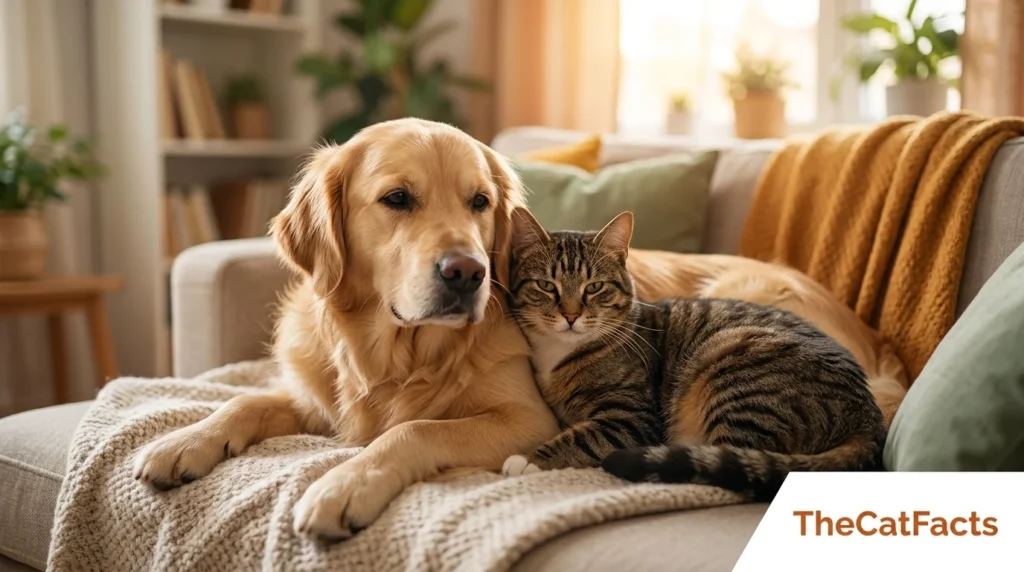
Many people assume that cats and dogs are natural enemies. In reality, countless households successfully raise both species together. While some cats and dogs may never become close friends, many learn to coexist peacefully, play together, sleep near each other, and even form strong social bonds.
Cats and dogs can get along because both are highly adaptable animals capable of learning, communication, and social bonding. Their relationship depends more on personality, early experiences, training, introductions, and environmental management than on species differences.
Understanding why cats and dogs can live harmoniously helps pet owners create safer, happier multi-pet homes and avoid common mistakes that lead to conflict.
Learning about insecticide poisoning in cats treatment can clarify what veterinary care may involve after accidental exposure.
Can Cats and Dogs Really Be Friends?
Yes, cats and dogs can become friends when their personalities, experiences, and environment support positive interactions.
The idea that cats and dogs always fight is largely a myth. While they communicate differently, both species can learn to understand each other’s body language and establish mutually comfortable relationships.
Some cat and dog pairs become:
- Playmates
- Sleeping companions
- Grooming partners
- Protective companions
- Calm housemates that simply respect each other’s space
Friendship may develop quickly or take several months, depending on the animals involved.
Why Do People Think Cats and Dogs Don’t Get Along?
Cats and dogs have different communication styles, which can create misunderstandings.
For example:
- Dogs often wag their tails when excited.
- Cats may swish their tails when irritated.
- Dogs frequently approach directly.
- Cats usually prefer a slower introduction.
- Dogs may enjoy rough play.
- Cats generally prefer gentler interactions.
Without proper introductions, these differences can cause stress or fear.
Historical Stereotypes
Movies, cartoons, and popular culture have long portrayed cats and dogs as rivals. While conflicts can happen, they are not inevitable.
Natural Predator and Prey Behaviors
Some dogs have strong prey drives and may instinctively chase smaller animals. Likewise, some cats may react defensively when approached by energetic dogs.
Proper training and supervision help reduce these risks.
Top Reasons Why Cats and Dogs Can Get Along
1. Both Species Are Social Animals
Cats and dogs can form social relationships with humans and other animals.
Dogs naturally live in social groups. Although cats are often viewed as solitary, they can form colonies and social bonds when resources are available.
This ability allows many cats and dogs to develop positive relationships.
2. Early Socialization Makes a Huge Difference
Animals exposed to other species during early development often adapt more easily.
For Puppies
Puppies that meet calm cats during their socialization period typically become more accepting of cats later in life.
For Kittens
Kittens exposed to friendly dogs often grow up viewing dogs as normal household companions.
Early positive experiences can significantly improve future interactions.
3. Individual Personality Matters More Than Species
Personality often predicts compatibility better than breed or species.
A relaxed dog may get along beautifully with a confident cat, while a highly energetic dog may struggle with a fearful cat.
Traits that promote harmony include:
- Calm temperament
- Confidence
- Curiosity
- Low aggression
- Good adaptability
4. Cats and Dogs Can Learn Each Other’s Signals
Over time, cats and dogs learn how the other species communicates.
Examples include:
- Dogs learning when a cat wants space
- Cats recognizing playful dog behavior
- Both animals respecting established boundaries
This communication reduces misunderstandings and stress.
5. Shared Territory Encourages Familiarity

Living together creates repeated positive experiences.
When cats and dogs share a home safely, they become familiar with:
- Smells
- Sounds
- Daily routines
- Feeding schedules
- Household activities
Familiarity often leads to reduced fear and increased comfort.
6. Positive Reinforcement Strengthens Relationships
Animals repeat behaviors that produce positive outcomes.
When cats and dogs receive rewards for calm behavior around each other, they begin associating the other pet with positive experiences.
Examples include:
- Treats
- Praise
- Toys
- Gentle attention
This creates positive emotional associations.
Understanding homemade cat food recipes for Scottish Fold cats helps owners choose appropriate ingredients and feeding portions.
7. They Benefit from Companionship

Many pets enjoy having company, especially when owners are away.
Some benefits include:
- Mental stimulation
- Reduced boredom
- Increased activity
- Social interaction
- Emotional comfort
While not every pet seeks companionship, many appreciate a familiar household companion.
Signs That Cats and Dogs Are Getting Along
Positive interactions indicate growing trust and comfort.
Relaxed Body Language
A comfortable cat may:
- Walk confidently around the dog
- Sit nearby
- Groom itself in the dog’s presence
- Rest openly
A comfortable dog may:
- Remain calm around the cat
- Ignore the cat when appropriate
- Display relaxed posture
- Respond to commands easily
Sleeping Near Each Other
Animals are vulnerable while sleeping.
Choosing to rest near one another suggests trust and security.
Gentle Play
Healthy play may include:
- Chasing
- Play bows
- Light pawing
- Mutual engagement
Play should remain relaxed and balanced.
Mutual Grooming
Some cats groom dogs and vice versa.
This behavior often indicates social bonding and acceptance.
Signs of Tension Between Cats and Dogs
Recognizing stress early can prevent fights.
| Cat Behavior | Dog Behavior | Possible Meaning |
| Hissing | Staring | Fear or discomfort |
| Growling | Barking | Escalating tension |
| Flattened ears | Lunging | Defensive behavior |
| Swatting | Chasing | Potential conflict |
| Hiding | Obsessive fixation | High stress level |
Intervene calmly when these signs appear.
Which Cats Are Most Likely to Get Along with Dogs?
Certain feline traits can improve compatibility.
Confident Cats
Confident cats tend to adapt more easily to new situations.
Social Cats
Cats that enjoy interaction with humans and other animals often accept dogs more readily.
Well-Socialized Kittens
Young cats exposed to dogs usually adjust more quickly than adult cats with no dog experience.
Which Dogs Are Most Likely to Get Along with Cats?
Temperament is more important than breed, but some characteristics are helpful.
Calm Dogs
Dogs with moderate energy levels often integrate more smoothly into cat households.
Trainable Dogs
Dogs that reliably respond to commands are easier to manage during introductions.
Dogs with Low Prey Drive
Dogs less inclined to chase small animals generally pose fewer challenges.
Dog Breeds Often Known for Cat Compatibility
The following breeds are commonly considered cat-friendly when properly trained and socialized.
| Breed Type | Typical Compatibility |
| Golden Retriever | Often excellent |
| Labrador Retriever | Usually very good |
| Cavalier King Charles Spaniel | Frequently good |
| Bichon Frise | Often good |
| Pug | Usually good |
| Maltese | Commonly good |
Individual personality always matters more than breed stereotypes.
Cat Breeds Often Known for Dog Compatibility
Some cat breeds are recognized for social and adaptable personalities.
| Cat Breed | Typical Traits |
| Maine Coon | Friendly and confident |
| Ragdoll | Relaxed and social |
| Abyssinian | Curious and active |
| Burmese | People-oriented |
| Siberian | Adaptable and playful |
| American Shorthair | Easygoing |
Every cat remains an individual regardless of breed.
How to Introduce a Cat and Dog Successfully
A slow introduction is one of the most important factors in creating a successful relationship.
Step 1: Separate Initially
Keep pets in separate areas.
Allow them to become familiar with each other’s scent before meeting face-to-face.
Step 2: Exchange Scents
Swap bedding, toys, or blankets.
This helps both animals become familiar with the other’s smell.
Step 3: Controlled Visual Introductions
Allow pets to see each other through:
- Baby gates
- Cracked doors
- Pet barriers
Reward calm behavior.
Step 4: Leashed Meetings
Keep the dog on a leash during initial interactions.
Allow the cat to move freely and retreat if desired.
Step 5: Gradually Increase Contact
Extend interaction time only when both animals remain relaxed.
Never rush the process.
Common Mistakes That Prevent Cats and Dogs from Getting Along
Forcing Interactions
Pets should never be forced to interact.
Forced encounters often increase fear and anxiety.
Ignoring Stress Signals
Subtle signs of discomfort can escalate if overlooked.
Punishing Fearful Behavior
Punishment may worsen anxiety and damage trust.
Lack of Escape Routes
Cats need elevated areas and safe spaces.
Allowing Chasing
Chasing can become a dangerous habit and should be stopped immediately.
Creating a Cat-Friendly and Dog-Friendly Home
Environmental management greatly improves success.
Essential Resources for Cats
Provide:
- Cat trees
- Shelves
- Window perches
- Hiding spots
- Quiet resting areas
Essential Resources for Dogs
Provide:
- Comfortable beds
- Exercise opportunities
- Training sessions
- Interactive toys
Separate Feeding Areas
Separate feeding stations reduce competition and stress.
Multiple Water Sources
Having several water bowls prevents resource guarding.
Veterinary Insights on Multi-Pet Households
Veterinarians frequently observe successful cat and dog relationships when introductions are managed properly.
Key recommendations include:
- Vaccinating all pets appropriately
- Maintaining parasite prevention
- Scheduling routine health examinations
- Monitoring behavioral changes
- Addressing anxiety early
A sudden change in behavior may indicate illness rather than relationship problems.
Health Benefits of Positive Cat and Dog Relationships
When compatible animals live together, both may experience benefits.
Mental Stimulation
Companionship can reduce boredom and encourage activity.
Reduced Loneliness
Some pets become more relaxed when another familiar animal is present.
Increased Exercise
Play and interaction often encourage movement.
Enrichment Opportunities
Daily interactions create mental challenges that support emotional well-being.
Myths vs Facts About Cats and Dogs Living Together
| Myth | Fact |
| Cats and dogs always fight. | Many coexist peacefully. |
| Puppies automatically love cats. | Proper socialization is still needed. |
| Cats cannot bond with dogs. | Strong friendships can develop. |
| Breed alone determines success. | Personality and training matter most. |
| One bad meeting ruins everything. | Slow introductions can rebuild trust. |
Emergency Warning Signs
Some situations require immediate intervention.
Contact a veterinarian or qualified animal behavior professional if you observe:
- Repeated attacks
- Bite wounds
- Severe fear responses
- Persistent hiding
- Refusal to eat
- Continuous chasing
- Injuries
- Escalating aggression
Safety should always come first.
Quick Checklist for Helping Cats and Dogs Get Along
Before Introduction
- Dog knows basic commands
- Cat has safe escape spaces
- Separate feeding areas available
- Vaccinations are current
During Introduction
- Keep interactions calm
- Reward positive behavior
- Supervise all meetings
- Allow voluntary interaction
Long-Term Success
- Respect individual personalities
- Maintain routines
- Monitor body language
- Provide enrichment
Expert Tips for Building a Strong Cat-Dog Relationship
Let the Cat Set the Pace
Cats generally feel safer when they control the interaction.
Exercise the Dog First
A tired dog is often calmer during introductions.
Reward Calm Behavior Consistently
Positive reinforcement helps create lasting positive associations.
Maintain Individual Attention
Spend quality time with each pet separately.
Be Patient
Some friendships form within days, while others require several months.
Conclusion
Cats and dogs can get along remarkably well when given the right environment, introductions, and support. Their ability to coexist is influenced more by personality, socialization, training, and management than by species differences. Many cats and dogs develop strong bonds that provide companionship, enrichment, and emotional comfort throughout their lives.
Successful relationships require patience, supervision, and respect for each animal’s unique needs. By introducing pets gradually, recognizing stress signals, and creating a safe home environment, owners can greatly increase the chances of a peaceful and rewarding cat-dog friendship.
FAQs
Why can cats and dogs get along despite being different species?
Cats and dogs can get along because both species are capable of learning, adapting, and forming social bonds. Positive experiences, proper introductions, and repeated exposure help them become comfortable with one another. Personality and training often have a greater impact on compatibility than species differences.
How long does it take for a cat and dog to become friends?
The timeline varies widely. Some cats and dogs become comfortable within a few days, while others may need several weeks or months. Slow introductions, positive reinforcement, and patience are essential for building trust and reducing stress during the adjustment period.
Is it easier to introduce a kitten to a dog or an adult cat to a dog?
Kittens often adapt more easily because they are still learning about the world and tend to be more flexible. However, many adult cats can also successfully live with dogs when introductions are gradual and their need for safety and personal space is respected.
Can older dogs learn to live with cats?
Yes. Older dogs can learn to coexist peacefully with cats, especially if they have calm temperaments and respond well to training. The introduction process may take longer, but many senior dogs adjust successfully when interactions are carefully managed.
What should I do if my dog chases my cat?
Immediately interrupt the behavior and redirect the dog to an appropriate activity. Use training commands such as “leave it” and reward compliance. Never allow chasing to continue, as it can create fear, stress, and potential injury for the cat.
Do certain cat breeds get along better with dogs?
Some breeds, including Maine Coons, Ragdolls, and Siberians, are often known for sociable personalities. However, individual temperament, socialization history, and previous experiences are usually more important than breed alone.
Can cats and dogs share food bowls or feeding areas?
It is generally best to provide separate feeding stations. Separate feeding areas reduce competition, resource guarding, and stress while allowing each pet to eat its appropriate diet without interference.
How can I tell if my cat is comfortable around my dog?
Signs of comfort include relaxed posture, normal grooming behavior, eating regularly, resting near the dog, and moving confidently through the home. A comfortable cat will not constantly hide or display defensive behaviors such as hissing or swatting.
What are the warning signs that a cat and dog are not getting along?
Warning signs include growling, hissing, chasing, staring, lunging, hiding, flattened ears, excessive barking, and signs of chronic stress. Early intervention can help prevent these behaviors from escalating into serious conflicts.
Should cats and dogs be left alone together?
Newly introduced pets should not be left unsupervised until they have consistently demonstrated calm and safe interactions. Even after successful integration, owners should ensure both pets have access to safe spaces and separate resources.

Benjamin Hayes is a Senior Cat Behavior Researcher with more than 15 years of experience studying feline behavior, companion animal welfare, and human cat interactions. He specializes in translating scientific research into practical, easy to understand guidance that helps cat owners better understand their pets’ behavior, communication, health, and daily care.