
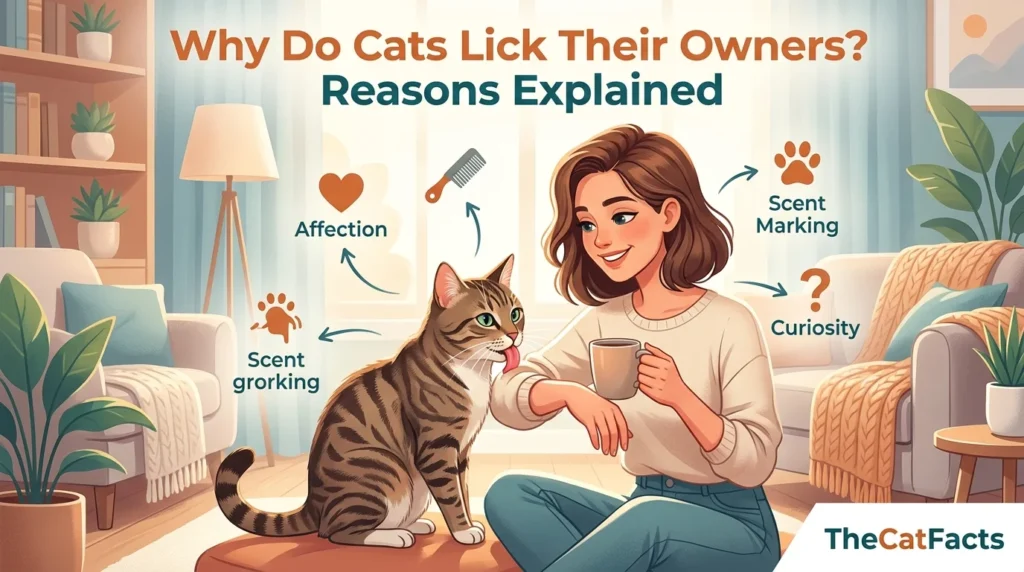
Cats lick their owners for many reasons, including affection, bonding, grooming, communication, curiosity, and even stress relief. While licking is usually a normal feline behavior, excessive licking or licking followed by biting can sometimes signal overstimulation, anxiety, or an underlying health problem. Understanding why your cat licks you helps strengthen your relationship and lets you recognize when the behavior is harmless and when it deserves a veterinarian’s attention.
Unlike dogs, cats are selective with their affection. When a cat chooses to lick you, it often means you are part of its trusted social group. This behavior has its roots in kittenhood, when mother cats groom their kittens to keep them clean, comfort them, and build strong social bonds. Many adult cats continue this instinct with the humans they love.
Whether your cat gives you a few gentle licks while you’re relaxing on the couch or spends several minutes grooming your hand, there is usually a reason behind it. Learning these reasons can help you respond appropriately and better understand your feline companion.
Quick Answer: Why Do Cats Lick Their Owners?
Cats lick their owners because they are showing affection, marking them with their scent, grooming them as family, seeking attention, exploring new smells and tastes, or coping with stress. Most licking is completely normal, but sudden excessive licking or licking combined with other unusual behaviors should be discussed with a veterinarian.
Why Do Cats Lick Their Owners?
Cats lick people for a combination of emotional, social, and biological reasons. Each cat has its own personality, so one cat may lick only occasionally while another makes grooming its owner part of its daily routine.
Common Reasons Cats Lick Their Owners
| Reason | What It Means | Is It Normal? |
| Affection | Your cat feels close to you | Yes |
| Grooming | Treating you like family | Yes |
| Scent Marking | Claiming you as part of their territory | Yes |
| Attention Seeking | Wants food, play, or interaction | Yes |
| Curiosity | Exploring taste or smell | Yes |
| Stress Relief | Self-soothing behavior | Usually |
| Medical or Behavioral Issues | Excessive licking with other signs | No, seek veterinary advice |
Your Cat Is Showing Affection
One of the most common reasons cats lick their owners is to express affection. Cats do not hug or kiss like humans. Instead, they communicate love through behaviors such as slow blinking, head bunting, purring, kneading, and grooming.
If your cat gently licks your hand while purring or sitting on your lap, it is often a sign that they feel safe and comfortable with you.
Signs the licking is affectionate include:
- Soft body posture
- Relaxed ears
- Slow blinking
- Gentle purring
- Remaining close after licking
This behavior is especially common in cats that have developed a strong bond with one particular family member.
They Are Grooming You
Cats spend a significant part of their day grooming themselves. In groups, friendly cats also groom each other, a behavior known as social grooming or allogrooming.
When your cat licks your hair, hands, or face, it may be treating you as another trusted cat.
Social grooming helps:
- Strengthen relationships
- Reduce tension
- Share scents
- Build trust
- Reinforce social bonds
If your cat regularly grooms you after grooming itself, it is often a compliment.
Your Cat Is Marking You With Their Scent
Cats communicate through scent much more than people realize.
Although rubbing their face against you is the most obvious way they transfer scent, licking also leaves behind tiny scent cues.
This tells other animals that you belong to your cat’s trusted social group.
Your cat may lick you more often after:
- You return home
- Another pet has touched you
- You visit another house
- You interact with unfamiliar animals
This behavior helps restore familiar scents.
They Like the Taste of Your Skin
Human skin contains salt from sweat along with traces of lotions, food, or natural body oils.
Some cats simply enjoy these tastes.
They may especially lick:
- Hands after cooking
- Arms after exercising
- Feet after walking barefoot
- Hair after using scented shampoo
If your cat is only licking because of taste, the behavior usually stops after a short time.
They Want Your Attention
Cats quickly learn which behaviors get a response.
If licking consistently results in petting, talking, treats, or playtime, your cat may repeat the behavior whenever they want interaction.
Attention-seeking licking often occurs:
- Before meal times
- During work hours
- At bedtime
- When visitors arrive
- During quiet evenings
If you unintentionally reward the behavior every time, your cat may lick more frequently.
Your Cat Feels Safe Around You
Cats are naturally cautious animals.
They rarely groom individuals they do not trust.
If your cat licks you while sleeping beside you or resting on your lap, it usually means they feel completely secure.
This level of trust develops over time through:
- Gentle handling
- Predictable routines
- Positive interactions
- Respecting your cat’s boundaries
They Are Comforting Themselves
Licking can release calming chemicals in the brain.
Some cats lick themselves, blankets, or their owners when they are trying to relax.
Situations that may trigger comfort licking include:
- Loud noises
- Moving to a new home
- Visitors
- Changes in routine
- Veterinary visits
- Separation from family members
Occasional comfort licking is normal.
However, excessive licking accompanied by anxiety may require behavioral support or veterinary evaluation.
They Learned It as Kittens
Mother cats groom their kittens from birth.
This grooming serves several important purposes.
It keeps kittens clean, stimulates elimination during early life, provides comfort, and strengthens the mother-kitten bond.
As kittens mature, they often groom their littermates.
Adult cats may continue this learned behavior by grooming the humans they trust most.
Cats that were well-socialized during kittenhood often show this behavior more confidently.
They Are Curious
Cats investigate the world using several senses, including taste.
Your cat may briefly lick your fingers simply to investigate something unusual.
For example:
- A new soap
- Sunscreen
- Hand cream
- Food residue
- Sweat
- A new perfume
If curiosity is the reason, the licking usually lasts only a few seconds.
How Cat Licking Changes With Age
Different life stages influence why cats lick people.
| Cat Age | Common Licking Behavior |
| Kitten | Learns grooming from mother and littermates |
| Young Adult | Shows affection, explores new scents |
| Adult | Social bonding, routine grooming |
| Senior | May lick more for comfort or due to health changes |
Senior cats sometimes change their grooming habits because of arthritis, dental disease, cognitive decline, or other medical conditions. If an older cat suddenly begins licking you far more than usual, schedule a veterinary examination to rule out underlying health issues.
Why Does My Cat Lick Me Then Bite Me?
Cats often lick and then bite because they become overstimulated, switch from grooming to play, or are signaling that they have reached their limit. A gentle “love bite” is usually harmless, while a hard bite may indicate frustration, fear, pain, or stress.
This behavior surprises many cat owners because it seems affectionate one moment and aggressive the next. In reality, the bite usually has a specific meaning.
Your Cat Became Overstimulated
One of the most common reasons is petting-induced overstimulation.
Your cat may enjoy being touched for several minutes, then suddenly feel overwhelmed.
The licking may occur just before the bite as part of the grooming interaction.
Warning signs of overstimulation include:
- Tail twitching
- Skin rippling
- Flattened ears
- Dilated pupils
- Turning the head toward your hand
- Sudden body tension
When you notice these signs, stop petting your cat and give them space.
It Is a Gentle Love Bite
Some cats naturally combine grooming with gentle nibbling.
Among cats, this behavior is perfectly normal.
Love bites are usually:
- Soft
- Brief
- Not painful
- Followed by more licking
- Accompanied by purring
These bites are different from aggressive bites, which are harder and intended to make you stop interacting.
Your Cat Wants to Play
Young cats and kittens often mix grooming with play behavior.
After licking your fingers, they may suddenly grab your hand with their paws and gently bite.
This behavior resembles how kittens play with their littermates.
Providing interactive toys each day can help redirect this playful energy away from your hands.
They Are Communicating That They Have Had Enough
Cats have personal boundaries.
Some enjoy only a few strokes before becoming uncomfortable.
The lick may be a transition before the bite communicates:
- Stop touching me.
- Give me some space.
- I need a break.
Respecting these signals helps build trust and reduces future biting incidents.
Pain Can Trigger Sudden Biting
If your normally affectionate cat suddenly begins licking and biting during petting, pain may be the cause.
Possible medical conditions include:
- Arthritis
- Dental disease
- Skin infections
- Ear infections
- Injuries
- Abdominal discomfort
A veterinary examination is recommended if the behavior appears suddenly or is accompanied by other signs of illness.
Stress and Anxiety
Cats under stress sometimes show mixed behaviors.
A stressed cat may seek comfort through licking but then react with a bite if it becomes startled or overwhelmed.
Common stress triggers include:
- New pets
- Household changes
- Construction noise
- Visitors
- Lack of hiding places
- Changes in routine
Reducing stress often decreases this behavior.
How to Respond When Your Cat Licks Then Bites
Instead of punishing your cat, try to understand what triggered the behavior.
Helpful responses include:
- Stop petting before your cat becomes overstimulated.
- Learn your cat’s body language.
- End interactions on a positive note.
- Offer interactive play sessions every day.
- Avoid rough hand play.
- Reward calm behavior with praise or treats.
- Schedule a veterinary visit if the behavior changes suddenly or becomes severe.
Understanding your cat’s communication is the key to preventing future bites while maintaining a strong, trusting relationship.
Why Does My Cat Lick My Hand and Then Bite Me?
Cats often lick your hand and then bite because they are combining grooming, affection, play, and communication. In most cases, the bite is not aggressive. Instead, it signals excitement, overstimulation, or a request to stop interacting. Paying attention to your cat’s body language helps you understand the difference.
This behavior can seem confusing, especially when your cat appears relaxed one moment and gently bites you the next. However, cats communicate differently than humans. What feels like mixed signals to us often makes perfect sense to them.
Your Hand Becomes Part of Grooming Time
When cats groom one another, they do not always stop at licking. They may gently nibble through the fur to remove loose hair, dirt, or tiny parasites. This behavior is a normal part of feline grooming.
When your cat licks your hand and gives a small nibble, it may simply be treating your skin the same way it would groom another cat.
The bite is usually:
- Gentle
- Brief
- Not intended to hurt
- Followed by more licking
Your Cat Is Switching From Grooming to Play
Cats often move quickly from affectionate behavior to playful behavior.
Your moving fingers may suddenly resemble prey, especially in kittens and young adult cats.
Your cat may:
- Lick your fingers.
- Grab your hand with its paws.
- Give a gentle bite.
- Kick with its back legs.
- Run away or invite more play.
This sequence is common in energetic cats and usually means they need more appropriate outlets for hunting behavior.
Your Cat Likes the Taste of Your Skin
Your hands carry many interesting scents and flavors throughout the day.
Cats may taste:
- Sweat
- Salt
- Cooking oils
- Food residue
- Lotion
- Sunscreen
After licking for a few moments, your cat may gently nibble while continuing to investigate the scent.
To reduce this behavior, wash your hands after handling food and avoid using strongly scented products if your cat seems attracted to them.
Your Cat Wants You to Stop Petting
Sometimes licking is the final warning before a bite.
Your cat may enjoy attention initially but become uncomfortable if petting continues for too long.
Watch for early warning signs such as:
- Tail flicking
- Flattened ears
- Looking back at your hand
- Restlessness
- Skin twitching
- Moving away slightly
Stopping before the bite occurs teaches you to respect your cat’s boundaries and helps prevent future incidents.
Your Cat Is Overexcited
Excitement can make some cats lose control of their bite pressure.
This commonly happens:
- During interactive play
- After zoomies
- While chasing toys
- During long petting sessions
A short break usually allows your cat to calm down.
Anxiety Can Cause Mixed Signals
An anxious cat may seek comfort by staying close to you while also feeling nervous.
As a result, it may:
- Lick repeatedly
- Stay close to you
- Suddenly bite when startled
- Walk away afterward
Creating a calm home environment, providing hiding spaces, and maintaining predictable routines can reduce stress-related behaviors.
Medical Conditions Can Change Behavior
If your cat suddenly begins licking and biting your hands without a history of doing so, consider a medical cause.
Potential health problems include:
- Dental pain
- Arthritis
- Skin allergies
- Hyperthyroidism
- Chronic pain
- Neurological disorders
Behavior changes that appear suddenly always deserve a veterinary evaluation, particularly in middle-aged and senior cats.
How to Prevent Licking Followed by Biting
Most cats can learn calmer ways to interact when owners understand their communication.
Learn Your Cat’s Limits
Every cat has a different tolerance for handling.
Some enjoy only a few strokes before needing a break, while others happily sit on your lap for an hour.
Pay attention to how long your cat enjoys petting and stop before signs of irritation appear.
Never Use Your Hands as Toys
One of the biggest mistakes owners make is encouraging kittens to chase fingers or wrestle with hands.
Although it seems harmless, this teaches kittens that human hands are appropriate play objects.
Instead, use:
- Wand toys
- Feather teasers
- Soft plush mice
- Ball toys
- Puzzle feeders
Reward Gentle Behavior
Positive reinforcement works better than punishment.
Whenever your cat interacts gently:
- Offer praise.
- Give a small treat.
- Continue calm petting if your cat enjoys it.
Avoid yelling or physically correcting your cat, as this can damage trust and increase fear.
Give Your Cat Daily Mental Stimulation
A bored cat is more likely to develop unwanted behaviors.
Try providing:
- Interactive toys
- Window perches
- Scratching posts
- Climbing trees
- Food puzzles
- Scheduled play sessions
Aim for at least two 10 to 15 minute play sessions each day for healthy adult cats.
Why Do Cats Lick Themselves?
Self-grooming is one of the most important behaviors in a cat’s daily routine. Healthy cats spend between 30 and 50 percent of their waking hours grooming themselves. This keeps their coat clean, removes loose hair, distributes natural skin oils, controls parasites, regulates body temperature, and helps them relax.
Although frequent grooming is normal, excessive licking that causes hair loss, sores, or skin irritation can indicate a medical or behavioral problem.
Cats Keep Their Fur Clean
Cats have rough tongues covered with tiny backward-facing structures called papillae. These act like miniature combs.
Each grooming session helps remove:
- Dirt
- Loose fur
- Dust
- Dead skin cells
- Small debris
This natural cleaning system helps keep a cat’s coat healthy and shiny.
Grooming Helps Control Body Temperature
As saliva evaporates from the fur, it helps cool the body during warm weather.
During colder months, grooming also fluffs the coat, trapping air between the hairs to improve insulation.
Cats Spread Protective Skin Oils
Natural oils produced by the skin keep the coat soft and waterproof.
By licking themselves regularly, cats spread these oils evenly across their bodies.
Benefits include:
- Shinier fur
- Healthier skin
- Reduced matting
- Better protection against moisture
Grooming Removes Loose Hair
Cats shed throughout the year, although shedding often increases in spring and fall.
Regular grooming removes dead hairs before they accumulate.
Without grooming, cats may develop:
- Mats
- Tangles
- Skin irritation
- Increased shedding around the home
Long-haired breeds generally require additional brushing from their owners because self-grooming alone is not enough.
Grooming Helps Cats Relax
Many cats groom after exciting or stressful situations.
This behavior, known as a displacement behavior, helps calm the nervous system.
Examples include grooming after:
- Meeting another pet
- Hearing loud noises
- Returning from the veterinarian
- Finishing playtime
- Watching birds through a window
A few minutes of grooming after these events is completely normal.
Cats Groom to Remove Scents
Cats are both predators and prey in nature.
Keeping their scent low helps them remain less noticeable to other animals.
Self-grooming removes unfamiliar smells from:
- Other pets
- Humans
- Outdoor environments
- Food
- Household products
This instinct remains strong even in indoor cats.
Mother Cats Groom Their Kittens
Female cats begin grooming kittens immediately after birth.
This serves several important purposes:
- Cleans newborn kittens
- Stimulates breathing
- Encourages urination and defecation
- Keeps kittens warm
- Strengthens the mother-kitten bond
As kittens grow, they learn to groom themselves by watching their mother and practicing independently.
Normal Grooming vs Excessive Grooming
Not every grooming session is a cause for concern. The table below can help you tell the difference.
| Behavior | Usually Normal | May Need Veterinary Attention |
| Grooming after eating | ✔ | |
| Grooming after waking up | ✔ | |
| Cleaning dirty fur | ✔ | |
| Grooming before sleeping | ✔ | |
| Hair loss from licking | ✔ | |
| Red, inflamed skin | ✔ | |
| Bleeding sores | ✔ | |
| Constant licking of one body area | ✔ | |
| Grooming that interrupts eating or sleeping | ✔ | |
| Sudden increase in grooming | ✔ |
If you notice any of the warning signs in the right column, schedule a veterinary appointment. Excessive grooming is often linked to allergies, fleas, skin infections, pain, stress, or other underlying medical conditions.
Common Medical Causes of Excessive Licking
While normal grooming is healthy, excessive licking can be a symptom rather than a habit.
Some common causes include:
- Flea infestations
- Environmental allergies
- Food allergies
- Ringworm
- Bacterial skin infections
- Arthritis
- Urinary tract pain
- Anal gland problems
- Hyperthyroidism
- Chronic stress and anxiety
Never assume excessive licking is purely behavioral until a veterinarian has ruled out medical conditions.
When Is Cat Licking Normal?
Most cat licking is healthy and expected. Cats naturally groom themselves, show affection to trusted people, and communicate through licking. As long as your cat has healthy skin, a normal coat, and no signs of illness, occasional licking is rarely a cause for concern.
Healthy cats often lick:
- After eating
- After waking up
- Before sleeping
- Following play sessions
- After using the litter box
- During quiet relaxation
- When greeting familiar people
- While grooming another friendly cat
These behaviors are part of normal feline life and usually require no treatment.
Signs Your Cat’s Licking Is Healthy
A healthy grooming routine has several characteristics.
Your cat should:
- Have clean, shiny fur
- Groom several times throughout the day
- Show no bald patches
- Have healthy skin without redness
- Eat and drink normally
- Remain playful and active
Cats vary in how much they groom. Some naturally groom more than others, especially long-haired breeds.
When Is Cat Licking a Problem?
Excessive licking is abnormal when it becomes compulsive, causes physical damage, or appears suddenly without an obvious reason. In many cases, excessive grooming is one of the first signs that something is wrong.
Warning Signs That Need Attention
Contact your veterinarian if you notice:
- Bald patches
- Red or inflamed skin
- Bleeding sores
- Thick scabs
- Constant licking of one body area
- Crying while grooming
- Changes in appetite
- Weight loss
- Lethargy
- Aggressive behavior
- Sudden personality changes
These signs may indicate an underlying medical condition that requires diagnosis and treatment.
Common Causes of Excessive Licking
Fleas and Other Parasites
Even a single flea bite can cause intense itching in sensitive cats.
Cats with flea allergies often lick excessively around:
- The base of the tail
- Lower back
- Belly
- Inner thighs
Regular parasite prevention is one of the most effective ways to reduce excessive grooming caused by fleas.
Allergies
Cats can develop allergies to:
- Certain foods
- Pollen
- Dust mites
- Mold
- Household cleaners
- Fabrics
Allergies often lead to itchy skin, causing repeated licking and scratching.
Skin Infections
Bacterial or fungal infections can make grooming uncomfortable.
Signs include:
- Red skin
- Bad odor
- Hair loss
- Crusts
- Oozing sores
These infections require veterinary diagnosis and appropriate medication.
Pain
Cats frequently lick areas that hurt.
For example, a cat with arthritis may repeatedly lick painful joints, while one with bladder pain may overgroom the lower abdomen.
Pain-related licking usually affects one specific body area rather than the entire body.
Stress and Anxiety
Emotional stress can lead to compulsive grooming.
Possible stress triggers include:
- Moving house
- A new baby
- Another pet
- Changes in routine
- Loud noises
- Lack of enrichment
Chronic stress may eventually cause bald spots and skin injuries.
How Veterinarians Diagnose Excessive Licking
Finding the underlying cause often requires more than a simple physical examination.
Your veterinarian may perform:
- Complete physical examination
- Skin scraping
- Flea comb examination
- Fungal testing
- Allergy evaluation
- Blood tests
- Urine testing
- Dietary trial
- Behavioral assessment
Accurate diagnosis is important because treatments differ depending on the cause.
Treatment for Excessive Licking
Treatment focuses on correcting the underlying problem rather than simply stopping the licking.
Medical Treatments
Depending on the diagnosis, treatment may include:
- Flea prevention products
- Antibiotics
- Antifungal medications
- Anti-inflammatory medication
- Pain relief
- Allergy management
- Prescription diets
Always give medications exactly as prescribed by your veterinarian.
Behavioral Management
If anxiety is contributing to excessive grooming, your veterinarian may recommend:
- More daily play sessions
- Interactive feeding toys
- Cat trees
- Window perches
- Safe hiding places
- Consistent routines
- Synthetic feline pheromone diffusers
Some cats with severe anxiety may also benefit from behavior modification plans or prescription medications.
How to Strengthen Your Bond Without Encouraging Unwanted Licking
If your cat enjoys licking you, there’s usually no need to stop the behavior unless it becomes excessive or uncomfortable.
Instead, encourage other positive interactions.
Healthy bonding activities include:
- Gentle brushing
- Interactive play
- Clicker training
- Puzzle feeders
- Quiet cuddle sessions
- Slow blinking back at your cat
- Talking softly
These activities strengthen trust while giving your cat healthy outlets for affection and mental stimulation.
Common Mistakes Cat Owners Make
Understanding what not to do is just as important as knowing the correct approach.
Avoid these common mistakes:
- Punishing your cat for licking
- Yelling after a gentle bite
- Using hands as play toys
- Ignoring signs of pain
- Assuming all licking is affection
- Delaying veterinary care for excessive grooming
- Skipping flea prevention
- Making sudden changes to your cat’s routine
Small changes in your response can significantly improve your cat’s behavior over time.
Myths vs Facts About Cat Licking
| Myth | Fact |
| Cats only lick people because they like salt. | Salt may attract some cats, but affection, grooming, scent marking, and communication are much more common reasons. |
| Every cat that licks is showing love. | Some cats lick because of stress, curiosity, or habit rather than affection alone. |
| Licking followed by biting means the cat is aggressive. | Most gentle bites are communication or play, not aggression. |
| Excessive grooming is just a personality trait. | It can be an early sign of allergies, pain, parasites, or anxiety. |
| Cats groom only to stay clean. | Grooming also regulates body temperature, spreads skin oils, reduces stress, and strengthens social bonds. |
Veterinary Advice
Although licking is usually harmless, changes in your cat’s grooming habits should never be ignored.
Seek veterinary advice if your cat:
- Suddenly starts licking far more than usual
- Develops bald patches
- Has wounds or skin infections
- Stops grooming completely
- Appears painful while grooming
- Shows other signs of illness
Early diagnosis often prevents minor problems from becoming serious health issues.
Expert Tips for Cat Owners
- Brush long-haired cats several times each week to reduce hair mats and hairballs.
- Keep your cat on year-round flea prevention, even if they live indoors.
- Provide scratching posts and climbing structures to reduce boredom.
- Schedule regular veterinary wellness examinations.
- Learn your cat’s body language to avoid overstimulation.
- Rotate toys regularly to keep your cat mentally engaged.
- Maintain a consistent feeding and play routine.
- Avoid strongly scented lotions if your cat frequently licks your hands.
Quick Checklist
Use this checklist to decide whether your cat’s licking is likely normal.
✅ Licks you occasionally
✅ Has healthy skin and coat
✅ Eats and drinks normally
✅ Plays and behaves normally
✅ No bald spots or sores
✅ Licking is gentle and not compulsive
If you answered “yes” to all of these, your cat’s licking is most likely a normal part of feline communication.
If several answers are “no,” it’s time to arrange a veterinary examination.
Conclusion
Cats lick their owners for many different reasons, and most of them are perfectly normal. Affection, social bonding, grooming, scent marking, curiosity, and comfort are all common explanations for this behavior. A gentle lick is often your cat’s unique way of saying you are part of its trusted family.
However, context matters. Licking that suddenly becomes excessive, causes hair loss, or is accompanied by pain, skin changes, or other signs of illness should never be dismissed. Likewise, licking followed by a gentle nibble is usually a form of communication rather than aggression, but hard or repeated biting may indicate discomfort, overstimulation, or an underlying medical issue.
By learning your cat’s body language, respecting its boundaries, providing daily enrichment, and seeking veterinary advice when grooming habits change, you can better understand your feline companion and help keep them healthy, happy, and comfortable for years to come.
FAQs
Why does my cat lick me every day?
Cats often lick their favorite people every day as a sign of affection, trust, and social bonding. Daily licking can also be part of your cat’s grooming routine or a way to seek attention. As long as the behavior is gentle and not excessive, it is usually completely normal.
Is it safe to let my cat lick my skin?
In most cases, occasional licking is safe for healthy adults with intact skin. However, avoid allowing your cat to lick open wounds because bacteria in the mouth may increase the risk of infection. Wash the area if licking becomes excessive.
Why does my cat lick my face?
Many cats lick their owner’s face because they are grooming someone they consider family. Your face may also carry scents, skin oils, or traces of products that attract your cat. Always discourage face licking if you have cuts or sensitive skin.
Why does my kitten lick me so much?
Kittens learn grooming from their mother and littermates. Licking is one of the first social behaviors they develop. Young kittens often lick their owners to build trust, seek comfort, or explore new tastes and smells.
Why does my cat only lick one person in the family?
Cats usually form stronger bonds with certain individuals. They may choose to lick the person who feeds them most often, spends the most time with them, or makes them feel the safest.
Why does my cat stop licking me suddenly?
A sudden change in affectionate behavior may result from stress, changes in routine, illness, pain, or aging. If your cat also shows changes in appetite, grooming, or activity level, schedule a veterinary examination.
Can stress make a cat lick excessively?
Yes. Stress and anxiety can cause some cats to groom themselves or their owners more frequently. If stress-related licking becomes compulsive or leads to hair loss, your veterinarian can recommend environmental changes or additional treatment.
Why does my cat lick blankets and clothing?
Some cats lick fabric because it carries their owner’s scent, which provides comfort and security. Others may enjoy the texture or develop compulsive fabric licking due to stress. Persistent fabric licking should be discussed with a veterinarian.
Should I stop my cat from licking me?
Occasional licking is usually harmless and can be a normal way for your cat to show affection. If the licking becomes uncomfortable, gently redirect your cat with a toy or play session rather than punishing the behavior.
Do all cats lick their owners?
No. Some cats rarely lick people but still show affection through purring, head bunting, slow blinking, kneading, or simply choosing to stay close. Every cat has its own personality and preferred way of communicating.

Amelia Scott is a Cat Breed Specialist with more than 12 years of experience researching feline breeds, cat behavior, breed characteristics, and responsible cat ownership. She specializes in studying the history, temperament, appearance, health considerations, and unique traits of different cat breeds to create accurate and informative resources for cat lovers.