
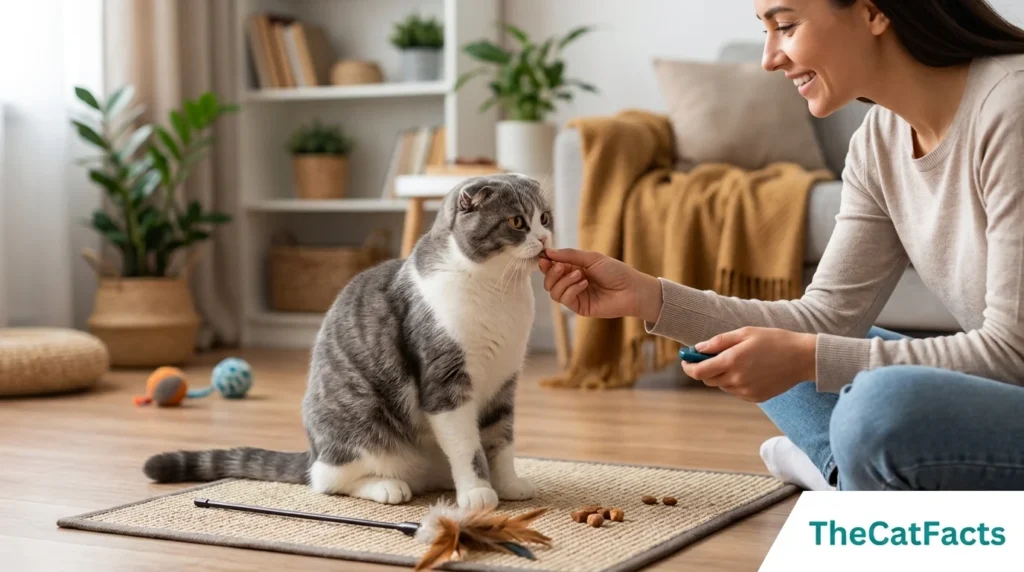
Scottish Fold cats are known for their sweet personalities, folded ears, and calm nature. While they are generally easygoing, they still need proper training to become confident, well-behaved companions. Good training helps prevent unwanted habits, strengthens your bond, and keeps your cat mentally stimulated throughout life.
Unlike dogs, cats are not trained through dominance or punishment. Scottish Folds respond best to patience, positive reinforcement, and consistency. Their intelligent and affectionate temperament makes them capable of learning routines, basic commands, leash walking, and even fun tricks when training sessions are enjoyable.
This comprehensive guide explains everything you need to know about Scottish Fold cat training, from preparing your home and understanding feline behavior to solving common behavior problems and creating a lifelong training routine. Whether you have a playful kitten or an older rescue, these techniques can help your cat succeed.
What Is Scottish Fold Cat Training?
Scottish Fold cat training is the process of teaching your cat desirable behaviors through rewards, repetition, and positive experiences. It includes litter training, scratching post use, socialization, handling, basic commands, carrier acceptance, and behavior management.
Training is not about forcing obedience. Instead, it helps your cat understand what behaviors earn rewards while reducing stress and confusion.
A well-trained Scottish Fold can learn to:
- Use the litter box consistently.
- Come when called.
- Sit on command.
- Enter a carrier willingly.
- Walk comfortably in a harness.
- Use scratching posts instead of furniture.
- Accept grooming and nail trimming.
- Travel with less anxiety.
- Interact politely with family members and visitors.
Even though every cat has its own personality, almost all Scottish Folds can learn these behaviors with enough patience.
Why Training Is Important
Training improves much more than behavior. It supports your cat’s physical health, emotional well-being, and overall quality of life.
Builds Confidence
Cats feel safer when they understand routines and expectations. Predictable training reduces anxiety and helps shy Scottish Folds become more comfortable in new situations.
Strengthens Your Bond
Training sessions create positive interactions between you and your cat. Reward-based learning teaches your Scottish Fold that spending time with you leads to enjoyable experiences.
Prevents Common Behavior Problems
Many unwanted behaviors develop because cats are bored, stressed, or confused. Early training can reduce problems such as:
- Furniture scratching
- Play aggression
- Litter box accidents
- Excessive meowing
- Counter jumping
- Fear of visitors
- Resistance to grooming
Makes Veterinary Care Easier
Cats that are comfortable with handling experience less stress during:
- Veterinary examinations
- Vaccinations
- Nail trimming
- Ear cleaning
- Medication administration
- Weight checks
Teaching these skills early can reduce fear throughout your cat’s life.
Understanding the Scottish Fold Personality
Scottish Fold cats have personality traits that influence how they learn. Understanding these characteristics helps you choose the most effective training methods.
Gentle and Affectionate
Most Scottish Folds enjoy spending time with their families. They often prefer learning alongside trusted people rather than training independently.
Intelligent but Calm
Scottish Folds are smart enough to recognize routines and solve simple puzzles. However, they usually learn at a relaxed pace rather than displaying constant energy.
Keep sessions short and enjoyable instead of expecting rapid progress.
Sensitive to Stress
Scottish Folds generally dislike loud noises, rough handling, and sudden environmental changes.
Training should always take place in a quiet, familiar area where your cat feels secure.
Food Motivated
Many Scottish Folds respond well to healthy treats during training.
Small rewards encourage learning without contributing excessive calories.
Curious Learners
Interactive toys, puzzle feeders, and clicker training can stimulate their minds while preventing boredom.
Scottish Fold Personality Traits and Training Impact
| Personality Trait | Training Effect | Best Approach |
| Gentle | Learns through trust | Positive reinforcement |
| Intelligent | Understands routines quickly | Consistent practice |
| Calm | Prefers slower sessions | Short daily lessons |
| Sensitive | Dislikes punishment | Gentle correction |
| Affectionate | Enjoys owner interaction | Praise and rewards |
| Curious | Loves mental challenges | Puzzle toys and games |
Best Age to Start Training
The best time to begin training is as soon as your kitten arrives home. However, cats of any age can continue learning.
8 to 12 Weeks
This is an ideal time to introduce:
- Litter habits
- Name recognition
- Gentle handling
- Carrier familiarity
- Scratching posts
- Family members
Keep lessons playful and brief.
3 to 6 Months
Kittens become more curious and adventurous.
This stage is perfect for teaching:
- Sit
- Come
- Target training
- Harness introduction
- Nail trimming acceptance
- Grooming routines
6 to 12 Months
Adolescent cats test boundaries and become more independent.
Continue reinforcing:
- Household rules
- Positive behaviors
- Daily routines
- Social interactions
Avoid inconsistent rules, as teenage cats quickly learn mixed signals.
Adult Scottish Folds
Older cats may require more patience, but they can still learn new behaviors successfully.
Training adult cats often takes longer because established habits must be replaced with better ones.
Training Goals by Age
| Age | Main Focus |
| 8 to 12 weeks | Socialization and litter training |
| 3 to 6 months | Basic commands and confidence |
| 6 to 12 months | Manners and advanced behaviors |
| Adult | Correct unwanted habits |
| Senior | Mental stimulation and gentle routines |
Preparing Before Training
Successful training begins before the first lesson.
Create an environment where your Scottish Fold feels comfortable and motivated.
Choose a Quiet Location
Avoid busy hallways, loud televisions, barking dogs, or distractions.
A peaceful room allows your cat to focus.
Remove Competing Rewards
Put away food bowls, toys, or anything that may distract your cat during short training sessions.
Pick the Right Time
Cats learn best when they are:
- Awake
- Calm
- Slightly hungry
- Interested in interaction
Avoid training immediately after meals or during naps.
Keep Sessions Short
Scottish Folds generally concentrate for only a few minutes at a time.
Aim for:
- 3 to 5 minutes for kittens
- 5 to 10 minutes for adults
Several short sessions each day are far more effective than one long lesson.
Essential Supplies for Scottish Fold Training
Having the right tools makes training easier and more enjoyable.
| Training Item | Purpose |
| Small soft treats | Reward desired behavior |
| Clicker | Marks correct actions instantly |
| Interactive toys | Keeps training fun |
| Scratching post | Encourages healthy scratching |
| Comfortable harness | Outdoor training |
| Lightweight leash | Harness practice |
| Treat pouch | Quick reward access |
| Puzzle feeder | Mental stimulation |
| Cat carrier | Travel and veterinary training |
| Grooming brush | Handling practice |
Choose treats that are small, highly palatable, and easy to chew so your cat stays engaged without overeating.
Core Principles of Successful Cat Training
Every successful training program follows the same basic principles.
Reward Good Behavior Immediately
Cats learn through timing.
Offer a reward within one or two seconds after the correct behavior. Delayed rewards make it difficult for your cat to understand what earned the treat.
Use Positive Reinforcement
Positive reinforcement means adding something your cat enjoys immediately after a desired behavior.
Examples include:
- Healthy treats
- Gentle petting
- Verbal praise
- Favorite toys
- Interactive play
This method encourages your cat to repeat the behavior.
Stay Consistent
Everyone in the household should use the same commands and rules.
For example:
If one family member allows jumping onto the kitchen counter while another discourages it, your Scottish Fold will receive mixed signals and learn more slowly.
Never Punish Your Cat
Avoid:
- Yelling
- Hitting
- Spraying water
- Shaking objects
- Physical correction
Punishment increases fear and may damage your relationship with your cat. It also fails to teach the behavior you actually want.
Instead, redirect unwanted actions toward appropriate alternatives and reward those choices.
End on a Positive Note
Finish each session after a successful behavior, even if it is a small achievement.
Ending with success helps your Scottish Fold look forward to the next lesson.
Building Trust Before Formal Training
A trusting relationship is the foundation of successful cat training.
Respect Personal Space
Allow your Scottish Fold to approach you voluntarily rather than forcing interaction.
This builds confidence and reduces fear.
Learn Body Language
Recognizing your cat’s signals helps prevent stress.
Signs your cat is relaxed include:
- Slow blinking
- Soft eyes
- Tail held naturally
- Gentle purring
- Curious exploration
Signs your cat needs a break include:
- Flattened ears
- Swishing tail
- Dilated pupils
- Hissing
- Growling
- Attempts to hide
Pause training if these stress signals appear.
Create Predictable Routines
Feed, play, groom, and train at similar times each day.
Predictable routines help Scottish Folds feel secure and improve learning.
Creating a Daily Training Routine
Consistency matters more than long practice sessions.
A simple daily routine may look like this:
| Time | Activity |
| Morning | Name recognition and basic command practice |
| Afternoon | Puzzle toy or enrichment game |
| Evening | Scratching post practice and interactive play |
| Before bedtime | Gentle handling and grooming practice |
Even 15 to 20 minutes of structured interaction spread throughout the day can significantly improve your cat’s behavior and confidence.
First Week Scottish Fold Training Plan
If you have just brought home a Scottish Fold kitten or adopted an adult cat, avoid trying to teach everything at once. Focus on helping your cat feel safe while introducing one or two simple skills each day.
Day 1, Let Your Cat Settle In
Allow your Scottish Fold to explore one quiet room with food, water, a litter box, a bed, and a scratching post. Spend time nearby without forcing interaction. Reward your cat for approaching you voluntarily.
Day 2, Introduce Name Recognition
Say your cat’s name in a cheerful voice. When your cat looks toward you, immediately offer a treat or gentle praise. Repeat this several times during the day.
Day 3, Encourage Scratching Post Use
Place the scratching post near your cat’s favorite resting area. Sprinkle a little catnip on it if appropriate, or use a toy to encourage scratching. Reward any interaction with the post.
Day 4, Begin Gentle Handling
Briefly touch your cat’s paws, ears, and tail while offering treats. These short sessions prepare your Scottish Fold for grooming and veterinary visits.
Day 5, Introduce the Carrier
Leave the carrier open in a familiar room with a soft blanket inside. Toss treats into the carrier so your cat explores it willingly instead of viewing it as something scary.
Day 6, Practice Following a Treat
Hold a treat slightly above your cat’s nose and move it slowly. Reward your cat for following the treat calmly. This simple exercise prepares your cat for learning commands in later training.
Day 7, Review and Reinforce
Repeat the behaviors your cat learned during the week. Keep sessions fun, short, and rewarding. Building confidence is more important than teaching many new skills quickly.
By the end of the first week, most Scottish Folds understand their new environment better, recognize their name, and begin forming positive associations with training. These early successes create a strong foundation for more advanced skills, including litter training, clicker training, harness walking, and behavior correction, which are covered in the next section.
Litter Box Training
Litter box training is one of the first and most important lessons for a Scottish Fold. Most kittens naturally want to bury their waste, but they still need the right setup and routine to develop reliable habits.
Choose the Right Litter Box
The best litter box is large enough for your cat to turn around comfortably.
For kittens:
- Use a low-sided litter box for easy access.
- Avoid very high entrances.
- Place it away from food and water bowls.
For adult Scottish Folds:
- Choose a box at least 1.5 times your cat’s body length.
- Large breeds or bigger Scottish Folds may prefer oversized litter boxes.
Select a Cat-Friendly Litter
Many Scottish Folds prefer:
- Unscented clumping litter
- Fine-textured litter
- Soft litter that is gentle on their paws
Strong fragrances may discourage some cats from using the box.
Place the Box in the Right Location
Good locations include:
- Quiet rooms
- Low-traffic areas
- Easily accessible spaces
- Away from loud appliances
Avoid placing litter boxes:
- Next to washing machines
- Beside noisy air conditioners
- Near busy hallways
- Close to food dishes
Keep It Clean
Cats naturally avoid dirty litter boxes.
A good cleaning routine includes:
- Scoop waste at least once daily.
- Replace litter regularly.
- Wash the box with mild soap and warm water.
- Avoid heavily scented cleaners.
If Accidents Happen
Never punish your cat.
Instead:
- Clean the area using an enzymatic cleaner.
- Check whether the litter box is clean.
- Rule out medical problems if accidents suddenly begin.
- Reduce household stress if recent changes occurred.
Frequent urination outside the litter box can sometimes indicate urinary tract disease or other medical conditions. Contact your veterinarian if accidents continue despite proper training.
Litter Box Troubleshooting
| Problem | Possible Cause | Solution |
| Urinating outside box | Dirty litter | Scoop more often |
| Avoiding litter box | Box too small | Upgrade size |
| Digging but not using | Litter dislike | Try another unscented litter |
| Multiple accidents | Stress | Identify environmental triggers |
| Sudden accidents | Medical illness | Schedule a veterinary examination |
Teaching Your Scottish Fold to Use a Scratching Post
Scratching is a completely normal feline behavior. It helps cats stretch muscles, remove old nail layers, and mark territory.
Instead of trying to stop scratching, teach your Scottish Fold where it is appropriate.
Choose the Right Scratching Surface
Some cats prefer:
- Vertical sisal posts
- Horizontal cardboard scratchers
- Carpet-style scratchers
- Wooden scratching boards
Offering multiple options helps identify your cat’s preference.
Placement Matters
Place scratching posts:
- Near sleeping areas
- Close to favorite windows
- Beside furniture your cat already scratches
Cats naturally stretch and scratch after waking up.
Encourage Interest
Try:
- Catnip
- Silvervine
- Dangling toys
- Treat rewards
- Interactive play
Reward every successful use.
Protect Furniture
If your cat scratches furniture:
- Cover the area temporarily.
- Move a scratching post beside it.
- Reward use of the scratching post.
- Gradually move the post to the desired location.
Avoid declawing, as it is a painful surgical procedure associated with long-term physical and behavioral problems.
Clicker Training for Scottish Fold Cats
Clicker training uses a small device that makes a clicking sound to mark the exact moment your cat performs the desired behavior.
The click tells your cat, “That is exactly what earned the reward.”
Step 1: Charge the Clicker
Click once.
Immediately give a treat.
Repeat this 15 to 20 times over several sessions.
Soon your cat will associate the click with a reward.
Step 2: Reward Simple Behaviors
Click when your cat:
- Looks at you
- Touches your hand
- Sits naturally
- Comes closer
- Steps onto a mat
Reward immediately after every click.
Step 3: Increase Difficulty
Once your cat understands the clicker, begin teaching:
- Sit
- High five
- Spin
- Come
- Jump onto a platform
- Enter the carrier
- Touch a target stick
Scottish Folds often enjoy clicker sessions because they are mentally stimulating and rewarding.
Teaching Basic Commands
Cats may not respond like dogs, but they can learn several useful commands through repetition and rewards.
Name Recognition
Say your cat’s name once.
When your cat looks at you:
- Click (if using a clicker)
- Reward immediately
Never repeatedly say your cat’s name without a reason, as it may lose meaning.
Come When Called
Call your cat using a cheerful voice.
Reward every successful response.
Practice in different rooms before introducing distractions.
Sit
Hold a treat slightly above your cat’s nose.
As your cat naturally raises its head, many cats will lower their hindquarters into a sitting position.
The moment your cat sits:
- Click
- Reward
- Say “Sit”
Repeat consistently.
Target Training
Use your finger or a target stick.
Reward your Scottish Fold whenever it touches the target with its nose.
Target training becomes the foundation for many advanced behaviors.
Basic Command Progression
| Command | Average Learning Difficulty | Purpose |
| Name | Easy | Attention |
| Come | Easy | Recall |
| Sit | Moderate | Manners |
| Touch | Easy | Foundation behavior |
| High Five | Moderate | Mental enrichment |
| Spin | Moderate | Fun trick |
| Go to Mat | Moderate | Calm behavior |
| Carrier | Moderate | Easier travel |
Carrier Training
Many cats only see their carrier before a veterinary visit, making it something they fear.
Training changes that association.
Keep the Carrier Available
Leave it open year-round.
Place inside:
- Soft bedding
- Favorite blanket
- Toys
- Occasional treats
Feed Near the Carrier
Gradually move food:
- Beside the carrier
- At the entrance
- Just inside
- Fully inside
Allow your cat to progress at its own pace.
Practice Closing the Door
Once comfortable:
- Close the door briefly.
- Reward calmly.
- Reopen immediately.
Increase the duration gradually.
Take Short Practice Trips
Drive around the block occasionally.
Reward your cat afterward.
This helps prevent your Scottish Fold from associating the carrier only with stressful events.
Harness and Leash Training
Some Scottish Folds enjoy supervised outdoor adventures when introduced properly.
Never attach a leash to a collar.
Always use a secure cat harness.
Step 1: Introduce the Harness
Place it near your cat for several days.
Allow sniffing and exploration.
Reward curiosity.
Step 2: Wear It Indoors
Put the harness on for:
- One minute
- Three minutes
- Five minutes
- Ten minutes
Reward calm behavior throughout.
Step 3: Attach the Leash
Let your cat drag the lightweight leash indoors under supervision.
Never pull the leash.
Instead, encourage movement using treats or toys.
Step 4: Explore Outdoors
Choose:
- Quiet gardens
- Secure patios
- Calm parks
- Low-traffic areas
Keep early outdoor sessions short.
Watch carefully for signs of stress.
Socialization Training
Scottish Folds generally enjoy companionship, but proper socialization helps them remain confident throughout life.
Introduce New People Gradually
Allow visitors to:
- Sit quietly
- Offer treats
- Avoid staring directly
- Let the cat approach voluntarily
Forced interaction often delays progress.
Introducing Other Cats
Take introductions slowly.
Begin with:
- Separate rooms.
- Scent swapping.
- Visual introductions through a barrier.
- Supervised meetings.
- Full access only when both cats appear relaxed.
Introducing Dogs
Dogs should:
- Remain calm.
- Be on a leash initially.
- Avoid chasing.
- Ignore the cat until the cat feels comfortable approaching.
Always provide elevated escape routes for your Scottish Fold.
Preventing Biting During Play
Play biting is common in kittens but should not become a lifelong habit.
Redirect Instead of Punishing
If biting begins:
- Stop moving your hand.
- End play briefly.
- Offer a toy instead.
Your cat learns that toys, not hands, are appropriate targets.
Avoid Rough Play
Never encourage:
- Wrestling with hands
- Finger chasing
- Hand attacks under blankets
These games teach cats that human skin is a toy.
Reward Gentle Behavior
Whenever your Scottish Fold plays appropriately:
- Praise calmly.
- Continue play.
- Offer treats occasionally.
Positive reinforcement builds better habits.
Preventing Scratching and Furniture Damage
Cats scratch for exercise, communication, and nail maintenance.
Instead of stopping the behavior, redirect it.
Helpful strategies include:
- Multiple scratching posts
- Window perches
- Daily play sessions
- Puzzle feeders
- Nail trimming every few weeks
- Furniture protectors during training
A bored cat is much more likely to damage furniture than a mentally stimulated one.
Training Adult Scottish Fold Cats
Adult cats can absolutely learn new behaviors.
Success depends on patience and consistency rather than age.
Replace Old Habits Slowly
Focus on teaching the desired behavior instead of trying to eliminate the unwanted one immediately.
For example:
Instead of constantly stopping counter jumping, teach your cat to go to a nearby cat tree and reward that choice.
Increase Motivation
Adult cats often respond well to:
- High-value treats
- Freeze-dried meat treats
- Short play sessions
- Favorite toys
Find what motivates your individual cat.
Keep Expectations Realistic
Adult cats may need:
- More repetitions
- Slower progression
- Longer adjustment periods
Small improvements each week are signs of successful training.
Training Senior Scottish Fold Cats
Older Scottish Folds still benefit from learning, but their physical abilities may change with age. Some Scottish Folds are also prone to joint problems associated with the gene responsible for their folded ears, making gentle training especially important.
Adapt sessions by:
- Keeping lessons to 3 to 5 minutes.
- Using low platforms instead of high jumps.
- Choosing soft treats that are easy to chew.
- Providing non-slip surfaces for stability.
- Scheduling training when your cat is alert but relaxed.
If your senior cat seems reluctant to move, becomes stiff after activity, or shows signs of pain, arrange a veterinary examination before continuing training. Adjusting the training plan to your cat’s comfort level helps maintain confidence while protecting long-term health.
Solving Common Scottish Fold Behavior Problems
Behavior problems are often signs that a cat’s physical or emotional needs are not being met. Before assuming your Scottish Fold is being stubborn, consider whether stress, boredom, illness, or inconsistent training may be contributing to the issue.
Address problems calmly and consistently. If a new behavior appears suddenly, especially in a previously well-behaved cat, schedule a veterinary examination to rule out an underlying medical condition.
Excessive Meowing
Scottish Folds are usually quieter than many other breeds, but some individuals become vocal when they want attention, food, or stimulation.
Possible causes include:
- Hunger
- Loneliness
- Boredom
- Stress
- Aging-related cognitive changes
- Medical conditions
How to help:
- Feed on a consistent schedule.
- Increase daily playtime.
- Provide puzzle feeders.
- Avoid rewarding excessive meowing with immediate attention.
- Reward calm, quiet behavior instead.
Counter Surfing
Cats naturally seek high places to observe their surroundings.
Instead of repeatedly removing your cat from counters:
- Provide a tall cat tree nearby.
- Reward your cat for using approved climbing areas.
- Keep food off kitchen counters.
- Block access when training if necessary.
Nighttime Activity
Cats are naturally more active during dawn and dusk.
Reduce late-night zoomies by:
- Scheduling an energetic play session before bedtime.
- Feeding a small meal afterward.
- Providing interactive toys for independent play.
This routine often encourages your Scottish Fold to rest through more of the night.
Fear of Visitors
Some Scottish Folds hide when unfamiliar people visit.
Help them feel safe by:
- Providing quiet hiding spaces.
- Allowing voluntary interaction.
- Asking visitors not to chase or pick up the cat.
- Offering treats when guests are present.
Building positive experiences gradually increases confidence.
Separation-Related Stress
Scottish Folds often form close bonds with their families. Some may become anxious when left alone for long periods.
Helpful strategies include:
- Puzzle feeders before leaving home.
- Window perches for entertainment.
- Automatic toys with timers.
- Consistent departure and arrival routines.
- Interactive play before you leave.
Common Behavior Problems and Solutions
| Behavior | Common Causes | Recommended Solution |
| Furniture scratching | Normal scratching behavior | Provide multiple scratching posts |
| Biting during play | Overstimulation | Redirect to toys |
| Counter jumping | Seeking height | Offer cat trees |
| Nighttime activity | Natural instincts | Evening play session |
| Excessive meowing | Attention seeking or boredom | Reward quiet behavior |
| Hiding | Fear or anxiety | Gradual socialization |
| Litter box accidents | Stress or illness | Clean box and consult a veterinarian if persistent |
Mental Enrichment for Scottish Folds
Training alone is not enough. Mental stimulation helps prevent boredom and reduces unwanted behaviors.
Aim to provide several enrichment activities each day.
Food Puzzles
Puzzle feeders encourage problem-solving while slowing down eating.
They also help satisfy your cat’s natural hunting instincts.
Interactive Play
Use toys that imitate prey, such as:
- Feather wands
- Ribbon toys
- Toy mice
- Small balls
- Motorized toys (used in moderation)
Rotate toys weekly to maintain interest.
Climbing Opportunities
Cats enjoy observing their environment from above.
Provide:
- Cat trees
- Wall shelves
- Window perches
- Multi-level furniture
These spaces also give your Scottish Fold a sense of security.
Scent Enrichment
Safe scent experiences can increase curiosity.
Examples include:
- Catnip
- Silvervine
- Dried valerian root (if recommended for cats)
- Cardboard boxes from new deliveries
Introduce new scents occasionally rather than every day.
Training Games
Training itself is excellent mental exercise.
Practice:
- Recall
- Sit
- Target touching
- Spin
- High five
- Going to a mat
Even five minutes of learning provides valuable enrichment.
Daily Exercise Needs
Although Scottish Folds are relatively calm, they still require regular physical activity.
Without enough exercise, they may become overweight or develop behavior problems.
Recommended Daily Activity
| Age | Daily Interactive Exercise |
| Kitten | 45 to 90 minutes |
| Adult | 30 to 60 minutes |
| Senior | 15 to 30 minutes, adjusted for comfort |
Break exercise into several short sessions rather than one long workout.
Signs Your Cat Needs More Activity
Your Scottish Fold may need additional exercise if it:
- Gains excess weight.
- Sleeps almost all day without playing.
- Frequently seeks attention.
- Chases feet or hands.
- Scratches furniture more often.
- Appears restless at night.
Reward Guide for Training
Not every reward works for every cat. Discover what motivates your Scottish Fold the most.
| Reward Type | Best Use |
| Small meat treats | Learning new skills |
| Freeze-dried treats | High-value rewards |
| Gentle praise | Reinforcing familiar behaviors |
| Petting | Cats that enjoy affection |
| Interactive play | Ending successful sessions |
| Catnip toy | Occasional enrichment reward |
Avoid giving large treats during training, as too many calories can contribute to obesity.
Weekly Training Schedule
| Day | Focus |
| Monday | Name recognition and recall |
| Tuesday | Scratching post practice |
| Wednesday | Sit and target training |
| Thursday | Carrier confidence |
| Friday | Harness practice |
| Saturday | Socialization and grooming |
| Sunday | Review and fun tricks |
Repeating this schedule helps maintain skills without overwhelming your cat.
Common Training Mistakes to Avoid
Even experienced owners sometimes make training more difficult without realizing it.
Expecting Immediate Results
Cats learn at different speeds.
Celebrate small improvements instead of expecting perfect behavior after only a few sessions.
Training Too Long
Long sessions often lead to boredom.
Several short sessions each day are much more effective.
Inconsistent Rules
If one person allows certain behaviors while another discourages them, your cat becomes confused.
Ensure everyone follows the same household rules.
Using Punishment
Punishment increases stress and may create fear.
Instead:
- Redirect unwanted behavior.
- Reward the correct choice.
- Stay patient and consistent.
Ignoring Medical Problems
Behavior changes are sometimes caused by illness.
Seek veterinary advice if your Scottish Fold suddenly develops:
- Aggression
- Litter box problems
- Reduced activity
- Pain when moving
- Loss of appetite
- Excessive vocalization
Veterinary Advice
Training works best when your Scottish Fold is healthy and comfortable.
Schedule regular veterinary visits to monitor:
- Body weight
- Dental health
- Joint mobility
- Ear health
- Vaccinations
- Parasite prevention
Scottish Folds deserve special attention to their joints because the genetic mutation responsible for folded ears is also associated with cartilage abnormalities. Some cats develop stiffness or pain that can affect movement and willingness to participate in training.
If your cat shows signs such as limping, reluctance to jump, swollen joints, or decreased activity, consult your veterinarian before continuing physical training exercises.
Emergency Warning Signs
Stop training and contact a veterinarian promptly if your Scottish Fold develops:
- Difficulty breathing
- Collapse
- Persistent vomiting
- Bloody urine
- Inability to urinate
- Severe lameness
- Sudden paralysis
- Continuous crying from pain
- Seizures
- Extreme lethargy
- Refusal to eat for more than 24 hours (or sooner for kittens)
Training should never continue if your cat appears ill or injured.
Scottish Fold Training Checklist
Use this checklist to track your cat’s progress.
Daily Checklist
- Feed on a consistent schedule.
- Complete one or two short training sessions.
- Scoop the litter box.
- Provide interactive play.
- Reward positive behaviors.
- Offer fresh water.
- Check scratching posts for wear.
Weekly Checklist
- Practice carrier training.
- Review basic commands.
- Rotate toys.
- Trim nails if needed.
- Brush your cat.
- Weigh your cat if recommended by your veterinarian.
- Inspect ears, eyes, and paws.
Myths vs Facts About Scottish Fold Training
| Myth | Fact |
| Cats cannot be trained. | Cats learn well through positive reinforcement. |
| Older cats cannot learn. | Adult and senior cats can learn new behaviors. |
| Punishment works best. | Rewards produce better long-term results. |
| Cats only respond to food. | Many also enjoy toys, praise, and play. |
| Scottish Folds are lazy. | They are calm, but still need daily exercise and mental stimulation. |
Expert Tips for Long-Term Success
- Train every day, even if only for five minutes.
- End each session with a success.
- Introduce new skills gradually.
- Reward generously when teaching something new.
- Keep training enjoyable rather than demanding.
- Rotate rewards to maintain motivation.
- Provide daily opportunities to climb, scratch, and explore.
- Watch your cat’s body language and stop before frustration develops.
- Adjust training to your cat’s age, health, and personality.
- Remember that patience and consistency are the keys to lasting success.
Conclusion
Training a Scottish Fold is about much more than teaching commands. It is an opportunity to build trust, encourage healthy behaviors, and strengthen the relationship you share with your cat. With positive reinforcement, short and consistent training sessions, and plenty of patience, Scottish Folds can learn everything from reliable litter box habits to advanced tricks and confident carrier travel.
Remember that every cat learns at its own pace. Focus on progress rather than perfection, provide regular mental and physical enrichment, and always consider your cat’s health when creating a training plan. A well-trained Scottish Fold is not only easier to live with but is also more confident, engaged, and prepared for a happy, healthy life.
FAQs
How long does it take to train a Scottish Fold cat?
Most Scottish Folds begin learning simple behaviors within a few days, but consistent training over several weeks produces reliable results. Every cat learns at a different pace, so patience, daily practice, and positive reinforcement are essential for long-term success.
Are Scottish Fold cats easy to train?
Yes. Scottish Folds are generally intelligent, calm, and people-oriented, making them responsive to reward-based training. They often learn routines, basic commands, and household manners when sessions are short, enjoyable, and consistent.
Can adult Scottish Fold cats still be trained?
Absolutely. Adult Scottish Folds can learn new skills and replace unwanted habits with positive behaviors. They may need more repetition than kittens, but age does not prevent successful learning.
Should I use treats during every training session?
Treats are helpful when introducing new behaviors. As your cat becomes reliable, gradually replace some food rewards with praise, petting, or play while continuing to reward excellent performance occasionally.
Is clicker training necessary?
No. Clicker training is helpful because it marks the exact behavior being rewarded, but it is not required. Consistent verbal praise and immediate rewards can also produce excellent results.
Can Scottish Fold cats walk on a leash?
Many Scottish Folds can learn to walk on a harness and leash through gradual indoor training followed by supervised outdoor practice. Never attach a leash directly to a collar, and always monitor your cat closely outside.
Why does my Scottish Fold suddenly stop responding to training?
Sudden changes in behavior may result from stress, illness, pain, or changes in the home environment. If your cat seems uncomfortable or loses interest unexpectedly, consult your veterinarian before assuming it is a training problem.
How often should I train my Scottish Fold?
Most cats benefit from two to four short sessions each day. Five to ten minutes per session is usually enough to keep your Scottish Fold engaged without causing boredom or frustration.
Do Scottish Fold cats need mental enrichment if they stay indoors?
Yes. Indoor Scottish Folds still need opportunities to explore, solve problems, climb, scratch, and play. Enrichment helps prevent boredom, obesity, and many common behavior problems.
Can training improve my Scottish Fold’s relationship with children and other pets?
Yes. Proper socialization and positive reinforcement help Scottish Folds become more confident around children and other animals. Introductions should always be gradual, supervised, and based on positive experiences.

Isabella Morgan is a Veterinary Content Researcher with more than 12 years of experience researching companion animal health, preventive veterinary care, pet nutrition, and animal welfare. She specializes in translating complex veterinary information into clear, accurate, and reader friendly content that helps pet owners make informed decisions about the health and well being of their animals.