
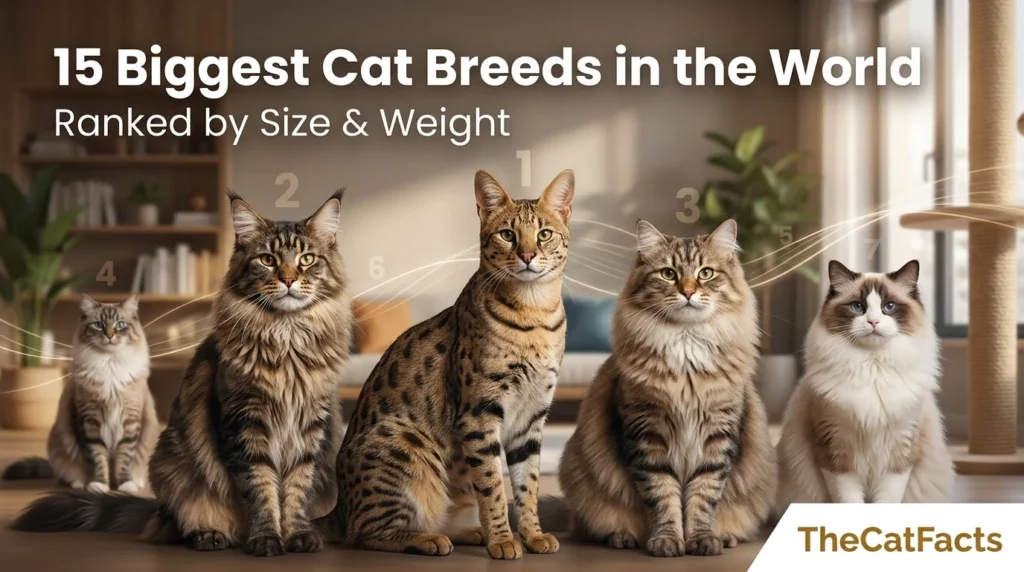
Large cat breeds combine impressive size with affectionate personalities, making them popular among families and experienced cat owners alike. While some giant cats resemble their wild ancestors, most are gentle companions that thrive in loving homes. Their larger bodies require specialized nutrition, regular veterinary care, and enough space to stay active and healthy.
This guide ranks the 15 biggest cat breeds in the world by their typical size and weight while exploring their personalities, care needs, health concerns, grooming requirements, and suitability for different households. You’ll also learn what influences a cat’s size, how veterinarians measure healthy growth, and whether a giant cat is the right fit for your lifestyle.
Biggest Cat Breeds at a Glance
The following table compares the world’s largest domestic cat breeds. Individual cats may be larger or smaller depending on genetics, diet, and overall health.
| Rank | Breed | Average Weight | Average Length | Coat Type | Activity Level |
| 1 | Maine Coon | 10 to 25 pounds | Up to 40 inches | Long | Moderate |
| 2 | Savannah | 12 to 25 pounds | Up to 44 inches | Short | Very High |
| 3 | Norwegian Forest Cat | 12 to 20 pounds | Up to 36 inches | Long | Moderate |
| 4 | Ragdoll | 10 to 20 pounds | Up to 40 inches | Semi-long | Moderate |
| 5 | Ragamuffin | 10 to 20 pounds | Up to 40 inches | Semi-long | Moderate |
| 6 | Chausie | 15 to 25 pounds | Up to 40 inches | Short | Very High |
| 7 | Siberian | 10 to 20 pounds | Up to 35 inches | Long | Moderate |
| 8 | Turkish Van | 10 to 20 pounds | Up to 36 inches | Semi-long | High |
| 9 | American Bobtail | 9 to 18 pounds | Up to 36 inches | Short or Long | Moderate |
| 10 | British Shorthair | 9 to 18 pounds | Up to 30 inches | Short | Low to Moderate |
| 11 | Bengal | 8 to 18 pounds | Up to 36 inches | Short | Very High |
| 12 | Highlander | 10 to 20 pounds | Up to 36 inches | Short | High |
| 13 | Selkirk Rex | 10 to 16 pounds | Up to 30 inches | Curly | Moderate |
| 14 | Pixie-bob | 8 to 17 pounds | Up to 34 inches | Short or Long | Moderate |
| 15 | Turkish Angora | 8 to 15 pounds | Up to 30 inches | Long | High |
Quick Answer: The Maine Coon is generally considered the largest domestic cat breed by overall body size, while Savannah cats are often the tallest and longest due to their long legs and lean build.
How Is a Cat’s Size Measured?
A cat’s size is more than just its weight. Veterinarians evaluate several measurements to determine whether a cat is truly large and whether it is maintaining a healthy body condition.
Weight
Body weight provides a general idea of size, but healthy muscle is more important than extra fat. A 20-pound athletic cat is healthier than a 20-pound overweight cat.
Body Length
Length is measured from the nose to the tip of the tail. Some breeds appear much larger because they have exceptionally long bodies.
Height
Some breeds, especially the Savannah, have long legs that make them much taller than average house cats.
Bone Structure
Large breeds naturally have broader shoulders, larger paws, and thicker bones. Their heavier skeleton contributes significantly to their overall size.
Body Condition Score
Veterinarians commonly use a Body Condition Score (BCS) to determine whether a cat’s weight is appropriate. A giant breed should still have a visible waist and easily felt ribs without excessive fat covering them.
What Determines How Big a Cat Becomes?
Several factors influence the final size of a domestic cat.
Genetics
Genetics plays the biggest role. Large-breed parents usually produce larger kittens, although there can be variation within the same litter.
Breed
Certain breeds have been selectively developed for greater size, stronger bones, and slower growth.
Nutrition
Balanced nutrition during kittenhood supports proper bone and muscle development. Poor nutrition can stunt growth, while excessive calories increase obesity risk.
Neutering or Spaying
Cats altered before reaching maturity may develop slightly longer limbs because growth plates remain open a bit longer. However, genetics still has the greatest influence on adult size.
Overall Health
Parasites, chronic illness, hormonal disorders, and severe nutritional deficiencies during kittenhood may affect growth.
Growth Rate
Unlike many smaller breeds that mature within a year, giant breeds often continue growing for several years.
| Breed Type | Typical Time to Full Maturity |
| Average Domestic Cat | 12 to 18 months |
| Large Cat Breeds | 2 to 3 years |
| Maine Coon | 3 to 5 years |
Are Large Cat Breeds Good Family Pets?
Yes. Many giant cat breeds are known for their calm, friendly personalities. Despite their impressive appearance, most are gentle and affectionate.
They often enjoy:
- Spending time with people
- Playing interactive games
- Following owners around the house
- Living with respectful children
- Sharing a home with other pets when introduced properly
However, they also require:
- Larger litter boxes
- Bigger scratching posts
- Stronger cat trees
- More food than average cats
- Routine veterinary care to monitor joint health and weight
15 Biggest Cat Breeds in the World
15. Turkish Angora
The Turkish Angora is an elegant natural breed known for its graceful appearance, silky coat, and surprising athletic ability. Although it ranks among the lighter giant breeds, its long body and refined frame make it appear larger than many average cats.
Average Size
| Characteristic | Measurement |
| Weight | 8 to 15 pounds |
| Length | Up to 30 inches |
| Lifespan | 12 to 18 years |
Personality
Turkish Angoras are intelligent, curious, and highly interactive. They enjoy climbing, exploring high places, and participating in family activities.
Common personality traits include:
- Affectionate
- Playful
- Vocal
- Curious
- Confident
Care Needs
These cats benefit from:
- Weekly brushing
- Interactive toys
- Puzzle feeders
- Tall climbing trees
- Daily play sessions
Health Considerations
Most Turkish Angoras are healthy, although some may inherit hearing loss, especially white cats with blue eyes. Regular veterinary examinations help detect health issues early.
14. Pixie-bob
The Pixie-bob has a rugged, wild appearance that resembles a bobcat, but it is completely domestic. Its muscular body, broad chest, and sturdy legs create the impression of a much larger cat.
Average Size
| Characteristic | Measurement |
| Weight | 8 to 17 pounds |
| Length | Up to 34 inches |
| Lifespan | 13 to 15 years |
Personality
Pixie-bobs are often compared to dogs because they form strong bonds with their owners and can learn simple commands.
They are known for being:
- Loyal
- Calm
- Intelligent
- Patient
- Social
Care Requirements
Owners should provide:
- High-quality protein-rich food
- Moderate daily exercise
- Routine nail trimming
- Weekly coat maintenance
- Large scratching posts
Health
This breed generally enjoys good health. Maintaining a healthy weight helps reduce stress on the joints throughout life.
13. Selkirk Rex
The Selkirk Rex stands out because of its distinctive curly coat, sturdy body, and affectionate personality. Beneath its soft curls is a surprisingly muscular frame.
Average Size
| Characteristic | Measurement |
| Weight | 10 to 16 pounds |
| Length | Up to 30 inches |
| Lifespan | 12 to 15 years |
Personality
Selkirk Rex cats are gentle companions that enjoy relaxing with their families while still appreciating daily playtime.
Typical traits include:
- Patient
- Friendly
- Easygoing
- Loving
- Adaptable
Grooming
Unlike many curly-coated animals, excessive brushing can damage the curls. Gentle combing every week is usually enough.
Health
Potential concerns include:
- Obesity
- Polycystic kidney disease in some bloodlines
- Heart disease screening in breeding programs
Routine wellness examinations help detect inherited conditions early.
12. Highlander
The Highlander is a relatively modern breed recognized for its curled ears, muscular body, and energetic personality. Despite its exotic appearance, it is fully domestic.
Average Size
| Characteristic | Measurement |
| Weight | 10 to 20 pounds |
| Length | Up to 36 inches |
| Lifespan | 10 to 15 years |
Personality
Highlanders remain playful well into adulthood.
Owners often describe them as:
- Outgoing
- Athletic
- Friendly
- Curious
- Highly interactive
Daily Care
This breed needs:
- Plenty of exercise
- Interactive climbing spaces
- Puzzle toys
- Daily play sessions
- Balanced nutrition
Health
The Highlander is generally considered healthy, although maintaining a lean body condition helps protect joints and supports long-term mobility.
11. Bengal
The Bengal is famous for its striking spotted coat that resembles a leopard. While not the heaviest cat on this list, its muscular build, athletic body, and exceptional strength earn it a place among the world’s biggest cat breeds.
Average Size
| Characteristic | Measurement |
| Weight | 8 to 18 pounds |
| Length | Up to 36 inches |
| Lifespan | 12 to 16 years |
Personality
Bengals are among the most energetic domestic cat breeds.
They typically enjoy:
- Running
- Climbing
- Water play
- Learning tricks
- Interactive games
These cats require significantly more mental stimulation than many other breeds.
Care Requirements
A healthy Bengal thrives with:
- High-protein nutrition
- Daily exercise
- Tall cat trees
- Puzzle feeders
- Rotating interactive toys
Without enough enrichment, Bengals may become bored and develop unwanted behaviors.
Health Considerations
Responsible breeders screen Bengals for inherited conditions such as hypertrophic cardiomyopathy and progressive retinal atrophy. Regular veterinary visits, a healthy diet, and consistent exercise help support a long, active life.
10. British Shorthair
The British Shorthair is one of the oldest and most recognizable cat breeds. Although it is not as long as the Maine Coon or Savannah, its broad chest, thick bones, and dense muscles make it one of the heaviest domestic cats. Its calm personality also makes it a favorite for families and apartment living.
Average Size
| Characteristic | Measurement |
| Weight | 9 to 18 pounds |
| Length | Up to 30 inches |
| Lifespan | 12 to 20 years |
Personality
British Shorthairs are known for their quiet and independent nature. They enjoy spending time with their families but usually are not overly demanding.
Common personality traits include:
- Calm
- Gentle
- Loyal
- Quiet
- Easygoing
Daily Care
Although they have short coats, regular grooming keeps shedding under control.
Provide:
- Weekly brushing
- High-quality protein diet
- Daily interactive play
- Weight monitoring
- Comfortable resting areas
Health Considerations
British Shorthairs can gain weight easily because they are less active than many other breeds.
Veterinarians recommend:
- Measuring meal portions
- Encouraging daily exercise
- Monitoring body condition score
- Routine heart screenings when advised
- Annual wellness exams
Best Home
This breed is ideal for:
- Families
- Seniors
- Apartment owners
- First-time cat owners
- Homes with respectful children
9. American Bobtail
The American Bobtail is a naturally occurring breed recognized by its short tail, athletic body, and intelligent personality. Its muscular frame gives it a much larger appearance than many medium-sized cats.
Average Size
| Characteristic | Measurement |
| Weight | 9 to 18 pounds |
| Length | Up to 36 inches |
| Lifespan | 13 to 15 years |
Personality
These cats are affectionate without being overly clingy.
Owners often describe them as:
- Intelligent
- Curious
- Friendly
- Confident
- Adaptable
Many American Bobtails enjoy leash training and interactive games.
Care Requirements
This breed benefits from:
- Large scratching posts
- Daily play sessions
- Puzzle toys
- Balanced nutrition
- Weekly grooming
Health
The breed is generally healthy, although responsible breeders monitor for spinal abnormalities associated with very short tails.
Maintaining a healthy weight also helps reduce pressure on joints.
Interesting Fact
American Bobtails mature slowly compared to many domestic cats, reaching their full size at around two to three years of age.
8. Turkish Van
Often called the “swimming cat,” the Turkish Van is famous for its fascination with water. Its broad shoulders, powerful hind legs, and athletic body make it one of the largest naturally occurring cat breeds.
Average Size
| Characteristic | Measurement |
| Weight | 10 to 20 pounds |
| Length | Up to 36 inches |
| Lifespan | 12 to 17 years |
Personality
Turkish Vans are active and adventurous.
They commonly enjoy:
- Climbing
- Jumping
- Playing fetch
- Water games
- Exploring new environments
Grooming Needs
Their semi-long coat lacks a thick undercoat, making grooming easier than many long-haired breeds.
Brush them:
- Once or twice each week
- More often during seasonal shedding
Nutrition
Active breeds burn more calories than sedentary cats.
Feed:
- High-quality animal protein
- Balanced fats
- Fresh drinking water
- Portion-controlled meals
Avoid frequent treats that may contribute to obesity.
Health
Turkish Vans are generally robust, but routine veterinary care remains essential throughout life.
7. Siberian
The Siberian developed naturally in Russia’s harsh climate. Its dense triple coat, muscular body, and remarkable agility allow it to thrive even in cold environments.
Despite its size, the Siberian is surprisingly graceful.
Average Size
| Characteristic | Measurement |
| Weight | 10 to 20 pounds |
| Length | Up to 35 inches |
| Lifespan | 12 to 18 years |
Personality
Siberians are affectionate without being demanding.
They are often described as:
- Loyal
- Intelligent
- Gentle
- Playful
- Confident
Many owners say Siberians enjoy greeting family members at the door.
Coat Care
Their thick coat requires consistent grooming.
Brush:
- Two to three times weekly
- Daily during seasonal shedding
Regular grooming reduces matting and hairballs.
Exercise
Although calm indoors, Siberians remain athletic.
Encourage activity with:
- Cat trees
- Interactive toys
- Puzzle feeders
- Climbing shelves
- Chase games
Health Concerns
Potential health issues include:
- Hypertrophic cardiomyopathy
- Obesity
- Dental disease
Regular veterinary examinations and weight management greatly reduce long-term health risks.
6. Chausie
The Chausie is one of the tallest and most athletic domestic cat breeds. Developed from crosses between domestic cats and jungle cats many generations ago, today’s Chausie is an energetic companion requiring experienced ownership.
Its lean muscles make it appear even larger than its weight suggests.
Average Size
| Characteristic | Measurement |
| Weight | 15 to 25 pounds |
| Length | Up to 40 inches |
| Lifespan | 12 to 15 years |
Personality
The Chausie is extremely intelligent and thrives when given physical and mental challenges.
Typical traits include:
- Energetic
- Curious
- Athletic
- Social
- Confident
These cats dislike being bored and need regular interaction.
Daily Care Requirements
Owners should provide:
- Large climbing structures
- Daily exercise sessions
- Puzzle toys
- Spacious living areas
- Protein-rich nutrition
Without enough stimulation, Chausies may develop destructive behaviors.
Nutrition
Because of their high activity level, Chausies require balanced diets rich in animal protein.
A veterinarian may recommend:
| Nutrient | Why It Matters |
| Protein | Builds and maintains muscle |
| Healthy fats | Provides energy |
| Taurine | Supports heart and eye health |
| Omega-3 fatty acids | Promotes healthy skin and joints |
| Fresh water | Prevents dehydration and supports kidney health |
Health Considerations
Although generally healthy, Chausies benefit from:
- Annual veterinary examinations
- Dental care
- Weight monitoring
- Parasite prevention
- Routine vaccinations
Because they are highly active, owners should also watch for injuries from climbing or jumping.
Comparing the Breeds Ranked #10 to #6
| Breed | Weight | Energy Level | Grooming Needs | Best For |
| British Shorthair | 9 to 18 pounds | Low to Moderate | Low | Families, apartments |
| American Bobtail | 9 to 18 pounds | Moderate | Low to Moderate | Families, active owners |
| Turkish Van | 10 to 20 pounds | High | Moderate | Experienced owners |
| Siberian | 10 to 20 pounds | Moderate | Moderate to High | Families, colder climates |
| Chausie | 15 to 25 pounds | Very High | Low | Experienced, active households |
Expert Tip
Large cat breeds grow more slowly than average domestic cats. Avoid overfeeding kittens to make them grow faster. Rapid weight gain can strain developing bones and joints. Instead, feed a complete, life stage appropriate diet and monitor growth during routine veterinary visits to help your cat reach a healthy adult size
5. Ragamuffin
The Ragamuffin is a large, gentle cat breed known for its plush coat, strong build, and exceptionally affectionate personality. Although often compared to the Ragdoll, the Ragamuffin has a broader body, rounder face, and comes in a wider variety of coat colors and patterns.
Average Size
| Characteristic | Measurement |
| Weight | 10 to 20 pounds |
| Length | Up to 40 inches |
| Lifespan | 12 to 16 years |
Personality
Ragamuffins are often described as “lap cats” because they love spending time with their owners.
Typical personality traits include:
- Affectionate
- Gentle
- Patient
- Friendly
- Relaxed
They usually get along well with:
- Children
- Seniors
- Other cats
- Cat-friendly dogs
- First-time cat owners
Care Requirements
Although their coats are thick and soft, they are less likely to mat than many long-haired breeds.
Routine care includes:
- Brushing two to three times each week
- Nail trimming every few weeks
- Daily playtime
- Portion-controlled feeding
- Routine dental care
Health Considerations
Potential concerns include:
- Obesity
- Heart disease (hypertrophic cardiomyopathy)
- Periodontal disease
Veterinary wellness exams help identify health concerns before they become serious.
Best Home
Ragamuffins thrive in quiet homes where they receive plenty of attention. They prefer indoor living because of their trusting nature.
4. Ragdoll
The Ragdoll is one of the largest and most popular domestic cat breeds. Famous for its striking blue eyes and calm temperament, this breed often relaxes completely when picked up, which inspired its name.
Average Size
| Characteristic | Measurement |
| Weight | 10 to 20 pounds |
| Length | Up to 40 inches |
| Lifespan | 13 to 17 years |
Personality
Ragdolls are exceptionally social and often follow their owners from room to room.
They are known for being:
- Calm
- Loving
- Quiet
- Gentle
- Intelligent
Many owners refer to them as “puppy-like” because they enjoy greeting family members and learning simple games.
Grooming
Their silky semi-long coat requires regular maintenance.
Recommended routine:
- Brush two to three times weekly
- Check ears regularly
- Trim nails every few weeks
- Brush teeth several times each week
Nutrition
Large breeds require balanced nutrition throughout their slower growth period.
Focus on:
- High-quality animal protein
- Moderate fat
- Taurine-rich diets
- Controlled calorie intake
- Plenty of fresh water
Avoid free-feeding unless your veterinarian recommends it.
Health Concerns
Responsible breeders screen for inherited diseases including:
| Condition | Why It Matters |
| Hypertrophic cardiomyopathy | Common inherited heart disease |
| Polycystic kidney disease | Can affect kidney function |
| Obesity | Increases joint stress and diabetes risk |
Fun Fact
Ragdolls usually reach full maturity between three and four years of age, making them one of the slowest-maturing domestic cat breeds.
3. Norwegian Forest Cat
The Norwegian Forest Cat evolved naturally in the forests of Scandinavia. Its powerful body, thick double coat, and strong climbing ability helped it survive harsh winters for centuries.
Average Size
| Characteristic | Measurement |
| Weight | 12 to 20 pounds |
| Length | Up to 36 inches |
| Lifespan | 13 to 18 years |
Personality
Despite their impressive size, Norwegian Forest Cats are gentle and independent.
Common traits include:
- Calm
- Friendly
- Loyal
- Curious
- Intelligent
They enjoy spending time with people but usually do not demand constant attention.
Exercise Needs
These cats are natural climbers.
Provide:
- Tall cat trees
- Wall shelves
- Scratching posts
- Interactive toys
- Daily climbing opportunities
Grooming
Their waterproof double coat sheds seasonally.
Brush:
- Two to three times weekly
- Daily during heavy shedding seasons
Health
Potential inherited concerns include:
- Hypertrophic cardiomyopathy
- Hip dysplasia
- Glycogen storage disease (rare)
Regular health screenings and maintaining a healthy body weight support long-term health.
Ideal Owner
The Norwegian Forest Cat is an excellent choice for families looking for a large, affectionate cat that is both playful and independent.
2. Savannah
The Savannah is one of the tallest and most exotic-looking domestic cat breeds. Developed by crossing domestic cats with the African serval, Savannah cats have extremely long legs, large ears, and lean, muscular bodies.
Although they may weigh similarly to some other breeds, their height and length make them appear much larger.
Average Size
| Characteristic | Measurement |
| Weight | 12 to 25 pounds |
| Length | Up to 44 inches |
| Height | Up to 17 inches |
| Lifespan | 12 to 20 years |
Personality
Savannah cats are highly intelligent and energetic.
Typical characteristics include:
- Extremely active
- Curious
- Athletic
- Loyal
- Confident
Many enjoy:
- Leash walks
- Playing fetch
- Water
- Learning tricks
- Puzzle toys
Exercise Requirements
Savannahs need more activity than almost any other domestic breed.
Daily enrichment should include:
- Large climbing trees
- Running space
- Interactive games
- Food puzzles
- Regular training sessions
Without enough stimulation, they may become destructive.
Nutrition
Veterinarians recommend complete and balanced diets rich in animal protein to support muscle development and energy needs.
Avoid feeding homemade or raw diets unless they have been formulated with guidance from a veterinary nutritionist.
Health
Most Savannah cats are healthy, but routine preventive care remains essential.
Monitor for:
- Obesity
- Dental disease
- Heart disease
- Parasites
- Injuries from vigorous activity
Important Consideration
Some countries, states, and local jurisdictions regulate or restrict ownership of certain Savannah generations. Always check local laws before purchasing one.
1. Maine Coon
The Maine Coon is widely recognized as the largest domestic cat breed in the world. Its enormous frame, muscular body, bushy tail, and friendly personality have earned it the nickname “the gentle giant.”
Some males exceed 25 pounds while maintaining a healthy body condition, and many continue growing until four or five years of age.
Average Size
| Characteristic | Measurement |
| Weight | 10 to 25 pounds |
| Length | Up to 40 inches |
| Height | Up to 16 inches |
| Lifespan | 12 to 15 years |
Personality
Maine Coons combine intelligence with an easygoing nature.
Owners commonly describe them as:
- Gentle
- Affectionate
- Patient
- Playful
- Adaptable
Unlike many cats, they often enjoy being involved in family activities without constantly demanding attention.
Physical Characteristics
Distinctive features include:
- Large tufted ears
- Massive paws
- Long bushy tail
- Water-resistant coat
- Broad chest
- Strong muscles
These traits originally helped them survive cold New England winters.
Grooming Needs
Although their coats are long, consistent care keeps them in excellent condition.
Recommended grooming schedule:
| Task | Frequency |
| Brushing | Two to three times weekly |
| Nail trimming | Every 3 to 4 weeks |
| Ear checks | Weekly |
| Dental care | Several times weekly |
Nutrition
Because Maine Coons grow slowly, kittens require balanced nutrition for several years.
Choose foods that provide:
- High-quality animal protein
- Essential fatty acids
- Taurine
- Vitamins and minerals
- Controlled calorie levels
Always provide unlimited access to fresh drinking water.
Health Concerns
Responsible breeders perform health testing to reduce inherited diseases.
Common conditions include:
| Condition | Description |
| Hypertrophic cardiomyopathy | An inherited heart disease seen in some Maine Coons |
| Hip dysplasia | Can affect mobility in larger cats |
| Spinal muscular atrophy | A genetic neuromuscular disorder that responsible breeders test for |
| Obesity | Increases the risk of arthritis, diabetes, and heart disease |
Routine veterinary examinations, healthy nutrition, regular exercise, and maintaining a lean body condition help reduce many long-term health risks.
Why the Maine Coon Ranks First
The Maine Coon earns the top spot because it combines exceptional weight, impressive body length, large bone structure, and gentle temperament. Few other domestic breeds consistently match its overall size while remaining such an adaptable and affectionate family companion.
Which Giant Cat Breed Is Right for You?
Choosing the biggest cat is not always the best choice. Consider your lifestyle before bringing home a large breed.
| Lifestyle | Recommended Breeds |
| Families with children | Maine Coon, Ragdoll, Ragamuffin |
| Apartment living | British Shorthair, Ragamuffin |
| Very active owners | Savannah, Bengal, Chausie |
| Cold climates | Norwegian Forest Cat, Siberian |
| First-time owners | Maine Coon, British Shorthair, Ragdoll |
Feeding Large Cat Breeds
Large cat breeds need complete and balanced nutrition to support their bigger bodies, slower growth, and active lifestyles. Feeding too much can lead to obesity, while feeding too little or providing an unbalanced diet may affect muscle development and overall health.
Always choose a cat food that meets the nutritional standards for your cat’s life stage.
Nutritional Requirements
Large cats benefit from diets that contain:
- High-quality animal protein for muscle maintenance
- Moderate amounts of healthy fats for energy
- Taurine for heart and eye health
- Calcium and phosphorus for strong bones
- Omega-3 fatty acids for skin and joint health
- Vitamins and minerals to support immunity
Avoid feeding dog food, as it does not provide the nutrients cats require.
Feeding Guide by Life Stage
| Life Stage | Feeding Recommendation |
| Kitten | Feed kitten food 3 to 4 meals daily until your veterinarian recommends transitioning to adult food. |
| Adult | Feed measured portions twice daily to maintain a healthy weight. |
| Senior | Choose diets that support joint health, digestion, and kidney function when recommended by your veterinarian. |
Foods to Avoid
Never feed your cat:
- Chocolate
- Onions
- Garlic
- Grapes
- Raisins
- Alcohol
- Caffeine
- Cooked bones
- Xylitol
- Raw bread dough
If your cat eats a potentially toxic food, contact your veterinarian immediately.
Exercise and Weight Management
Large cats still need daily exercise, even if they seem relaxed. Physical activity helps maintain muscle, prevents obesity, supports healthy joints, and reduces boredom.
Daily Exercise Ideas
Provide at least 20 to 30 minutes of active play every day.
Good activities include:
- Wand toys
- Laser toys (always finish with a toy they can catch)
- Fetch
- Puzzle feeders
- Cat tunnels
- Climbing towers
- Wall shelves
- Food hunts
Signs Your Cat Needs More Exercise
Watch for:
- Weight gain
- Sleeping all day
- Destructive behavior
- Excessive meowing
- Lack of interest in play
- Difficulty grooming because of excess weight
Grooming Guide for Giant Cats
Grooming keeps your cat comfortable and helps detect health problems early.
Recommended Grooming Schedule
| Grooming Task | Short Coat | Long Coat |
| Brushing | Weekly | 2 to 4 times weekly |
| Nail trimming | Every 3 to 4 weeks | Every 3 to 4 weeks |
| Ear check | Weekly | Weekly |
| Teeth brushing | 3 to 7 times weekly | 3 to 7 times weekly |
| Coat inspection | Weekly | Weekly |
Why Grooming Matters
Regular grooming helps:
- Remove loose hair
- Reduce hairballs
- Prevent painful mats
- Improve circulation
- Detect skin problems
- Identify fleas or ticks early
Common Health Problems in Large Cat Breeds
Many giant cat breeds live long, healthy lives. However, some conditions occur more frequently because of their size or genetics.
Hypertrophic Cardiomyopathy
This inherited heart disease affects several large breeds, including Maine Coons and Ragdolls.
Possible signs include:
- Difficulty breathing
- Weakness
- Lethargy
- Collapse
Some cats show no symptoms until the disease becomes advanced, making routine veterinary checkups especially important.
Hip Dysplasia
Large, heavy cats may develop abnormal hip joints.
Symptoms include:
- Limping
- Difficulty jumping
- Reduced activity
- Stiffness
- Pain after exercise
Arthritis
Older giant cats have an increased risk of arthritis.
Common signs include:
- Sleeping more
- Hesitating before jumping
- Difficulty climbing stairs
- Less grooming
- Irritability when touched
Obesity
Extra weight places stress on the heart and joints.
Healthy weight management can reduce the risk of:
- Diabetes
- Arthritis
- Heart disease
- Reduced mobility
- Shortened lifespan
Dental Disease
Dental disease is common in cats of all sizes.
Signs include:
- Bad breath
- Drooling
- Difficulty eating
- Red gums
- Loose teeth
Regular dental care can prevent painful infections.
Warning Signs That Need Immediate Veterinary Care
Seek emergency veterinary attention if your cat has:
- Difficulty breathing
- Collapse
- Seizures
- Severe bleeding
- Inability to urinate
- Repeated vomiting
- Bloated abdomen
- Sudden paralysis
- Exposure to toxins
- Loss of consciousness
Prompt treatment often improves outcomes.
Preventive Veterinary Care
Routine veterinary visits help large breeds stay healthy throughout their lives.
Recommended Wellness Schedule
| Age | Veterinary Visits |
| Kitten | Every 3 to 4 weeks until vaccination series is complete |
| Adult | Once every year |
| Senior | Every 6 months or as recommended |
Routine care may include:
- Physical examination
- Weight assessment
- Vaccinations
- Parasite prevention
- Dental evaluation
- Blood tests for older cats
Indoor vs. Outdoor Living
Most veterinarians recommend keeping large cat breeds indoors or providing secure outdoor access.
Indoor Benefits
- Lower injury risk
- Reduced exposure to diseases
- Longer average lifespan
- Protection from vehicles
- Reduced risk of theft
Safe Outdoor Options
If your cat enjoys being outside, consider:
- Catios
- Secure fenced enclosures
- Harness and leash walks
- Supervised backyard time
Common Mistakes Owners Make
Avoid these common errors:
- Overfeeding treats
- Skipping regular exercise
- Ignoring dental care
- Using small litter boxes
- Buying undersized scratching posts
- Missing annual veterinary exams
- Assuming a large cat is overweight simply because of its breed
- Buying from irresponsible breeders without health testing
Expert Tips for Raising a Healthy Giant Cat
- Measure food instead of free-feeding.
- Provide multiple water bowls or a pet fountain.
- Use sturdy cat trees designed for large breeds.
- Keep your cat mentally stimulated with puzzle toys.
- Monitor body condition instead of weight alone.
- Begin grooming while your cat is young.
- Schedule regular preventive veterinary care.
- Introduce new foods gradually to avoid digestive upset.
Quick Summary
- Maine Coon is generally the largest domestic cat breed by overall size.
- Savannah cats are among the tallest and longest.
- Large breeds usually mature more slowly than average cats.
- Balanced nutrition and exercise are essential for healthy growth.
- Routine veterinary care helps detect inherited conditions early.
- Most giant cat breeds are affectionate, intelligent, and make excellent family companions.
Conclusion
The biggest cat breeds in the world are much more than impressive in size. From the gentle Maine Coon to the athletic Savannah, each breed has unique characteristics, care requirements, and personality traits. Understanding their nutritional needs, exercise requirements, grooming routines, and potential health concerns allows owners to provide the best possible care throughout their cat’s life.
Before choosing a large cat breed, consider your available space, daily schedule, and ability to meet its long-term needs. Responsible ownership, preventive veterinary care, and a balanced diet will help these gentle giants enjoy long, healthy, and happy lives.
FAQs
The Maine Coon is widely considered the biggest domestic cat breed based on its overall body size, weight, and length. Adult males commonly weigh between 15 and 25 pounds, and some continue growing until they are four or five years old. Savannah cats are generally the tallest domestic cat breed. Their long legs and lean bodies can make them much taller than other breeds, even when they weigh a similar amount. Most average cats reach full size by 12 to 18 months. Many large breeds, including the Maine Coon, Ragdoll, and Norwegian Forest Cat, continue growing for three to five years before reaching full maturity. Many large cat breeds are known for their gentle and patient personalities. Maine Coons, Ragdolls, Ragamuffins, and British Shorthairs often do well with respectful children when properly socialized. Large breeds generally require more calories than smaller cats, but their food intake depends on age, activity level, and overall health. Your veterinarian can help determine the appropriate daily portion for your cat. Long-haired breeds such as the Maine Coon, Siberian, and Norwegian Forest Cat shed more than short-haired breeds, especially during seasonal coat changes. Regular brushing helps reduce loose fur and matting. Some large breeds have a higher risk of joint conditions such as hip dysplasia or arthritis. Maintaining a healthy body weight and encouraging regular activity can reduce stress on the joints. Yes. Calm breeds like the British Shorthair, Ragdoll, and Ragamuffin often adapt well to apartment living if they have enough enrichment, climbing opportunities, and daily interaction. Many owners consider the Maine Coon and Ragdoll among the friendliest large cat breeds. They are affectionate, sociable, and often enjoy spending time with people and other pets. Provide a complete and balanced diet, regular exercise, routine grooming, preventive veterinary care, dental hygiene, and plenty of mental stimulation. Monitoring body condition throughout life also helps prevent obesity and related diseases. Isabella Morgan is a Veterinary Content Researcher with more than 12 years of experience researching companion animal health, preventive veterinary care, pet nutrition, and animal welfare. She specializes in translating complex veterinary information into clear, accurate, and reader friendly content that helps pet owners make informed decisions about the health and well being of their animals.What is the biggest domestic cat breed?
Which cat breed is the tallest?
How long do large cat breeds take to reach full size?
Are large cat breeds good with children?
Do giant cats eat much more than average cats?
Which large cat breed sheds the most?
Are large cat breeds more likely to develop joint problems?
Can large cat breeds live in apartments?
What is the friendliest large cat breed?
How can I keep a large cat healthy?