
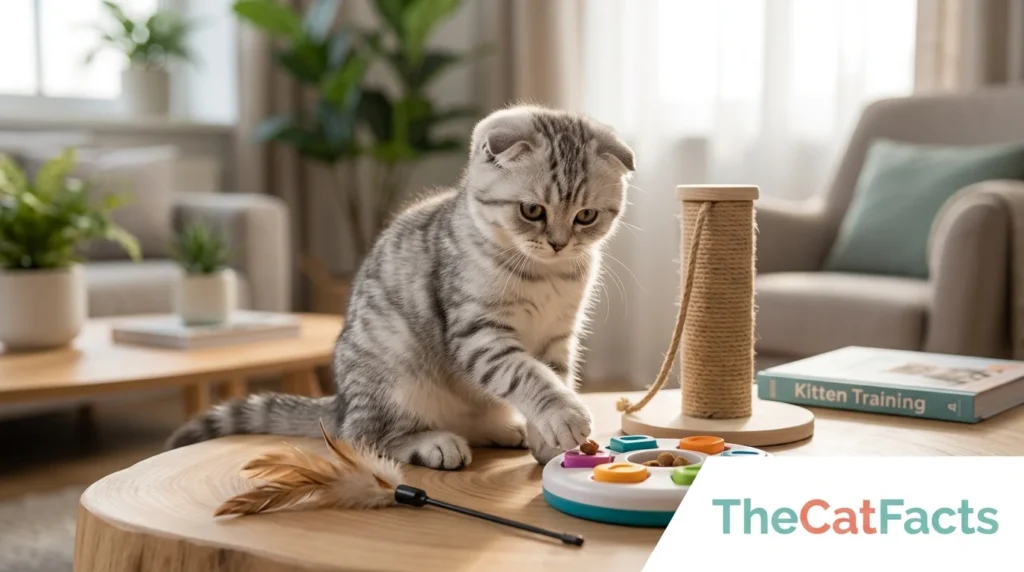
Scottish Fold kittens are affectionate, intelligent, and gentle companions, but their first year is one of the most important stages of their lives. During these first 12 months, they learn how to interact with people, other pets, and their environment. Good training, proper socialization, and consistent routines help shape them into confident, well-behaved adult cats.
Unlike some highly energetic breeds, Scottish Fold kittens tend to have calm and adaptable personalities. However, every kitten is unique. Genetics, early experiences, health, and the home environment all influence behavior. Understanding what is normal at each stage helps owners respond appropriately and prevent unwanted habits before they become long-term problems.
This guide explains Scottish Fold kitten behavior month by month, effective training techniques, common behavioral challenges, and veterinarian-approved advice for raising a happy and healthy kitten throughout the first year.
Understanding Scottish Fold Kitten Behavior
Scottish Fold kittens are naturally curious, social, and people-oriented. They learn through play, observation, and positive experiences rather than punishment.
Their folded ears may be their most recognizable feature, but they are equally known for their sweet personalities. Most Scottish Fold kittens enjoy spending time near their families and often follow their owners from room to room.
Common personality traits include:
- Gentle and affectionate
- Curious but not overly adventurous
- Intelligent and eager to learn routines
- Moderate activity level
- Friendly toward children and other pets when socialized
- Adaptable to apartment and indoor living
- Playful without being excessively hyperactive
Although these characteristics are common, each kitten develops its own personality.
How Genetics Influence Behavior
Behavior begins before a kitten is born. Genetics influence confidence, activity level, and sociability.
A kitten from calm, well-socialized parents is more likely to become relaxed around people. However, genetics are only part of the story. Daily handling, positive experiences, and training have an enormous impact during the first year.
Why Early Experiences Matter
The first few months are a critical learning period.
Positive experiences help kittens become:
- Comfortable with visitors
- Less fearful of household noises
- Easier to groom
- More accepting of veterinary visits
- Better with children
- More confident around other pets
Negative experiences during this stage may increase fear or anxiety later in life.
Natural Behaviors You Should Expect
Many first-time owners worry that normal kitten behavior indicates a problem.
Healthy Scottish Fold kittens commonly:
- Chase moving objects
- Climb furniture
- Explore every corner
- Pounce during play
- Scratch surfaces
- Chew unfamiliar objects
- Zoom around the house
- Sleep for long periods
These behaviors are normal parts of physical and mental development.
Scottish Fold Kitten Development Timeline During the First Year
Behavior changes rapidly throughout the first year. Understanding each developmental stage helps you set realistic expectations and choose appropriate training methods.
| Age | Behavioral Development | Training Focus |
| 0 to 4 weeks | Learning from mother and littermates | Human handling, gentle exposure |
| 4 to 8 weeks | Increased curiosity and play | Socialization begins |
| 8 to 12 weeks | Moves into new home | Litter training, routines, bonding |
| 3 to 4 months | High energy and exploration | Basic commands, scratching habits |
| 4 to 6 months | Growing confidence | Social skills, grooming practice |
| 6 to 9 months | Adolescence begins | Consistency and impulse control |
| 9 to 12 months | Personality becomes more stable | Reinforcing lifelong habits |
Birth to Four Weeks
Newborn kittens spend most of their time nursing and sleeping.
Behavior includes:
- Crawling toward warmth
- Learning scents
- Responding to sounds
- Beginning social interaction with littermates
At this age, the mother teaches important survival skills.
Four to Eight Weeks
This is one of the most important learning periods.
Kittens begin:
- Running
- Jumping
- Chasing toys
- Wrestling with siblings
- Learning bite control
- Exploring their surroundings
Most behavioral learning occurs through play.
Eight to Twelve Weeks
This is when many kittens join their new families.
Owners should focus on:
- Building trust
- Introducing household routines
- Teaching litter box habits
- Encouraging scratching posts
- Gentle handling
- Daily play sessions
Three to Six Months
Energy levels often peak during this stage.
You may notice:
- Increased curiosity
- Climbing behavior
- Play hunting
- Short attention span
- Fast learning ability
Training sessions should remain brief, fun, and rewarding.
Six to Twelve Months
Scottish Fold kittens enter adolescence.
Common behaviors include:
- Testing household boundaries
- Becoming more independent
- Developing favorite sleeping spots
- Forming stronger bonds with family members
- Reduced but still regular zoomies
Consistency becomes more important than introducing new lessons.
Why Training Should Start Early
Early training creates lifelong habits and is much easier than correcting unwanted behaviors in adulthood.
Cats learn through repetition and rewards. Waiting until a kitten develops unwanted habits makes behavior modification more challenging.
Benefits of early training include:
- Better litter box habits
- Reduced furniture scratching
- Improved confidence
- Easier veterinary visits
- Safer grooming sessions
- Better interactions with children
- Less fear of new environments
The Best Age to Begin Training
Most kittens can begin gentle training around 8 weeks of age after arriving at their new home.
Early lessons include:
- Responding to their name
- Coming when called
- Using scratching posts
- Accepting nail trimming
- Entering a carrier calmly
- Playing appropriately
Keep Sessions Short
Young kittens have limited attention spans.
Aim for:
- Three to five minute sessions
- Two to four sessions daily
- Plenty of rewards
- Ending on a positive note
Short sessions produce better learning than long training periods.
Positive Reinforcement Works Best
Reward behaviors you want to see again.
Good rewards include:
- Small kitten treats
- Praise
- Gentle petting
- Favorite toys
- Interactive play
Avoid yelling, physical punishment, or spraying water. These methods increase fear and may damage trust without teaching the desired behavior.
Essential Supplies for Training Your Scottish Fold Kitten
Having the right equipment makes training easier, safer, and more enjoyable for both you and your kitten.
| Item | Purpose |
| Litter box | Toilet training |
| Unscented litter | Encourages consistent use |
| Scratching post | Redirects scratching |
| Interactive wand toy | Builds confidence and exercise |
| Puzzle feeder | Mental enrichment |
| Clicker (optional) | Marker training |
| Soft treats | Positive reinforcement |
| Grooming brush | Handling practice |
| Nail clippers | Paw desensitization |
| Comfortable carrier | Travel and veterinary training |
Choosing the Right Scratching Post
Scottish Fold kittens often prefer sturdy vertical scratching posts.
Choose one that is:
- Tall enough to stretch fully
- Stable and heavy
- Covered in sisal rope or fabric
- Located near favorite resting areas
Offering multiple scratching options encourages appropriate scratching behavior.
Selecting Safe Toys
Rotate toys regularly to maintain interest.
Safe choices include:
- Wand toys
- Soft plush mice
- Ball toys
- Puzzle feeders
- Treat-dispensing toys
Avoid toys with loose strings, ribbons, small detachable parts, or anything that could be swallowed.
Socialization During the First Year
The socialization period is when kittens learn that people, animals, sounds, and new experiences are safe. Proper socialization helps prevent fear and anxiety later in life.
A well-socialized Scottish Fold is generally calmer during grooming, veterinary visits, travel, and introductions to new people.
Introduce New People Gradually
Allow visitors to approach quietly.
Encourage positive interactions by:
- Offering treats
- Allowing the kitten to approach voluntarily
- Avoiding forced handling
- Keeping visits short
Never chase or corner a frightened kitten.
Meeting Other Pets
Slow introductions reduce stress.
Start by:
- Keeping pets separated initially.
- Swapping bedding to exchange scents.
- Allowing supervised visual contact.
- Rewarding calm behavior.
- Increasing interaction gradually.
Some kittens adapt within days, while others need several weeks.
Exposure to Household Sounds
Normal household sounds should become familiar.
Gradually expose kittens to:
- Vacuum cleaners
- Television
- Kitchen appliances
- Doorbells
- Washing machines
- Hair dryers
Pair unfamiliar sounds with treats or play to create positive associations.
Car Rides and Carrier Training
Carrier training should begin early rather than only before veterinary visits.
Leave the carrier open with:
- Soft bedding
- Favorite toys
- Treats
- Familiar scents
Short practice car rides help reduce travel anxiety as the kitten grows.
Reading Your Scottish Fold Kitten’s Body Language
Understanding body language allows owners to recognize when a kitten feels happy, playful, nervous, or stressed before unwanted behaviors develop.
Signs of a Relaxed Kitten
A relaxed Scottish Fold usually shows:
- Soft eyes
- Gentle blinking
- Upright ears (or naturally folded ears in a neutral position)
- Loose body posture
- Tail resting comfortably
- Quiet purring
- Slow movements
These signs indicate that your kitten feels safe and comfortable.
Signs of Playfulness
Play behavior often includes:
- Wiggle before pouncing
- Sideways hops
- Chasing toys
- Tail held upright
- Quick bursts of energy
- Gentle wrestling with toys
Interactive play helps satisfy natural hunting instincts in a safe way.
Signs of Fear or Stress
Watch for:
- Hiding
- Flattened whiskers
- Dilated pupils
- Crouched posture
- Tail tucked close to the body
- Hissing or growling
- Refusing treats
If these signs appear, reduce stimulation and give your kitten space to recover. Never force interaction.
Signs of Pain That Need Veterinary Attention
Behavioral changes can sometimes indicate illness rather than training problems.
Seek veterinary care if your kitten shows:
- Sudden aggression
- Reluctance to move
- Limping
- Persistent hiding
- Loss of appetite
- Excessive vocalization
- Difficulty jumping
- Changes in litter box habits
Because Scottish Folds can inherit joint and cartilage disorders, any signs of stiffness or pain should be evaluated promptly by a veterinarian.
Common Behaviors and What They Usually Mean
| Behavior | Usually Normal? | Possible Meaning | When to Seek Veterinary Advice |
| Zoomies | Yes | Energy release | If accompanied by pain or limping |
| Scratching | Yes | Marking territory, claw maintenance | If claws are damaged or bleeding |
| Gentle nibbling | Yes | Play behavior | If biting becomes aggressive |
| Hiding after moving home | Yes | Adjusting to a new environment | If it continues for several weeks with poor appetite |
| Kneading | Yes | Comfort and contentment | Rarely a concern |
| Purring | Usually | Relaxation, sometimes self-soothing | If paired with lethargy or illness |
| Climbing | Yes | Exploration and exercise | If mobility suddenly decreases |
| Sleeping 16 to 20 hours | Yes | Normal kitten growth | If difficult to wake or accompanied by illness |
Expert Tips for Raising a Well-Behaved Scottish Fold Kitten
- Establish a predictable daily routine for meals, play, and rest.
- Schedule at least two interactive play sessions every day.
- Reward good behavior immediately so your kitten connects the action with the reward.
- Provide vertical spaces, scratching posts, and puzzle toys to prevent boredom.
- Handle your kitten’s paws, ears, and mouth gently several times each week to prepare for future grooming and veterinary exams.
- Keep all training sessions positive, patient, and consistent.
- Monitor your kitten’s movement regularly, as Scottish Folds have a higher risk of inherited joint problems that may affect behavior if pain develops.
- Arrange routine veterinary wellness visits during the first year to monitor growth, vaccinations, nutrition, and orthopedic health.
Litter Box Training Your Scottish Fold Kitten
Most Scottish Fold kittens naturally learn to use a litter box, but consistency and the right setup help prevent accidents.
Healthy kittens instinctively bury their waste. Your role is to provide an inviting litter box, keep it clean, and make it easy to find.
Choosing the Right Litter Box
The ideal litter box should be:
- Low enough for a young kitten to enter easily
- Large enough for turning around comfortably
- Stable and easy to clean
- Placed in a quiet, low-traffic area
Many kittens prefer an open litter box during their first few months because it feels less confined.
Selecting the Best Litter
Unscented, fine-grain clumping litter is often preferred by kittens because it is soft on their paws.
Avoid:
- Strongly scented litter
- Large pellet litter for very young kittens
- Dusty products that may irritate the respiratory system
If your kitten is under four months old, supervise closely to prevent accidental litter ingestion.
Helping Your Kitten Learn
Follow these simple steps:
- Place your kitten in the litter box after meals.
- Repeat after naps and play sessions.
- Praise calmly after successful use.
- Scoop waste daily.
- Wash the box regularly using mild soap and water.
Never punish accidents. Instead, clean the area thoroughly with an enzymatic cleaner to remove odors that may encourage repeat accidents.
Common Litter Box Problems
| Problem | Possible Cause | Solution |
| Urinating outside the box | Dirty litter | Clean more frequently |
| Refusing the litter box | Wrong litter type | Try unscented litter |
| Digging excessively | Exploring texture | Usually normal |
| Standing outside while using | Box too small | Upgrade to a larger box |
| Multiple accidents | Stress or illness | Consult a veterinarian if persistent |
Teaching Appropriate Scratching Behavior
Scratching is a normal feline behavior that keeps claws healthy, stretches muscles, and marks territory. Training should redirect scratching rather than stop it.
Scottish Fold kittens do not scratch furniture out of spite. They scratch because it fulfills important physical and emotional needs.
Why Kittens Scratch
Scratching helps kittens:
- Remove old claw sheaths
- Stretch their back and shoulder muscles
- Leave scent marks
- Relieve excitement
- Reduce stress
Providing acceptable scratching surfaces protects your furniture while allowing natural behavior.
Encouraging Scratching Posts
Place scratching posts:
- Near sleeping areas
- Beside favorite furniture
- Close to windows
- Along walking paths
Reward your kitten whenever they use the post.
You can also attract interest by:
- Rubbing catnip on suitable posts (for kittens over several months old that respond to catnip)
- Hanging a toy nearby
- Playing around the post
Preventing Furniture Damage
Instead of punishment:
- Cover furniture corners temporarily.
- Offer several scratching surfaces.
- Redirect gently when scratching begins.
- Reward immediately after using the correct post.
Consistency works much better than scolding.
Preventing Biting and Rough Play
Play biting is common in kittens, but they should learn early that human hands are never toys.
Young kittens practice hunting skills through chasing and grabbing. Without guidance, playful bites may become stronger as they grow.
Why Scottish Fold Kittens Bite
Common reasons include:
- Excitement during play
- Teething
- Overstimulation
- Fear
- Seeking attention
- Lack of appropriate toys
Most biting is not aggression.
Teaching Bite Inhibition
When your kitten bites:
- Stop moving your hand.
- End play immediately.
- Redirect attention to a toy.
- Resume play after your kitten calms down.
Avoid rough games that encourage chasing fingers or feet.
Recognizing Overstimulation
Some kittens become overly excited during petting.
Warning signs include:
- Tail twitching
- Skin rippling
- Flattened ears
- Sudden head turning
- Dilated pupils
If you notice these signs, stop petting before your kitten reacts with a bite or swat.
Positive Reinforcement Training
Scottish Fold kittens respond best to rewards rather than punishment. Positive reinforcement strengthens desired behaviors while building trust.
Every reward should happen immediately after the correct behavior so your kitten understands why they earned it.
Effective Rewards
Use rewards such as:
- Tiny kitten treats
- Gentle praise
- Favorite toys
- Interactive play
- Soft petting (if your kitten enjoys it)
Different kittens value different rewards. Observe what motivates your kitten the most.
Behaviors Worth Rewarding
Reward your kitten when they:
- Use the litter box
- Scratch the post
- Come when called
- Sit calmly in the carrier
- Allow nail trimming
- Stay calm during grooming
- Respond to their name
Small successes build lifelong habits.
Clicker Training Basics
Clicker training uses a consistent sound to tell your kitten exactly when they performed the correct behavior.
Many Scottish Fold kittens learn quickly because they are intelligent and enjoy interactive activities.
Introducing the Clicker
Begin by creating a positive association.
Repeat several times:
- Click.
- Give a treat immediately.
- Wait a few seconds.
- Repeat.
Soon your kitten will recognize that the click predicts a reward.
Simple Commands to Teach
Start with easy behaviors.
These include:
- Come
- Sit
- Target a hand
- Enter the carrier
- Touch a stick target
- Jump onto a mat
Keep sessions short and fun.
Teaching Your Kitten Their Name
Most kittens can learn their names within a few weeks through repetition and positive experiences.
Use your kitten’s name only in pleasant situations.
Training Steps
- Say your kitten’s name.
- When they look toward you, reward immediately.
- Repeat several times daily.
- Increase distance gradually.
Avoid using their name before punishment or unpleasant experiences.
Carrier Training
A kitten that willingly enters a carrier experiences less stress during travel and veterinary visits.
The carrier should become a familiar resting place rather than something that only appears before appointments.
Making the Carrier Comfortable
Place inside:
- Soft bedding
- Familiar blanket
- Favorite toy
- Occasional treats
Leave the carrier accessible every day.
Practicing Travel
Once your kitten enters comfortably:
- Close the door briefly.
- Offer treats.
- Carry the carrier around the house.
- Take short car rides.
- Reward calm behavior afterward.
These short sessions build confidence gradually.
Encouraging Confidence Through Play
Interactive play teaches hunting skills, burns energy, and prevents boredom-related behavior problems.
Daily play is just as important as feeding and grooming.
Recommended Toys
Rotate toys regularly, including:
- Feather wands
- Soft mice
- Rolling balls
- Puzzle feeders
- Crinkle toys
- Small plush toys
Rotation keeps toys interesting.
Ideal Play Schedule
| Age | Daily Interactive Play |
| 8 to 12 weeks | 15 to 20 minutes, divided into several sessions |
| 3 to 6 months | 30 to 45 minutes total |
| 6 to 12 months | 30 to 60 minutes total |
End each session by allowing your kitten to “catch” the toy to satisfy their natural hunting sequence.
Common Behavioral Problems During the First Year
Many behavior problems are temporary and improve with patience, enrichment, and consistent training.
Excessive Meowing
Possible causes include:
- Hunger
- Loneliness
- Attention seeking
- Stress
- Illness
Sudden increases in vocalization should always be evaluated if accompanied by other symptoms.
Nighttime Zoomies
Even calm breeds experience bursts of nighttime energy.
Reduce them by:
- Increasing evening play
- Feeding after play
- Providing climbing opportunities
- Maintaining a regular schedule
Climbing Curtains and Furniture
Climbing is normal.
Offer safer alternatives such as:
- Cat trees
- Shelves
- Window perches
- Multi-level climbing furniture
Redirect rather than punish.
Chewing Household Objects
Young kittens often chew during teething.
Provide safe alternatives:
- Veterinary-approved chew toys
- Rubber kitten toys
- Durable plush toys
Keep electrical cords, toxic plants, medications, and small objects out of reach.
Begging for Food
Avoid feeding from the dining table.
Instead:
- Feed on a schedule.
- Ignore begging.
- Reward calm behavior away from the table.
- Use puzzle feeders for enrichment.
When Behavior May Signal a Medical Problem
Sudden behavioral changes are not always training issues. Pain or illness should always be considered first.
Contact your veterinarian if your kitten develops:
- Sudden aggression
- Difficulty walking
- Persistent hiding
- Loss of appetite
- Drinking much more water
- Frequent vomiting
- Diarrhea lasting more than a day
- Crying while using the litter box
- Refusal to jump
- Limping or stiffness
Because Scottish Fold cats are predisposed to inherited cartilage and joint disorders, any signs of pain or reduced mobility deserve prompt veterinary evaluation.
Expert Training Tips
- Keep daily routines predictable.
- Train before meals when your kitten is interested in treats.
- Avoid overwhelming your kitten with long sessions.
- Reward desired behaviors immediately.
- Provide daily mental enrichment through toys and puzzles.
- Introduce new experiences gradually.
- Give your kitten safe places to hide and rest.
- Never use fear or punishment as a training method.
- Celebrate small improvements, as consistency is more important than speed.
Understanding Adolescent Behavior in Scottish Fold Kittens
Between 6 and 12 months of age, Scottish Fold kittens enter adolescence. During this stage, they become more independent, curious, and confident, but they still need guidance and consistent training.
You may notice temporary changes in behavior as your kitten matures. This is normal and usually improves with patience and routine.
Common Adolescent Behaviors
Your kitten may:
- Test household boundaries
- Become more active during dawn and dusk
- Explore higher places
- Ignore previously learned commands occasionally
- Become more interested in hunting games
- Show increased confidence around visitors
Continue reinforcing positive behaviors rather than introducing punishment.
Managing Increased Energy
As your kitten grows stronger, provide healthy outlets for energy.
Daily enrichment should include:
- Interactive play sessions
- Climbing structures
- Puzzle feeders
- Window perches
- Rotating toys
- Food puzzles
Mental stimulation is just as important as physical exercise.
Introducing Your Scottish Fold Kitten to Children
Scottish Fold kittens generally do well with respectful children, but every interaction should be supervised until both the child and kitten understand appropriate behavior.
Teaching children how to interact with cats helps prevent injuries and builds trust.
Teaching Safe Interaction
Children should:
- Let the kitten approach first.
- Pet gently along the back or cheeks.
- Avoid pulling ears or tails.
- Never chase or corner the kitten.
- Respect resting and sleeping times.
Encourage calm voices and slow movements around young kittens.
Signs Your Kitten Needs a Break
Remove the kitten from the interaction if you notice:
- Tail flicking
- Flattened ears
- Hiding
- Growling
- Hissing
- Swatting
- Trying to escape
Giving your kitten space helps prevent fear-based behaviors.
Introducing Your Kitten to Other Pets
Successful introductions happen gradually. Slow introductions reduce stress and encourage positive relationships.
Introducing Another Cat
Follow these steps:
- Keep each cat in separate rooms initially.
- Exchange bedding daily.
- Feed both cats near opposite sides of a closed door.
- Allow supervised visual meetings.
- Increase interaction gradually.
Patience is essential. Some cats become friends quickly, while others need several weeks.
Introducing Dogs
Choose calm, cat-friendly dogs.
Keep the dog:
- Leashed initially
- Calm and rewarded
- Prevented from chasing
Allow the kitten to approach when ready. Always provide elevated escape routes such as cat trees or shelves.
Grooming Training
Scottish Fold kittens should become comfortable with grooming from an early age. Gentle handling makes future grooming and veterinary care much easier.
Brushing
Brush your kitten:
- Two to three times weekly for short-haired cats
- Three to four times weekly for long-haired Scottish Folds
Brushing helps:
- Remove loose fur
- Reduce hairballs
- Prevent mats
- Strengthen your bond
Reward calm behavior after each session.
Nail Trimming
Trim nails every two to four weeks.
Introduce nail trimming by:
- Touching your kitten’s paws daily.
- Pressing gently to extend the claws.
- Trimming only the sharp tip.
- Rewarding after each paw.
Do not rush the process if your kitten becomes anxious.
Ear Care
Although folded ears are normal for the breed, they should still be checked weekly.
Watch for:
- Excess wax
- Redness
- Bad odor
- Swelling
- Scratching at the ears
Never insert cotton swabs into the ear canal. Consult your veterinarian if abnormalities develop.
Dental Care
Begin brushing your kitten’s teeth early using a cat-safe toothbrush and toothpaste.
Aim for:
- Daily brushing when possible
- At least three sessions each week
Early dental care helps reduce plaque and supports lifelong oral health.
Nutrition and Its Impact on Behavior
Balanced nutrition supports healthy brain development, learning ability, and energy levels throughout the first year.
Poor nutrition may contribute to low energy, digestive upset, or difficulty maintaining a healthy weight.
Feeding Schedule
| Age | Meals Per Day |
| 8 to 12 weeks | 4 meals |
| 3 to 6 months | 3 meals |
| 6 to 12 months | 2 to 3 meals |
Follow your veterinarian’s recommendations based on your kitten’s growth and body condition.
Nutrients That Support Development
Choose a complete and balanced kitten diet containing:
- High-quality animal protein
- DHA for brain development
- Omega-3 fatty acids
- Calcium and phosphorus
- Taurine
- Vitamins and minerals
Fresh water should always be available.
Common Training Mistakes to Avoid
Many unwanted behaviors develop because of inconsistent training rather than stubbornness.
Avoid these common mistakes.
Punishing Your Kitten
Punishment may cause:
- Fear
- Anxiety
- Hiding
- Reduced trust
- Aggression
Instead, redirect unwanted behavior and reward good choices.
Inconsistent Rules
If scratching furniture is allowed one day but discouraged the next, your kitten becomes confused.
Ensure everyone in the household follows the same rules.
Skipping Daily Play
Bored kittens often:
- Scratch furniture
- Bite hands
- Wake owners at night
- Climb curtains
- Seek constant attention
Regular play prevents many common behavior problems.
Ignoring Early Warning Signs
Do not assume every behavioral change is a training issue.
Pain, illness, and stress can all affect behavior.
Emergency Warning Signs
Most behavior changes are harmless, but some require immediate veterinary attention.
Seek veterinary care immediately if your kitten experiences:
- Difficulty breathing
- Collapse
- Repeated vomiting
- Seizures
- Sudden inability to walk
- Severe limping
- Bloody urine
- Straining without producing urine
- Complete refusal to eat for more than 24 hours
- Extreme lethargy
- Sudden swelling
- Suspected poisoning
Prompt treatment can significantly improve outcomes.
First-Year Training Checklist
Use this checklist to monitor your kitten’s progress.
- Responds to their name
- Uses the litter box consistently
- Uses scratching posts
- Accepts gentle handling
- Comfortable in a carrier
- Plays appropriately without biting
- Allows nail trimming
- Accepts brushing
- Comfortable around household sounds
- Greets visitors confidently
- Interacts safely with children
- Gets along with other pets
- Attends routine veterinary visits
- Maintains a healthy weight
- Eats a balanced kitten diet
Myths vs Facts
| Myth | Fact |
| Scottish Fold kittens are naturally lazy. | They are playful and active, especially during the first year. |
| Cats cannot be trained. | Cats learn very well through positive reinforcement and repetition. |
| Scratching is bad behavior. | Scratching is a normal instinct that should be redirected to appropriate surfaces. |
| Punishment teaches discipline. | Reward-based training is more effective and builds trust. |
| Indoor kittens do not need enrichment. | Indoor kittens need daily mental and physical stimulation for good health. |
| Folded ears require no care. | Regular ear checks are still important to monitor for wax buildup or irritation. |
Veterinary Advice
- Schedule routine wellness examinations throughout the first year.
- Keep vaccinations and parasite prevention up to date.
- Discuss spaying or neutering at the appropriate age.
- Monitor growth using a body condition score instead of weight alone.
- Watch for signs of joint discomfort, as Scottish Fold cats are genetically predisposed to cartilage and bone disorders.
- Contact your veterinarian promptly if you notice persistent behavioral changes, reduced mobility, or loss of appetite.
Quick Summary
| Topic | Key Takeaway |
| Training | Begin at 8 weeks using positive reinforcement. |
| Socialization | Introduce people, pets, sounds, and environments gradually. |
| Play | Provide daily interactive play and enrichment. |
| Grooming | Start brushing, nail trimming, and dental care early. |
| Nutrition | Feed a complete and balanced kitten diet appropriate for growth. |
| Health | Monitor for joint problems and schedule regular veterinary visits. |
| Behavior | Most unwanted behaviors improve with patience and consistency. |
Conclusion
The first year of a Scottish Fold kitten’s life lays the foundation for a lifetime of good behavior and strong health. Early socialization, consistent training, daily enrichment, and positive reinforcement help your kitten grow into a confident and affectionate companion. Understanding normal developmental stages also makes it easier to distinguish between expected kitten behavior and signs that may require veterinary attention.
By creating a safe environment, maintaining a predictable routine, and responding patiently to challenges, you can help your Scottish Fold develop into a happy, well-adjusted adult cat. Remember that every kitten learns at its own pace, and small daily efforts often produce the best long-term results.
FAQs
How long does it take to train a Scottish Fold kitten?
Most Scottish Fold kittens begin learning simple behaviors within a few days, but consistent training throughout the first year produces the best results. Daily sessions lasting only a few minutes help reinforce good habits without overwhelming your kitten.
Are Scottish Fold kittens easy to train?
Yes. Scottish Fold kittens are intelligent and generally respond well to positive reinforcement. They learn best through treats, praise, interactive play, and repetition rather than punishment.
At what age should I start training my Scottish Fold kitten?
Training should begin as soon as your kitten arrives home, usually around 8 to 12 weeks of age. Early lessons such as litter box use, scratching post training, and responding to their name are easier to teach during this stage.
Why does my Scottish Fold kitten bite during play?
Play biting is a normal part of kitten development. It helps kittens practice hunting skills and learn bite control. Redirect biting toward appropriate toys and avoid using your hands as play objects.
Can Scottish Fold kittens live with dogs?
Yes, many Scottish Fold kittens live successfully with friendly dogs. Introduce them gradually, supervise all interactions, and ensure the kitten always has a safe place to retreat if needed.
How much playtime does a Scottish Fold kitten need?
Most kittens benefit from 30 to 60 minutes of interactive play each day, divided into several shorter sessions. Play supports physical fitness, mental stimulation, and healthy behavior.
Why is my kitten suddenly hiding more often?
Temporary hiding may occur after changes in the environment or stressful events. However, persistent hiding combined with poor appetite, lethargy, or pain may indicate illness and should be evaluated by a veterinarian.
Do Scottish Fold kittens need special training because of their breed?
Their training needs are similar to those of other cats, but owners should pay close attention to joint health. Gentle handling, low-impact play, and regular veterinary examinations help support long-term mobility.
Should I use a clicker to train my Scottish Fold kitten?
A clicker can be a helpful training tool because it clearly marks the desired behavior. Many kittens quickly learn to associate the click with a reward, making training more precise and consistent.
How can I keep my Scottish Fold kitten mentally stimulated indoors?
Provide puzzle feeders, climbing structures, scratching posts, window perches, rotating toys, and daily interactive play. These activities reduce boredom and encourage healthy physical and mental development.

Jack Turner is a Pet Care Content Writer with more than 9 years of experience creating informative, engaging, and research based content focused on companion animal care, pet health, behavior, nutrition, grooming, and responsible ownership. He specializes in transforming expert pet care information into simple and practical resources that help pet owners make better decisions for their animals.