
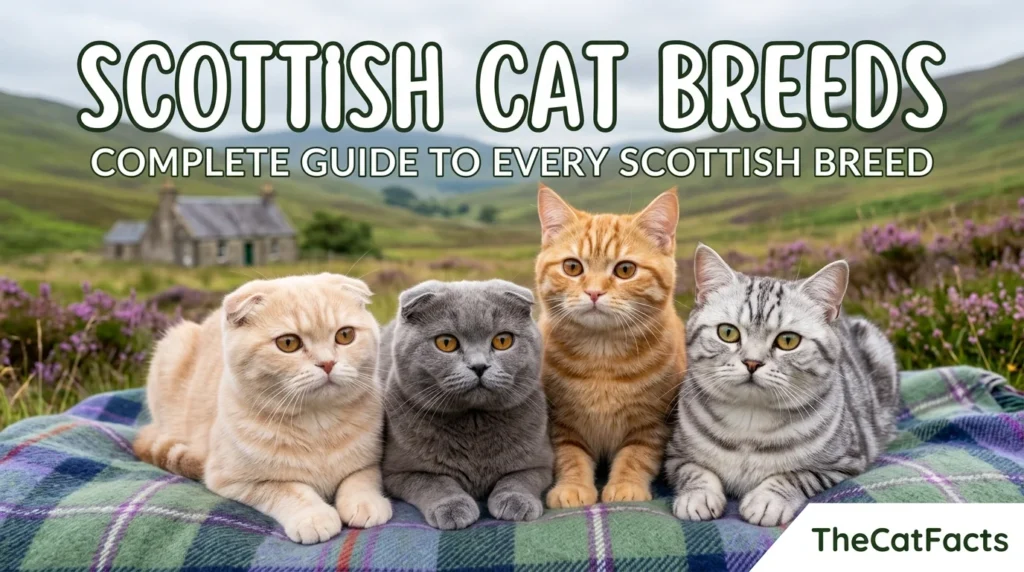
Scotland has produced some of the world’s most recognizable cat breeds, especially the Scottish Fold and Scottish Straight. These cats are admired for their gentle personalities, affectionate nature, and distinctive appearances. While only a few cat breeds officially originated in Scotland, each has its own fascinating history, physical characteristics, care requirements, and health considerations.
Whether you’re planning to adopt your first Scottish cat or simply want to learn about these unique felines, this guide covers every officially recognized Scottish cat breed, their differences, personalities, grooming needs, health concerns, and expert care advice.
Scottish Cat Breeds at a Glance
Scottish cat breeds are known for their calm temperaments, family-friendly personalities, and adaptable nature. However, they also require responsible breeding practices because some inherited traits, particularly folded ears, are linked to genetic health conditions.
| Breed | Origin | Coat Length | Distinctive Feature | Activity Level | Family Friendly |
| Scottish Fold | Scotland | Short or Long | Folded ears | Moderate | Excellent |
| Scottish Straight | Scotland | Short or Long | Straight ears | Moderate | Excellent |
| Highland Fold | Scotland | Long | Folded ears with long coat | Moderate | Excellent |
| Highland Straight | Scotland | Long | Straight ears with long coat | Moderate | Excellent |
What Makes a Cat a Scottish Breed?
A Scottish cat breed is one that originated in Scotland or developed directly from Scottish breeding programs. The most famous trait is the folded ear gene discovered in a Scottish barn cat during the 1960s.
Today, Scottish breeds share several characteristics:
- Calm personalities
- Gentle voices
- Medium-sized bodies
- Round heads
- Large expressive eyes
- Strong bond with their families
- Good adaptability to apartment living
Although they share common ancestry, each breed has its own appearance and care needs.
History of Scottish Cat Breeds
The story of Scottish cat breeds began in 1961 on a farm in Perthshire, Scotland. A white barn cat named Susie was born with naturally folded ears caused by a spontaneous genetic mutation.
Scottish shepherd William Ross and his wife Mary became interested in Susie’s unusual appearance. They acquired one of her kittens and began selective breeding to preserve the folded ears while improving health and temperament.
As breeding programs expanded, cats with straight ears also became valuable because they helped reduce inherited skeletal disorders associated with breeding two folded-ear cats together.
Today, responsible breeders always pair:
- Scottish Fold × Scottish Straight
- Highland Fold × Highland Straight
Breeding two folded-ear cats together is considered unethical because it greatly increases the risk of severe bone and joint disease.
Recognition by Cat Registries
Different cat organizations recognize Scottish breeds in slightly different ways.
| Registry | Scottish Fold | Scottish Straight | Highland Fold | Highland Straight |
| CFA | Yes | Limited recognition | Yes | Limited recognition |
| TICA | Yes | Yes | Yes | Yes |
| FIFe | Varies by country | Varies | Varies | Varies |
Some veterinary organizations and animal welfare groups discourage breeding folded-ear cats because of concerns about inherited cartilage disorders.
Scottish Fold
Quick Answer
The Scottish Fold is Scotland’s most famous cat breed. It is known for its folded ears, sweet expression, affectionate personality, and relaxed temperament.
Appearance
Scottish Folds have a distinctive rounded appearance from head to tail.
Common physical traits include:
- Folded ears
- Large round eyes
- Rounded cheeks
- Medium muscular body
- Thick tail
- Plush coat
- Strong legs
The folded ears can vary in appearance.
- Single fold
- Double fold
- Triple fold (closest to the head)
The tighter the fold, the more dramatic the appearance.
Coat Types
Scottish Folds come in two coat lengths.
Shorthaired Scottish Fold
The short coat is dense, plush, and easy to maintain.
Longhaired Scottish Fold
The longhaired variety has a silky coat with feathering around the legs, neck, and tail. This variation is often called the Highland Fold.
Personality
Scottish Folds are famous for their gentle personalities.
Typical traits include:
- Quiet
- Loyal
- Friendly
- Patient
- Intelligent
- Curious
- Affectionate
Many enjoy following their owners from room to room without being overly demanding.
Unlike highly energetic breeds, Scottish Folds usually prefer interactive play sessions followed by long naps.
Exercise Needs
Although they are not hyperactive, Scottish Folds benefit from daily exercise.
Recommended activities include:
- Wand toys
- Food puzzles
- Ball chasing
- Cat trees
- Window perches
Aim for at least 20 to 30 minutes of active play each day.
Grooming
Shorthaired cats usually need brushing once each week.
Longhaired Scottish Folds should be brushed:
- Three to four times weekly
- Daily during seasonal shedding
Owners should also:
- Trim nails every 3 to 4 weeks.
- Clean ears gently if recommended by a veterinarian.
- Brush teeth several times weekly.
- Monitor for skin irritation beneath dense coats.
Health Concerns
Osteochondrodysplasia
This inherited disorder affects cartilage and bone development.
It can cause:
- Stiff walking
- Thickened joints
- Shortened limbs
- Tail stiffness
- Arthritis
- Chronic pain
Every Scottish Fold carrying folded ears has this mutation to some degree. The severity varies significantly between individuals.
Arthritis
Joint degeneration may begin at an early age.
Veterinarians often recommend:
- Weight management
- Joint supplements
- Controlled exercise
- Pain management when necessary
Obesity
Scottish Folds enjoy relaxing and can gain weight if they receive excessive treats or too little exercise.
Maintaining an ideal body condition reduces stress on their joints.
Is the Scottish Fold Right for You?
The Scottish Fold may suit owners who want:
- A calm companion
- Moderate grooming
- Indoor lifestyle
- Family-friendly temperament
- Quiet personality
It may not be ideal for people seeking a highly athletic or extremely active cat.
Scottish Straight
Quick Answer
The Scottish Straight shares nearly every characteristic of the Scottish Fold except one, its ears remain upright instead of folding forward.
Why Scottish Straights Are Important
Scottish Straights are essential to ethical breeding programs.
Because they do not inherit folded ears, they help reduce the risk of severe skeletal disease in future generations.
Responsible breeders never breed:
- Fold × Fold
Instead, they breed:
- Fold × Straight
This practice helps produce healthier kittens.
Appearance
Scottish Straights have:
- Straight ears
- Round face
- Large eyes
- Medium body
- Plush coat
- Thick tail
Many people mistake them for British Shorthairs, but Scottish Straights usually have a softer facial expression and lighter body structure.
Personality
Scottish Straights are affectionate without being clingy.
Owners often describe them as:
- Easygoing
- Gentle
- Friendly
- Quiet
- Intelligent
- Adaptable
They usually enjoy spending time with family members and get along well with respectful children.
Health
Although Scottish Straights avoid the folded-ear mutation, they still benefit from routine health screening.
Potential concerns include:
- Dental disease
- Obesity
- Kidney disease in older cats
- Heart disease
- Age-related arthritis
Regular veterinary examinations help detect problems early.
Grooming
Most shorthaired Scottish Straights require:
- Weekly brushing
- Nail trimming
- Ear checks
- Dental care
Longhaired varieties require more frequent brushing to prevent tangles and mats.
Highland Fold
Quick Answer
The Highland Fold is the longhaired version of the Scottish Fold. It combines folded ears with a luxurious, silky coat that requires additional grooming.
Appearance
Highland Folds have all the rounded features of the Scottish Fold, plus:
- Long flowing fur
- Full neck ruff
- Feathered legs
- Plumed tail
- Soft undercoat
Their elegant coat gives them a regal appearance while maintaining the breed’s signature sweet expression.
Personality
Highland Folds are affectionate, calm, and people-oriented. They enjoy interactive play but are generally less demanding than many active cat breeds.
Many owners describe them as cats that like to stay close to their family without constantly seeking attention.
Grooming Needs
Because of their longer coat, Highland Folds require more frequent maintenance than shorthaired Scottish breeds.
Recommended grooming routine includes:
- Brushing three to five times per week
- Daily brushing during heavy shedding seasons
- Regular checks for mats behind the ears, under the legs, and around the tail
- Routine nail trimming and dental care
Proper grooming not only keeps the coat healthy but also helps reduce hairballs and allows owners to detect skin problems early.
Health Considerations
Highland Folds share the same inherited folded-ear gene as Scottish Folds. As a result, they may also develop osteochondrodysplasia and related joint issues.
Maintaining a healthy weight, providing low-impact exercise, and scheduling regular veterinary checkups are important for supporting lifelong mobility.
In the next part, we’ll cover the Highland Straight, compare all Scottish breeds side by side, discuss health testing, nutrition, grooming, choosing the right breed, common myths, expert veterinary advice, a buyer’s checklist, and more.
Highland Straight
Quick Answer
The Highland Straight is the longhaired version of the Scottish Straight. It has upright ears, a luxurious coat, and the same calm, affectionate personality that makes Scottish cats popular family companions.
Unlike the Highland Fold, the Highland Straight does not have folded ears. This makes it an important part of responsible Scottish breeding programs.
Appearance
Highland Straights have an elegant yet sturdy appearance.
Typical features include:
- Upright ears
- Large round eyes
- Rounded head
- Medium-sized muscular body
- Thick, fluffy tail
- Long, silky coat
- Feathering on the legs and chest
Their long coat gives them a soft, teddy bear-like appearance while remaining easier to manage than some other longhaired breeds.
Personality
Highland Straights are known for their balanced temperament.
Most are:
- Calm
- Affectionate
- Curious
- Gentle
- Intelligent
- Adaptable
- Quiet
They enjoy spending time near their owners but are usually independent enough to stay relaxed when left alone for reasonable periods.
Grooming Requirements
The long coat needs regular maintenance to prevent tangles.
A good grooming routine includes:
- Brushing three to four times weekly
- Daily brushing during seasonal shedding
- Monthly nail trimming
- Weekly ear checks
- Regular tooth brushing
- Occasional bathing if necessary
Early grooming sessions help kittens become comfortable with handling.
Health
Because Highland Straights do not carry folded ears, they are much less likely to develop the inherited cartilage disorder associated with Scottish Folds.
However, they still benefit from:
- Annual veterinary examinations
- Weight monitoring
- Dental care
- Joint health assessments as they age
- Routine vaccinations and parasite prevention
Scottish Cat Breeds Comparison
Quick Answer
All Scottish breeds share similar personalities, but they differ in ear shape, coat length, grooming needs, and inherited health risks.
| Feature | Scottish Fold | Scottish Straight | Highland Fold | Highland Straight |
| Folded ears | Yes | No | Yes | No |
| Long coat | No | No | Yes | Yes |
| Weekly brushing | 1 to 2 times | Once | 3 to 5 times | 3 to 4 times |
| Family friendly | Excellent | Excellent | Excellent | Excellent |
| Apartment friendly | Excellent | Excellent | Excellent | Excellent |
| Joint disease risk | Higher | Lower | Higher | Lower |
| Beginner friendly | Yes, with health awareness | Yes | Yes, with grooming commitment | Yes |
Temperament Comparison
Which Scottish Breed Is the Most Affectionate?
All Scottish breeds tend to be affectionate, but each expresses affection differently.
| Personality Trait | Fold | Straight | Highland Fold | Highland Straight |
| Lap cat | Often | Sometimes | Often | Sometimes |
| Loves children | Excellent | Excellent | Excellent | Excellent |
| Gets along with dogs | Usually | Usually | Usually | Usually |
| Vocal | Quiet | Quiet | Quiet | Quiet |
| Playfulness | Moderate | Moderate | Moderate | Moderate |
| Independence | Moderate | Moderate | Moderate | Moderate |
Most Scottish cats enjoy companionship without being overly demanding.
Coat Colors and Patterns
Scottish cat breeds come in an impressive variety of colors and patterns.
Common solid colors include:
- White
- Black
- Blue
- Cream
- Red
- Chocolate
- Lilac
Popular patterns include:
- Tabby
- Silver tabby
- Golden tabby
- Smoke
- Tortoiseshell
- Bicolor
- Calico
- Colorpoint
Eye color often depends on coat color and genetics.
Possible eye colors include:
- Copper
- Gold
- Green
- Blue
- Odd-eyed (one blue and one gold)
Size and Growth
Scottish breeds are medium-sized cats that mature slowly.
| Life Stage | Age | Average Weight |
| Kitten | Birth to 6 months | Rapid growth |
| Junior | 6 to 12 months | 5 to 8 pounds |
| Young adult | 1 to 2 years | Near adult size |
| Adult female | Mature | 6 to 9 pounds |
| Adult male | Mature | 8 to 13 pounds |
Most Scottish cats reach full physical maturity between 18 and 24 months.
Health Problems Seen in Scottish Cat Breeds
Quick Answer
The most important health concern in Scottish breeds involves the folded-ear gene. Other conditions are similar to those seen in many domestic cats.
Osteochondrodysplasia
This inherited disorder affects cartilage throughout the body.
Signs may include:
- Difficulty jumping
- Stiff movements
- Swollen joints
- Thick tail
- Pain while walking
- Reduced activity
Early veterinary evaluation helps improve long-term comfort.
Arthritis
Joint disease may develop earlier in folded-ear cats than in other breeds.
Veterinarians may recommend:
- Weight control
- Prescription pain medications
- Physical rehabilitation
- Joint-support supplements
- Environmental adjustments
Obesity
Extra body weight places additional pressure on painful joints.
Healthy body condition should remain a priority throughout life.
Dental Disease
Without regular dental care, tartar and gum disease can develop.
Preventive care includes:
- Tooth brushing
- Veterinary dental cleanings
- Dental diets when recommended
- Dental treats approved by veterinarians
Heart Disease
Like many pedigree breeds, some Scottish cats may develop heart disease.
Routine examinations help detect heart murmurs or other abnormalities early.
Responsible Breeding Matters
Quick Answer
Choosing a responsible breeder is one of the most important decisions you can make when buying a Scottish kitten.
Ethical breeders focus on health before appearance.
A responsible breeder should:
- Never breed Fold to Fold
- Perform health screening
- Socialize kittens
- Provide veterinary records
- Offer vaccination history
- Explain genetic health risks
- Allow buyers to meet the mother when possible
Avoid breeders who advertise unusually low prices or refuse to answer health questions.
Choosing the Right Scottish Breed
Best for Families
Excellent choices include:
- Scottish Straight
- Highland Straight
- Scottish Fold
Their calm personalities generally make them patient companions for respectful children.
Best for Apartment Living
All Scottish breeds adapt well to indoor living because they have moderate exercise needs and quiet personalities.
Best for First-Time Owners
Scottish Straight is often the easiest choice because it combines the classic Scottish temperament with fewer inherited health concerns.
Best for Grooming Enthusiasts
If you enjoy regular brushing and coat care, the Highland Fold or Highland Straight offers a beautiful long-haired appearance.
Daily Care Guide
Feeding
Choose a complete, balanced diet appropriate for your cat’s:
- Age
- Weight
- Activity level
- Health status
Avoid overfeeding, especially in folded-ear cats with joint concerns.
Exercise
Aim for at least two interactive play sessions each day.
Good toys include:
- Feather wands
- Ball toys
- Puzzle feeders
- Climbing trees
- Scratching posts
Mental Enrichment
Scottish cats enjoy gentle mental challenges.
Provide:
- Food puzzles
- Window perches
- Rotating toys
- Cat-safe climbing shelves
- Interactive games
Mental stimulation helps prevent boredom and unwanted behaviors.
Common Mistakes Owners Make
Avoid these common errors:
- Allowing excessive weight gain
- Ignoring subtle signs of joint pain
- Skipping routine veterinary visits
- Choosing breeders based only on price
- Neglecting dental care
- Overlooking grooming in longhaired cats
- Assuming folded ears are purely cosmetic
Recognizing these issues early can greatly improve your cat’s quality of life.
Veterinary Advice
Veterinarians commonly recommend:
- Annual wellness examinations for healthy adults
- More frequent checkups for senior cats
- Routine dental evaluations
- Maintaining a lean body condition
- Prompt evaluation of limping or stiffness
- Early treatment of arthritis symptoms
- Purchasing kittens only from ethical breeders
Supporting joint health from a young age can make a significant difference, particularly for folded-ear cats.
Expert Tips
- Keep scratching posts in several rooms.
- Use puzzle feeders to slow eating.
- Brush kittens from an early age.
- Monitor jumping ability as your cat ages.
- Provide soft bedding to support aging joints.
- Schedule routine dental care instead of waiting for visible problems.
- Record your cat’s weight every few months to catch gradual weight gain early.
New Owner Checklist
Before bringing home a Scottish cat, make sure you have:
- Quality cat food
- Food and water bowls
- Litter box and litter
- Scratching post
- Comfortable bed
- Interactive toys
- Carrier
- Grooming brush
- Nail clippers
- Toothbrush and cat-safe toothpaste
- Initial veterinary appointment scheduled
Conclusion
Scottish cat breeds are admired around the world for their gentle personalities, adorable round faces, and loving companionship. Whether you choose a Scottish Fold, Scottish Straight, Highland Fold, or Highland Straight, understanding each breed’s unique characteristics is essential for providing lifelong care.
While folded ears may be the breed’s signature feature, responsible ownership goes beyond appearance. Choosing an ethically bred kitten, maintaining a healthy weight, providing regular veterinary care, and meeting your cat’s physical and emotional needs will help ensure a long, comfortable, and happy life.
For many families, Scottish cats make affectionate indoor companions that thrive on gentle interaction, consistent routines, and a safe, enriching home environment. Their calm nature, intelligence, and strong bonds with their owners continue to make them one of Scotland’s most cherished feline contributions.
FAQs
What are the official Scottish cat breeds?
The official Scottish cat breeds include the Scottish Fold, Scottish Straight, Highland Fold, and Highland Straight. The Highland varieties are the longhaired versions of the Scottish Fold and Scottish Straight. All four breeds originated from the same breeding program in Scotland and share similar personalities, although they differ in ear shape, coat length, and grooming needs.
Are Scottish Fold cats born with folded ears?
No. Scottish Fold kittens are born with straight ears. If they inherit the folded-ear gene, their ears usually begin folding forward when they are about 3 to 4 weeks old. Some kittens keep straight ears and become Scottish Straights instead.
Which Scottish cat breed is the healthiest?
Scottish Straights and Highland Straights are generally considered healthier because they do not have the folded-ear mutation linked to osteochondrodysplasia. However, all cats can develop health problems, so regular veterinary checkups, proper nutrition, and preventive care remain important throughout their lives.
Are Scottish cat breeds good with children and other pets?
Yes. Scottish cat breeds are known for their calm, patient, and affectionate personalities. They usually get along well with respectful children, other cats, and cat-friendly dogs when introduced gradually. Early socialization helps build confidence and encourages positive interactions with other household pets.
Do Scottish Fold cats have health problems?
Scottish Fold cats can develop osteochondrodysplasia, an inherited condition that affects cartilage and bone development. The disease may lead to stiff joints, arthritis, reduced mobility, and chronic pain. Responsible breeding, regular veterinary care, weight management, and early treatment can help improve their quality of life.
How often should Scottish cats be groomed?
Shorthaired Scottish cats usually need brushing once a week. Longhaired Highland Folds and Highland Straights benefit from brushing three to five times weekly to prevent mats and reduce shedding. Regular nail trimming, ear checks, and dental care should also be included in their grooming routine.
Can Scottish cats live in apartments?
Yes. Scottish cat breeds adapt very well to apartment living because they are relatively quiet and have moderate exercise needs. They still require daily play sessions, scratching posts, climbing opportunities, and mental enrichment to stay physically active and mentally stimulated indoors.
How long do Scottish cat breeds live?
With proper care, most Scottish cat breeds live between 12 and 16 years, although some may live even longer. A balanced diet, routine veterinary visits, maintaining a healthy body weight, dental care, and an enriching indoor environment all contribute to a longer and healthier life.
Should two Scottish Fold cats be bred together?
No. Ethical breeders never mate two Scottish Fold cats because doing so greatly increases the risk of severe skeletal and cartilage disorders in their kittens. Responsible breeding pairs a Scottish Fold with a Scottish Straight to reduce the likelihood of serious inherited health problems.
How do I choose a responsible Scottish cat breeder?
Choose a breeder who prioritizes health over appearance. They should provide veterinary records, vaccinations, health screening information, and allow you to meet the kittens in a clean environment. Responsible breeders also explain genetic risks, answer questions openly, and never breed two folded-ear cats together.

Benjamin Hayes is a Senior Cat Behavior Researcher with more than 15 years of experience studying feline behavior, companion animal welfare, and human cat interactions. He specializes in translating scientific research into practical, easy to understand guidance that helps cat owners better understand their pets’ behavior, communication, health, and daily care.