
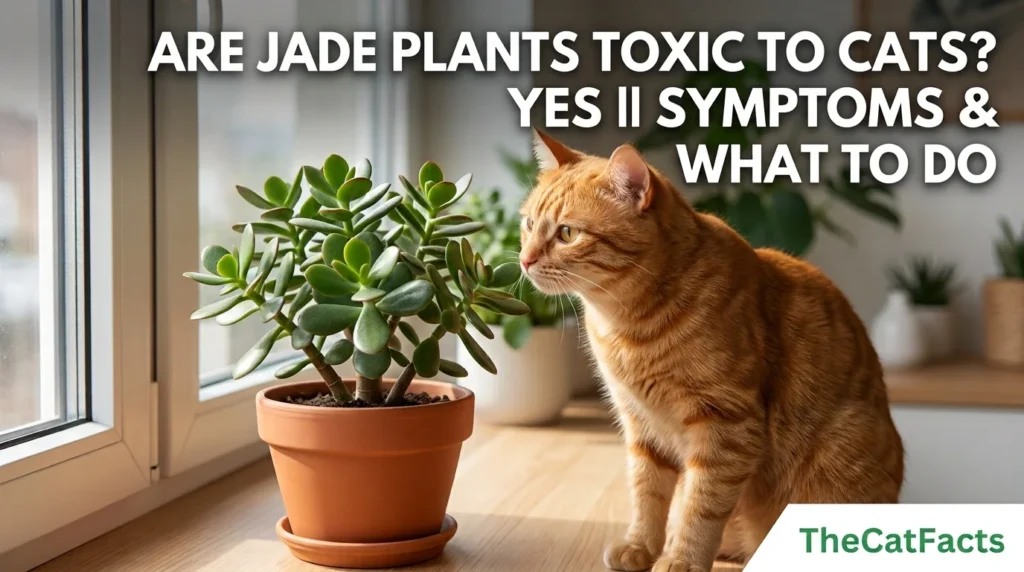
Jade plants are popular houseplants because they are easy to grow, attractive, and long-lasting. However, many cat owners do not realize that these common succulents can pose a health risk to curious pets. If your cat chews or eats part of a jade plant, it may develop symptoms ranging from mild stomach upset to serious lethargy and coordination problems.
The good news is that most cats recover well when they receive prompt veterinary care. Knowing the symptoms of jade plant poisoning and acting quickly can help prevent complications.
In this guide, you’ll learn why jade plants are toxic to cats, the signs to watch for, what to do if your cat eats one, treatment options, recovery expectations, and safer plant alternatives for your home.
What Is a Jade Plant?
Jade plants (Crassula ovata) are toxic succulent houseplants that can cause poisoning in cats if eaten. Although severe poisoning is uncommon, even a small amount can trigger digestive upset and other clinical signs.
Native to South Africa and Mozambique, jade plants are among the world’s most popular indoor succulents. They are often called:
- Jade plant
- Money plant
- Lucky plant
- Friendship tree
- Money tree (although this name is also used for other plant species)
How to Identify a Jade Plant
Jade plants have several distinctive features:
- Thick, woody stems
- Smooth, oval-shaped fleshy leaves
- Glossy green foliage
- Red edges on leaves when exposed to bright sunlight
- Small white or pale pink star-shaped flowers on mature plants
Because jade plants are common in homes, offices, apartments, and patios, indoor cats often encounter them while exploring.
Are Jade Plants Toxic to Cats?
Yes. Jade plants are considered toxic to cats and should be kept completely out of reach. Even though the exact poisonous substance has not been identified, veterinarians recognize jade plant ingestion as a cause of poisoning in cats.
Cats may chew leaves out of curiosity, boredom, or while exploring indoor plants. After eating part of the plant, symptoms often appear within a few hours.
Fortunately, jade plant poisoning is usually treatable, especially when veterinary care is sought early.
How Toxic Are Jade Plants?
The severity depends on several factors:
- Amount of plant eaten
- Size and age of the cat
- Overall health
- Whether the leaves, stems, or multiple plant parts were consumed
- How quickly treatment begins
Many cats experience mild to moderate illness, but some may become extremely weak or develop neurological signs requiring emergency treatment.
Are All Parts of the Plant Toxic?
Current veterinary recommendations assume the entire plant should be treated as toxic, including:
- Leaves
- Stems
- Small branches
- Fallen plant pieces
Even dried leaves on the floor should be removed promptly so curious cats cannot eat them.
Why Are Jade Plants Poisonous to Cats?
The exact toxin has not yet been identified, but the plant is well documented as poisonous to cats and dogs. Veterinary toxicologists know that ingestion causes predictable clinical signs even though researchers have not isolated the responsible chemical.
Unlike some plants that contain calcium oxalate crystals or specific alkaloids, jade plants remain somewhat mysterious. This uncertainty is one reason veterinarians recommend treating every exposure seriously.
What Happens Inside the Body?
After a cat chews the plant:
- Plant material enters the stomach.
- Toxic compounds are absorbed through the digestive tract.
- The digestive system becomes irritated.
- The nervous system may also be affected.
- Symptoms begin developing over the next several hours.
Some cats only experience vomiting, while others become sleepy, weak, or unsteady on their feet.
How Do Cats Get Poisoned by Jade Plants?
Most poisonings happen indoors when cats chew houseplants out of curiosity. Kittens and young adult cats are especially likely to investigate new plants.
Common situations include:
- Chewing leaves while playing
- Knocking over plant pots
- Eating fallen leaves
- Biting stems during exploration
- Grazing on houseplants because they lack safe greens
- Playing with hanging branches
Indoor-only cats are often assumed to be safe from poisoning, but houseplants are one of the most common indoor hazards.
Which Cats Are Most at Risk?
Some cats are naturally more likely to chew plants.
Higher-risk groups include:
- Kittens
- Young cats
- Highly active breeds
- Cats left alone for long periods
- Cats with access to many indoor plants
- Cats that frequently chew cords or household objects
- Bored indoor cats
Providing environmental enrichment may reduce plant-chewing behavior, but it does not eliminate the risk.
Symptoms of Jade Plant Poisoning in Cats
The most common signs include vomiting, lethargy, loss of appetite, and poor coordination. Symptoms usually develop within a few hours after ingestion but may appear sooner in sensitive cats.
Some cats show only mild digestive upset, while others experience neurological symptoms.
Common Symptoms
Watch for:
- Vomiting
- Nausea
- Drooling
- Loss of appetite
- Lethargy
- Weakness
- Depression
- Difficulty walking
- Unsteady movements
- Poor coordination
- Hiding
- Sleeping more than usual
Less Common Symptoms
Although less frequently reported, some cats may also develop:
- Diarrhea
- Mild abdominal discomfort
- Slow response to surroundings
- Muscle weakness
- Reduced interest in play
- Mild dehydration after repeated vomiting
Symptoms Table
| Symptom | How Common | Severity |
| Vomiting | Very common | Mild to moderate |
| Drooling | Common | Mild |
| Loss of appetite | Common | Mild to moderate |
| Lethargy | Very common | Moderate |
| Weakness | Common | Moderate |
| Poor coordination | Common | Moderate to severe |
| Diarrhea | Less common | Mild |
| Depression | Common | Moderate |
| Dehydration | Secondary symptom | Moderate |
How Soon Do Symptoms Appear?
Most cats begin showing signs within 30 minutes to several hours after eating the plant.
The timeline varies depending on:
- Amount consumed
- Individual sensitivity
- Whether food was already in the stomach
- Overall health
- Age of the cat
Even if your cat seems normal immediately after chewing the plant, continue monitoring closely and contact your veterinarian for advice.
When Is Jade Plant Poisoning an Emergency?
Seek immediate veterinary care if your cat develops repeated vomiting, severe lethargy, collapse, or difficulty walking after eating a jade plant. Rapid treatment can prevent dehydration and other complications.
Emergency Warning Signs
Go to the nearest veterinary clinic immediately if your cat has:
- Continuous vomiting
- Cannot stand or walk normally
- Appears unconscious
- Collapses
- Extreme weakness
- Severe tremors
- Trouble responding to you
- Refuses all food and water
- Shows signs of dehydration
- Has eaten a large amount of the plant
Mild Versus Severe Symptoms
| Mild Symptoms | Severe Symptoms |
| One episode of vomiting | Repeated vomiting |
| Mild drooling | Collapse |
| Temporary loss of appetite | Unable to walk |
| Slight tiredness | Extreme lethargy |
| Brief nausea | Severe neurological signs |
Never wait for symptoms to become severe before contacting a veterinarian. Early intervention often leads to faster recovery and reduces the likelihood of complications.
Factors That Affect the Severity of Poisoning
Not every cat reacts the same way after eating a jade plant. Several factors influence how serious the poisoning becomes and how long recovery takes.
Amount of Plant Consumed
Cats that nibble a single leaf may develop only mild stomach upset, while those that eat several leaves or stems are more likely to experience more pronounced symptoms.
Age and Body Size
Kittens and smaller cats generally have less body mass, meaning a smaller amount of plant material may have a greater effect compared with larger adult cats.
Overall Health
Cats with existing medical conditions, especially those affecting the liver, kidneys, or digestive system, may recover more slowly and require closer veterinary monitoring.
Speed of Treatment
Prompt veterinary care is one of the biggest factors affecting outcome. Cats treated soon after ingestion often recover more quickly than those whose symptoms are allowed to worsen.
What to Do If Your Cat Eats a Jade Plant
If you suspect your cat has eaten a jade plant, remove access to the plant immediately and contact your veterinarian or an emergency animal clinic. Do not wait for symptoms to appear, as early treatment can greatly improve your cat’s recovery.
Even if your cat seems completely normal, it’s safest to seek professional advice because the effects can vary from one cat to another.
Step 1: Remove the Plant
Take the jade plant away from your cat to prevent additional chewing.
Also:
- Pick up any fallen leaves or stems.
- Keep other pets away from the plant.
- Move the plant to a room your cat cannot access.
Step 2: Check Your Cat
Observe your cat for early signs such as:
- Vomiting
- Drooling
- Lip licking
- Reduced appetite
- Sleepiness
- Weakness
- Unsteady walking
Write down:
- Approximately when your cat ate the plant
- How much may have been eaten
- Any symptoms you’ve noticed
These details will help your veterinarian decide on the best treatment.
Step 3: Contact Your Veterinarian
Call your veterinarian as soon as possible.
Be prepared to provide:
- Your cat’s age and weight
- Existing medical conditions
- Current medications
- Time of exposure
- Estimated amount consumed
- Any symptoms
If possible, take a photo of the plant or bring a small sample for identification.
Step 4: Follow Veterinary Instructions
Your veterinarian may advise:
- Immediate examination
- Home monitoring for mild exposure
- Emergency treatment if symptoms develop
Always follow professional advice rather than relying on home remedies.
What Not to Do
Certain home treatments can make the situation worse. Avoid these common mistakes while waiting for veterinary care.
Do not:
- Force your cat to vomit.
- Give hydrogen peroxide.
- Offer milk as a treatment.
- Give human medications.
- Use activated charcoal unless directed by a veterinarian.
- Wait several hours if symptoms are worsening.
- Assume your cat is safe because it only chewed one leaf.
How Veterinarians Diagnose Jade Plant Poisoning
There is no single laboratory test for jade plant poisoning. Diagnosis is usually based on your cat’s history, symptoms, and a physical examination.
Physical Examination
Your veterinarian will check:
- Heart rate
- Respiratory rate
- Body temperature
- Hydration status
- Gum color
- Neurological function
- Ability to walk normally
- Abdominal discomfort
Medical History
The veterinarian may ask:
- Did you see your cat eat the plant?
- When did it happen?
- How much was eaten?
- Has your cat vomited?
- Has your cat eaten anything else unusual?
- Does your cat have previous health problems?
Diagnostic Tests
Depending on symptom severity, your veterinarian may recommend:
| Test | Purpose |
| Blood tests | Evaluate overall health and organ function |
| Blood chemistry | Check for dehydration and metabolic changes |
| Complete blood count | Assess general health and rule out infection |
| Urinalysis | Evaluate kidney function and hydration |
| Neurological examination | Assess coordination and reflexes |
Not every cat requires all of these tests. Mild cases may only need a physical examination and observation.
Treatment for Jade Plant Poisoning in Cats
Treatment focuses on relieving symptoms, preventing dehydration, and supporting recovery. Most cats improve with supportive care, especially when treated early.
The treatment plan depends on:
- How much plant was eaten
- How long ago exposure occurred
- Severity of symptoms
- Overall health of the cat
Decontamination
If ingestion occurred recently, your veterinarian may determine that removing plant material from the digestive system is appropriate.
This decision depends on:
- Time since ingestion
- Your cat’s condition
- Risk of complications
Do not attempt decontamination at home unless specifically instructed by a veterinarian.
Fluid Therapy
Cats experiencing vomiting or dehydration often benefit from intravenous or subcutaneous fluids.
Fluid therapy helps:
- Replace lost fluids
- Correct electrolyte imbalances
- Support circulation
- Improve recovery
Medications
Depending on your cat’s symptoms, the veterinarian may prescribe medications to:
- Control vomiting
- Reduce nausea
- Protect the stomach
- Improve comfort
Cats showing neurological signs may require additional monitoring and supportive treatment.
Monitoring
Hospitalized cats are monitored for:
- Hydration
- Appetite
- Vomiting
- Walking ability
- Energy level
- Response to treatment
Most improve steadily within a day or two.
Does Jade Plant Poisoning Require Hospitalization?
Some cats can recover at home, while others need hospitalization for supportive care. The decision depends on symptom severity rather than the amount eaten alone.
Cats That May Recover at Home
Your veterinarian may recommend home care if your cat:
- Ate a very small amount
- Has mild or no symptoms
- Is drinking water
- Remains alert
- Is not repeatedly vomiting
Follow all monitoring instructions carefully.
Cats That Usually Need Hospital Care
Hospitalization is more likely if your cat has:
- Persistent vomiting
- Significant dehydration
- Severe lethargy
- Poor coordination
- Difficulty standing
- Multiple episodes of illness
- Other underlying medical conditions
Veterinary monitoring allows prompt treatment if symptoms worsen.
Recovery From Jade Plant Poisoning
Most cats recover completely within 24 to 72 hours with timely treatment. Recovery may take longer in severe cases or in cats with underlying health conditions.
Typical Recovery Timeline
| Time After Exposure | What May Happen |
| 0 to 6 hours | Vomiting, drooling, lethargy may begin |
| 6 to 24 hours | Symptoms often peak, treatment may be needed |
| 24 to 48 hours | Many cats begin improving |
| 48 to 72 hours | Most mild to moderate cases recover well |
| Several days | Severe cases may need additional monitoring |
Every cat is different, so follow your veterinarian’s recommendations even if your pet appears to improve quickly.
Caring for Your Cat During Recovery
After returning home:
- Provide a quiet place to rest.
- Offer fresh water at all times.
- Feed only the diet recommended by your veterinarian.
- Give medications exactly as prescribed.
- Watch for renewed vomiting or weakness.
- Prevent access to all toxic plants.
Avoid vigorous play until your cat has fully regained its normal energy level.
Long-Term Outlook
The prognosis for jade plant poisoning is generally excellent when treatment begins promptly. Permanent health problems are uncommon in uncomplicated cases.
Your cat’s outlook is usually very good if:
- Treatment begins early.
- Dehydration is corrected.
- Vomiting is controlled.
- No additional toxins were involved.
Delayed treatment increases the risk of complications, making early veterinary attention the safest choice.
How to Prevent Jade Plant Poisoning
The safest way to prevent jade plant poisoning is to keep jade plants out of homes with cats or place them in areas that are completely inaccessible. Remember that cats are excellent climbers, so a high shelf may not always be a safe location.
Remove Toxic Plants From Your Home
If you own cats, consider replacing toxic plants with pet-safe alternatives.
Check every room for:
- Jade plants
- Gift plants
- Office plants brought home
- Patio containers
- Hanging baskets within jumping distance
If you’re unsure whether a plant is safe, identify it before allowing your cat near it.
Create a Cat-Friendly Environment
Cats are less likely to chew houseplants when they have plenty of enrichment.
Provide:
- Interactive toys
- Cat trees and climbing shelves
- Scratching posts
- Puzzle feeders
- Daily play sessions
- Safe cat grass (grown specifically for pets)
These activities help reduce boredom and redirect natural chewing behavior.
Educate Everyone in the Household
Family members, visitors, and pet sitters should know which plants are toxic.
Ask them to:
- Avoid bringing toxic plants into your home.
- Keep floral arrangements out of reach.
- Store plant cuttings safely.
- Clean up fallen leaves immediately.
Safe Houseplants for Cat Owners
Many beautiful indoor plants are considered non-toxic to cats and make safer choices for pet-friendly homes. Always verify a plant’s safety before purchasing it, as common names can sometimes refer to different species.
| Plant | Cat Safe | Notes |
| Spider Plant | Yes | Easy to grow and beginner friendly |
| Areca Palm | Yes | Pet-safe tropical plant |
| Bamboo Palm | Yes | Good for indoor spaces |
| Parlor Palm | Yes | Low-maintenance option |
| Boston Fern | Yes | Enjoys humid environments |
| Calathea | Yes | Attractive patterned leaves |
| Prayer Plant | Yes | Colorful foliage and non-toxic |
| African Violet | Yes | Safe flowering houseplant |
| Polka Dot Plant | Yes | Bright foliage for indoor gardens |
| Cat Grass | Yes | Encourages safe chewing |
Even non-toxic plants can cause mild stomach upset if eaten in large amounts, so discourage excessive chewing whenever possible.
Toxic Plants That Are More Dangerous Than Jade Plants
Jade plants are toxic, but some common houseplants can cause much more severe or even life-threatening poisoning in cats.
Be especially cautious with:
| Plant | Risk Level | Possible Effects |
| Lilies | Extremely High | Severe kidney failure |
| Sago Palm | Extremely High | Liver failure |
| Oleander | Very High | Serious heart problems |
| Autumn Crocus | Very High | Organ damage |
| Azalea | High | Vomiting, weakness, heart effects |
| Dieffenbachia | Moderate | Mouth irritation and drooling |
| Philodendron | Moderate | Oral irritation |
| Jade Plant | Moderate | Vomiting, lethargy, poor coordination |
If you suspect your cat has eaten lilies or sago palm, seek emergency veterinary care immediately, even if no symptoms are present.
Common Mistakes Cat Owners Make
Many cases of plant poisoning become more serious because owners unintentionally delay appropriate care.
Avoid these common mistakes:
- Assuming succulents are always safe.
- Waiting for severe symptoms before calling a veterinarian.
- Searching online instead of contacting a veterinary professional.
- Trying home remedies without guidance.
- Forgetting to identify the plant.
- Ignoring mild vomiting or lethargy.
- Leaving toxic plants where cats can reach them.
- Believing one small bite cannot cause illness.
Quick action is always safer than waiting to see what happens.
Veterinary Advice
Any suspected jade plant ingestion should be discussed with a veterinarian, even if your cat appears healthy. Early advice may prevent minor symptoms from becoming more serious.
Veterinarians commonly recommend:
- Removing all toxic plants from the home.
- Monitoring closely for several hours after exposure.
- Bringing your cat in if vomiting, weakness, or coordination problems develop.
- Following all prescribed treatments until completed.
- Scheduling a follow-up visit if symptoms persist.
Never give human medications unless specifically instructed by your veterinarian.
Myths vs Facts
| Myth | Fact |
| Jade plants are harmless succulents. | Jade plants are toxic to cats and dogs. |
| Only large amounts are dangerous. | Even small amounts may cause illness in sensitive cats. |
| If my cat isn’t vomiting, it’s fine. | Some cats develop lethargy or neurological signs instead of vomiting. |
| Milk helps neutralize plant toxins. | Milk does not treat poisoning and may worsen stomach upset. |
| Indoor cats don’t need protection from poisonous plants. | Many plant poisonings occur inside the home. |
| Cats naturally avoid toxic plants. | Curious cats and kittens often chew plants despite the risks. |
Expert Tips for Cat Owners
- Learn the names of every plant in your home.
- Keep the contact information for your veterinarian and the nearest emergency clinic readily available.
- Inspect your home regularly for fallen leaves and plant debris.
- Rotate toys frequently to reduce boredom-related chewing.
- Introduce safe cat grass if your cat enjoys nibbling plants.
- When buying a new houseplant, confirm that it is non-toxic before bringing it home.
- If you move to a new home, check both indoor and outdoor plants for potential hazards.
Quick Safety Checklist
Use this checklist to help protect your cat from jade plant poisoning:
- Remove jade plants and other toxic houseplants from accessible areas.
- Identify every indoor and outdoor plant in your home.
- Provide safe alternatives like cat grass.
- Keep emergency veterinary contact numbers handy.
- Monitor your cat after any suspected plant exposure.
- Seek veterinary advice promptly if poisoning is suspected.
- Follow all treatment instructions and complete prescribed medications.
- Prevent future exposures by choosing pet-safe plants.
Conclusion
Jade plants may be attractive and easy to care for, but they are not safe for cats. While the exact toxin remains unknown, veterinarians recognize jade plant ingestion as a cause of vomiting, lethargy, weakness, and poor coordination. Fortunately, most cats recover fully when they receive prompt veterinary attention and supportive care.
The best way to protect your cat is through prevention. Replace toxic houseplants with pet-safe alternatives, supervise curious kittens, and create an enriching indoor environment that discourages plant chewing. If your cat ever eats a jade plant, don’t wait for symptoms to become severe. Contact your veterinarian immediately for guidance.
FAQs
Q: Are jade plants poisonous to cats?
Yes. Jade plants are toxic to cats and can cause vomiting, lethargy, weakness, drooling, and difficulty walking. Any suspected ingestion should be treated seriously, and your veterinarian should be contacted as soon as possible, even if your cat initially appears normal.
Q: How much jade plant is toxic to a cat?
The exact toxic dose is unknown. Even a small amount may cause illness in some cats, while others may need to consume more before showing symptoms. Because individual sensitivity varies, every exposure should be evaluated by a veterinarian.
Q: How quickly do symptoms appear after eating a jade plant?
Most cats begin showing symptoms within 30 minutes to several hours after ingestion. Early signs often include vomiting, drooling, reduced appetite, and lethargy. Some cats may develop poor coordination or weakness as the poisoning progresses.
Q: Can jade plant poisoning be fatal?
Fatal cases are considered uncommon, especially when veterinary treatment is provided promptly. Most cats recover completely with supportive care. However, severe symptoms should always be treated as a medical emergency.
Q: Should I make my cat vomit after it eats a jade plant?
No. Never attempt to induce vomiting unless your veterinarian specifically instructs you to do so. Home methods can be dangerous and may worsen your cat’s condition.
Q: Can cats recover from jade plant poisoning at home?
Some mild cases may only require home monitoring after veterinary consultation. However, cats with repeated vomiting, dehydration, weakness, or neurological signs often need professional treatment and supportive care.
Q: Are jade plants toxic to kittens?
Yes. Kittens are particularly vulnerable because of their small body size and curious behavior. They may become ill after eating relatively small amounts and should be examined by a veterinarian promptly if exposure is suspected.
Q: What are the safest houseplants for cat owners?
Spider plants, areca palms, parlor palms, calatheas, prayer plants, Boston ferns, African violets, and cat grass are among the popular pet-safe choices. Always verify a plant’s safety before bringing it into your home.
Q: Can dried jade leaves still be toxic?
Yes. Because the exact toxin has not been identified, dried leaves and fallen plant material should also be considered potentially toxic. Clean them up promptly to prevent accidental ingestion.
Q: How can I stop my cat from chewing houseplants?
Provide environmental enrichment through interactive play, scratching posts, climbing structures, puzzle feeders, and safe cat grass. Removing toxic plants and offering safe alternatives are the most effective ways to reduce the risk of poisoning.

Jack Turner is a Pet Care Content Writer with more than 9 years of experience creating informative, engaging, and research based content focused on companion animal care, pet health, behavior, nutrition, grooming, and responsible ownership. He specializes in transforming expert pet care information into simple and practical resources that help pet owners make better decisions for their animals.
2 thoughts on “Are Jade Plants Toxic to Cats? Yes | Symptoms & What to Do”