
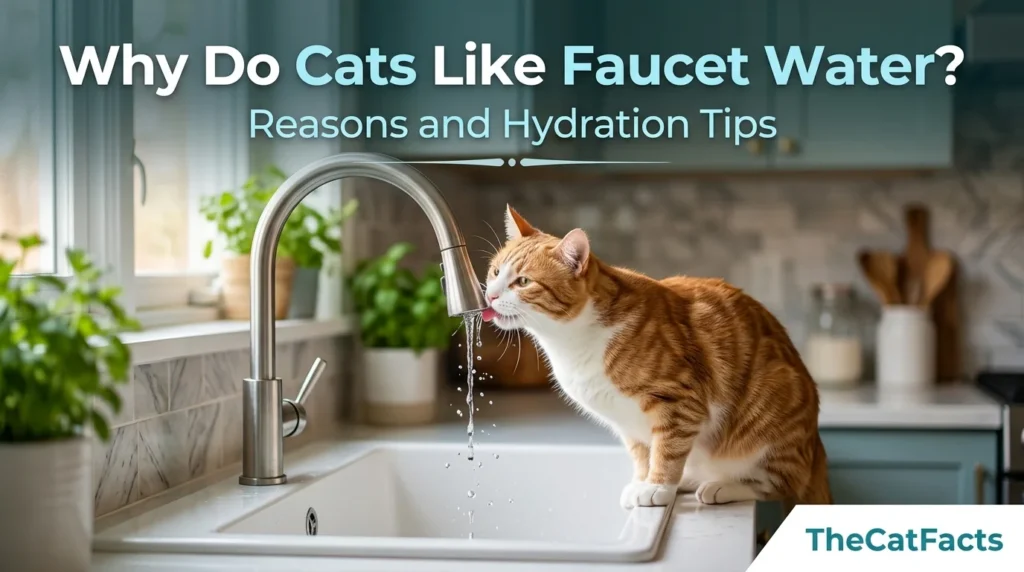
Many cat owners notice their cat ignoring a full water bowl while eagerly waiting beside the sink for the faucet to turn on. This behavior is surprisingly common and is rooted in feline instincts, drinking preferences, and natural survival behaviors.
Most cats prefer moving water because they instinctively associate it with freshness and safety. Running water is often cooler, contains more oxygen, and is less likely to be contaminated than stagnant water in the wild. Even though indoor cats live safely indoors, these instincts remain strong.
Some cats are also attracted to the movement, sound, and sparkle of flowing water. Others simply dislike their water bowl because of its location, shape, or cleanliness.
Understanding why your cat prefers faucet water helps you encourage better hydration while ensuring your pet stays healthy and comfortable.
Why Do Cats Like Faucet Water?
Cats like faucet water because flowing water naturally appears fresher, cleaner, and safer than still water. Their ancestors relied on moving streams instead of standing pools, and modern cats continue to follow these instincts.
Domestic cats descended from wild felines that survived in dry environments. Drinking from stagnant water could expose them to bacteria, parasites, or decaying organic matter. Flowing water was generally a safer option.
Although household tap water is usually safe, your cat’s instincts do not recognize the difference. Instead, they respond to visual movement, cooler temperatures, and the sound of flowing water.
Several factors may influence this preference.
- Natural survival instincts
- Attraction to movement
- Cooler water temperature
- Better oxygenation
- Curiosity and playfulness
- Dissatisfaction with the water bowl
Each cat is unique, so one or several of these reasons may explain the behavior.
The Science Behind Cats Preferring Running Water
Running water appeals to several feline senses at the same time.
Evolutionary Instincts
Cats evolved to survive by avoiding potentially contaminated water sources.
In nature, stagnant water can contain harmful bacteria, parasites, insects, algae, and waste from other animals. Moving water is generally safer because it is constantly refreshed.
Even though your cat lives indoors, thousands of years of evolution still influence its choices.
Better Taste and Freshness
Moving water often tastes fresher because it contains more dissolved oxygen and stays cooler than water sitting in a bowl for hours.
Cats have an excellent sense of smell. Water that has absorbed food odors, dust, or bacteria from a dirty bowl may become less appealing.
Attraction to Movement
Cats are visual hunters.
Moving objects naturally capture their attention. Just as they chase toys or insects, the sparkling movement of flowing water encourages investigation.
The changing reflections and ripples make faucet water much more interesting than a motionless bowl.
Sound Encourages Drinking
Many cats respond to the gentle sound of trickling water.
The sound helps them locate the source and may signal that fresh water is available.
Some cats even learn to associate the sound of a faucet turning on with a rewarding drink.
Cooler Temperature
Water flowing through household pipes is usually cooler than water left sitting at room temperature.
Many cats prefer cool water, especially during warm weather or after exercise.
Is Faucet Water Better Than Bowl Water?
Not necessarily.
Faucet water itself is not automatically healthier than bowl water. What matters most is cleanliness, freshness, and water quality.
If both contain the same tap water, the primary difference is usually how your cat perceives it.
| Feature | Faucet Water | Water Bowl |
| Movement | Constant | Still |
| Temperature | Usually cooler | Warms over time |
| Appeal | High for many cats | Depends on the cat |
| Freshness perception | Excellent | May seem stale |
| Convenience | Requires supervision | Always available |
| Hydration support | Good if available | Best when refreshed often |
For most households, providing clean bowls or a cat water fountain offers the best balance between convenience and hydration.
Signs Your Cat Prefers Running Water
Some cats clearly communicate their preference.
Common signs include:
- Sitting beside the sink
- Meowing until someone turns on the faucet
- Jumping onto bathroom or kitchen counters
- Pawing at the faucet handle
- Drinking from dripping taps
- Ignoring a full water bowl
- Playing with flowing water before drinking
- Waiting near showers after they are turned off
These behaviors usually indicate a preference rather than a medical problem.
However, if your cat suddenly starts drinking much more water than usual, schedule a veterinary examination. Increased thirst can signal conditions such as kidney disease, diabetes, or hyperthyroidism.
Common Reasons Cats Ignore Their Water Bowl
Many owners assume their cat dislikes the water itself, but the real issue may be the bowl.
The Bowl Is Too Close to Food
Cats naturally prefer to drink away from where they eat.
In the wild, food left near water can contaminate the drinking source.
Many indoor cats still show this preference.
Place the water bowl several feet away from food dishes to encourage drinking.
The Bowl Is Near the Litter Box
Cats dislike drinking near areas associated with waste.
Keeping water bowls away from litter boxes makes the water more appealing.
The Bowl Is Dirty
Even a thin layer of slime can discourage drinking.
Bacteria quickly build up inside bowls.
Wash bowls daily with warm water and mild dish soap, then rinse thoroughly.
Plastic Bowls Hold Odors
Plastic absorbs smells and may develop tiny scratches that harbor bacteria.
Many veterinarians recommend:
- Stainless steel bowls
- Ceramic bowls
- Glass bowls
These materials are easier to clean and resist odor buildup.
Whisker Fatigue
Some cats dislike bowls with high sides because their whiskers repeatedly touch the edges.
This discomfort is sometimes called whisker fatigue.
Choose a wide, shallow bowl that allows your cat to drink without compressing its whiskers.
Water Becomes Stale
Standing water collects:
- Dust
- Hair
- Food particles
- Saliva
- Household debris
Changing the water at least once or twice daily makes it more attractive.
The Water Is Too Warm
Cats often prefer cool water.
Warm water loses freshness more quickly and may become less appealing.
Adding fresh cool water several times each day can encourage drinking.
The Location Feels Unsafe
Cats like to monitor their surroundings while drinking.
A bowl placed in a noisy hallway or next to a washing machine may make your cat feel vulnerable.
Choose a quiet area where your cat can comfortably observe its environment while drinking.
Should You Let Your Cat Drink From the Faucet?
Yes, it is generally safe to let your cat drink from the faucet occasionally, provided your tap water is safe for human consumption. However, a constantly running faucet should not become your cat’s only source of water. Cats need access to fresh, clean water at all times, even when no one is home.
If your cat strongly prefers running water, a pet water fountain is often a better long-term solution. It provides continuous circulation without wasting water and encourages regular drinking.
Benefits of Letting Your Cat Drink From the Faucet
Many cats enjoy faucet water because it satisfies their natural preference for moving water.
Potential benefits include:
- Encourages better hydration
- Makes drinking more enjoyable
- Provides cool, fresh water
- Can help cats that normally drink too little
- May reduce the risk of dehydration
Potential Drawbacks
While occasional faucet drinking is usually harmless, there are a few disadvantages.
These include:
- Wasting water if the tap runs for long periods
- Teaching your cat to jump onto kitchen or bathroom counters
- Creating dependence on a person turning the faucet on
- Increasing the risk of slipping on wet countertops or sinks
- Leaving your cat without water when no one is home
Providing an alternative, such as a water fountain, helps avoid these problems.
Do Cats Need More Water Than They Drink?
Many cats naturally drink less water than dogs because their ancestors evolved in arid environments where much of their hydration came from prey.
Even so, modern indoor cats still need enough water to support:
- Kidney function
- Digestion
- Temperature regulation
- Healthy joints
- Blood circulation
- Urinary tract health
Cats that eat only dry kibble usually need to drink more water than those eating wet food.
How Much Water Does a Cat Need Each Day?
A healthy cat generally requires about 50 to 60 milliliters of water per kilogram of body weight each day. This includes water from both food and drinking.
The exact amount varies depending on:
- Body size
- Diet
- Activity level
- Age
- Indoor temperature
- Overall health
The table below provides a general guide.
| Cat Weight | Approximate Daily Water Requirement |
| 2 kg (4.4 lb) | 100 to 120 ml |
| 3 kg (6.6 lb) | 150 to 180 ml |
| 4 kg (8.8 lb) | 200 to 240 ml |
| 5 kg (11 lb) | 250 to 300 ml |
| 6 kg (13.2 lb) | 300 to 360 ml |
| 7 kg (15.4 lb) | 350 to 420 ml |
Remember that cats eating canned food receive a significant portion of this water from their meals.
Does Wet Food Help Keep Cats Hydrated?
Yes. Wet food contains much more moisture than dry kibble and can significantly increase your cat’s daily water intake.
Many veterinarians recommend including wet food in the diet, especially for cats that:
- Rarely drink from bowls
- Have a history of urinary tract problems
- Are older
- Live in hot climates
- Need extra hydration
Wet Food vs Dry Food
| Feature | Wet Food | Dry Food |
| Moisture content | Very high | Low |
| Supports hydration | Excellent | Limited |
| Water intake from meals | High | Minimal |
| Storage after opening | Refrigeration needed | Easy to store |
A balanced feeding plan can include both wet and dry food, depending on your veterinarian’s recommendations and your cat’s nutritional needs.
Signs Your Cat May Not Be Drinking Enough
Cats are good at hiding illness, so dehydration may develop gradually before obvious symptoms appear.
Watch for:
- Dry or sticky gums
- Sunken-looking eyes
- Reduced energy
- Sleeping more than usual
- Loss of appetite
- Panting (which is uncommon in cats)
- Constipation
- Dark, concentrated urine
- Reduced skin elasticity
Mild dehydration can worsen quickly if the underlying cause is not addressed.
Simple Hydration Check
One way to assess hydration at home is the skin tent test.
Gently lift the loose skin over your cat’s shoulders, then release it.
- If it quickly returns to normal, hydration is likely adequate.
- If it remains raised or returns slowly, dehydration may be present.
This test is only a rough guide. Older cats or overweight cats may give misleading results. If you suspect dehydration, contact your veterinarian promptly.
Which Cats Are at Higher Risk of Dehydration?
Some cats require closer monitoring because they lose water more easily or are less likely to drink enough.
Higher-risk groups include:
- Kittens
- Senior cats
- Cats with kidney disease
- Cats with diabetes
- Cats experiencing vomiting or diarrhea
- Cats recovering from surgery
- Nursing mother cats
- Overweight cats that move less
- Cats living in hot, humid weather
These cats may benefit from multiple water stations throughout the home and frequent monitoring.
How to Encourage Your Cat to Drink More Water
Most cats will drink more if drinking is made easy, comfortable, and interesting.
Place Several Water Bowls Around the House
Cats often drink more when water is available in multiple locations.
Try placing bowls:
- Near favorite sleeping spots
- On different floors of the home
- In quiet rooms
- Away from busy walkways
Avoid placing every bowl in one location.
Keep Water Away From Food
Many cats prefer separation between eating and drinking areas.
A distance of several feet is often enough to encourage more frequent drinking.
Refresh Water Daily
Fresh water tastes and smells better.
For the best results:
- Replace water at least once daily.
- Wash the bowl every day.
- Refill with cool, clean water.
During hot weather, refreshing water twice daily is even better.
Try Different Bowl Materials
Cats can have surprisingly strong preferences.
Experiment with:
- Stainless steel
- Ceramic
- Glass
Avoid cracked bowls or heavily scratched plastic containers that can trap bacteria and odors.
Choose the Right Bowl Shape
A shallow, wide bowl often works best because it reduces contact with the whiskers.
Some cats also prefer elevated bowls, particularly older cats with arthritis or neck discomfort.
Offer a Cat Water Fountain
Many cats immediately increase their water intake after switching to a fountain.
The continuous movement:
- Keeps water circulating
- Helps maintain freshness
- Appeals to natural instincts
- Reduces boredom
Clean the fountain regularly according to the manufacturer’s instructions to prevent bacterial buildup.
Can Ice Cubes Encourage Drinking?
Some cats enjoy playing with floating ice cubes before drinking.
Adding a small ice cube can:
- Keep water cooler longer
- Increase curiosity
- Encourage hesitant drinkers
Always supervise if your cat likes to bat at the ice, and ensure the cubes are small enough not to become a choking hazard.
Is Filtered Water Better for Cats?
In many homes, clean tap water is perfectly safe for cats.
However, some cats seem to prefer filtered water because it may have fewer mineral or chlorine odors.
If your local tap water has an unusual taste or smell, trying filtered water may encourage better drinking habits.
If you have concerns about your household water quality, consult your local water authority or use a filter certified for drinking water.
Expert Tips for Improving Your Cat’s Hydration
- Keep several clean water stations throughout the home.
- Offer both still water and moving water to discover your cat’s preference.
- Feed wet food if appropriate for your cat’s nutritional needs.
- Wash bowls every day to remove bacteria and odors.
- Use wide, shallow bowls to improve comfort.
- Monitor your cat’s drinking habits for sudden changes.
- Encourage regular veterinary wellness exams, especially for senior cats.
A noticeable increase or decrease in water intake should never be ignored. It can be one of the earliest signs of an underlying health condition and deserves prompt veterinary attention.
Can Drinking From the Faucet Be a Sign of a Health Problem?
Usually, no. Most cats drink from the faucet because they enjoy moving water. However, if your cat suddenly becomes obsessed with running water or starts drinking much more than usual, it may indicate an underlying medical condition.
A sudden increase in thirst, known as polydipsia, should always be discussed with a veterinarian, especially if it continues for more than a day or two.
Normal Faucet Drinking vs Excessive Thirst
The table below can help you tell the difference.
| Behavior | Usually Normal | May Need Veterinary Attention |
| Occasionally drinks from the faucet | Yes | No |
| Prefers a water fountain | Yes | No |
| Drinks more during hot weather | Yes | Sometimes |
| Suddenly drinks from every water source | No | Yes |
| Constantly begs for running water | Sometimes | Yes, if new |
| Drinks and urinates much more than usual | No | Yes |
| Drinks despite eating wet food | Sometimes | If excessive |
| Increased thirst with weight loss | No | Yes |
When in doubt, monitor your cat for 24 hours and contact your veterinarian if the behavior is unusual or accompanied by other symptoms.
Medical Conditions That Can Cause Increased Thirst
Excessive drinking is often more important than the preference for faucet water itself.
Several health conditions can make a cat drink more.
Chronic Kidney Disease
Kidney disease is one of the most common illnesses in older cats.
As the kidneys lose their ability to concentrate urine, cats produce larger amounts of urine and need to drink more water to replace those losses.
Other signs include:
- Weight loss
- Poor appetite
- Vomiting
- Bad breath
- Poor coat quality
- Increased urination
Early diagnosis can improve quality of life and slow disease progression.
Diabetes Mellitus
Cats with diabetes often become noticeably thirstier.
Common signs include:
- Increased drinking
- Frequent urination
- Weight loss despite a good appetite
- Weakness
- Lethargy
Diabetes requires veterinary diagnosis and long-term management.
Hyperthyroidism
Hyperthyroidism usually affects middle-aged and senior cats.
Cats with this condition may show:
- Increased thirst
- Increased appetite
- Weight loss
- Hyperactivity
- Vomiting
- Poor coat condition
Blood tests are needed to confirm the diagnosis.
Urinary Tract Disease
Cats experiencing urinary problems may visit the water bowl more frequently.
Watch for:
- Straining to urinate
- Blood in the urine
- Frequent trips to the litter box
- Crying during urination
- Urinating outside the litter box
Male cats with a urinary blockage require emergency treatment because the condition can become life-threatening within hours.
Dehydration From Illness
Vomiting, diarrhea, fever, or overheating can increase a cat’s need for water.
If your cat is sick and drinking more than usual, treat the illness as the priority rather than focusing only on the drinking behavior.
When Should You Contact a Veterinarian?
A cat that simply enjoys faucet water is not usually a cause for concern.
However, you should schedule a veterinary visit if your cat:
- Suddenly drinks much more than usual
- Drinks excessively for several days
- Urinates far more frequently
- Stops eating
- Loses weight
- Vomits repeatedly
- Appears weak or lethargic
- Shows signs of pain
- Has blood in the urine
- Has difficulty urinating
Prompt veterinary care can identify serious diseases before they become more advanced.
Common Mistakes Cat Owners Make
Small mistakes can unintentionally discourage cats from drinking enough water.
Avoid these common problems.
Using Only One Water Bowl
Some cats prefer having several drinking locations.
Providing multiple bowls increases the chance that your cat will drink throughout the day.
Forgetting to Clean Water Bowls
A bowl may look clean but still contain bacteria or a slippery biofilm.
Daily washing helps keep water fresh and appealing.
Choosing the Wrong Bowl
Deep, narrow bowls may discourage drinking.
Instead, choose bowls that are:
- Wide
- Shallow
- Stable
- Easy to clean
Placing Bowls in Busy Areas
Cats prefer calm environments.
Avoid placing water bowls:
- Beside loud appliances
- Near doors with heavy traffic
- Next to litter boxes
- In crowded hallways
Assuming Faucet Water Is Always Better
The movement of faucet water is attractive, but constantly running taps are not necessary.
A clean bowl or quality water fountain can provide the same benefits while conserving water.
Myths vs Facts
| Myth | Fact |
| Cats only like faucet water because it tastes better. | Most are attracted to the movement, freshness, and cooler temperature. |
| Cats naturally drink enough water. | Many indoor cats need encouragement to stay properly hydrated. |
| Dry food provides enough moisture. | Dry food contains very little water compared with wet food. |
| A cat that drinks more is always healthy. | Excessive thirst can signal serious medical conditions. |
| All cats love water fountains. | Many do, but some still prefer bowls or faucets. |
Daily Hydration Checklist
Use this simple checklist to help keep your cat hydrated.
✔ Provide fresh water every day.
✔ Wash water bowls daily.
✔ Offer water in multiple locations.
✔ Keep bowls away from food and litter boxes.
✔ Consider a water fountain if your cat enjoys running water.
✔ Feed wet food when appropriate.
✔ Monitor changes in drinking habits.
✔ Schedule regular veterinary wellness examinations.
Veterinary Advice for Healthy Hydration
Veterinarians recommend focusing on consistent hydration rather than forcing a specific drinking method.
Good hydration supports:
- Kidney health
- Urinary tract function
- Digestion
- Blood circulation
- Body temperature regulation
- Overall wellbeing
If your cat consistently avoids drinking or suddenly changes its drinking habits, your veterinarian may recommend:
- A physical examination
- Blood tests
- Urinalysis
- Blood pressure measurement
- Imaging studies if needed
These tests help identify hidden illnesses before more serious symptoms develop.
Quick Summary
Here are the key points to remember:
- Cats naturally prefer moving water because it appears fresher and safer.
- Faucet drinking is usually normal behavior.
- Clean bowls and water fountains are excellent alternatives.
- Wet food can significantly improve hydration.
- Multiple water stations encourage drinking.
- Sudden increases in thirst should never be ignored.
- Daily bowl cleaning improves water quality.
- Regular veterinary checkups help detect diseases that affect hydration early.
Conclusion
Cats often prefer faucet water because their natural instincts tell them that moving water is cleaner, fresher, and safer than still water. This preference is completely normal and reflects behaviors inherited from their wild ancestors.
While allowing your cat to drink from the faucet occasionally is generally safe, it should not replace constant access to fresh drinking water. Clean bowls, properly maintained water fountains, and moisture-rich diets can all help support healthy hydration.
Pay close attention to any sudden changes in your cat’s drinking habits. A noticeable increase in thirst, especially when combined with increased urination, weight loss, vomiting, or changes in appetite, deserves prompt veterinary evaluation. By understanding your cat’s preferences and providing an environment that encourages regular drinking, you can help support lifelong kidney health, urinary health, and overall well-being.
FAQs
Why does my cat only drink from the faucet?
Many cats instinctively prefer moving water because it appears fresher, cooler, and safer than still water. Flowing water also captures their attention through movement and sound. If your cat otherwise seems healthy and has access to clean water, this behavior is usually normal.
Is it safe for my cat to drink tap water?
In most areas where tap water is safe for people to drink, it is also safe for healthy cats. If you have concerns about your local water quality or notice unusual odors or tastes, filtered water may be a good alternative.
Should I buy a water fountain for my cat?
A water fountain is an excellent option for many cats that prefer running water. It keeps water circulating, encourages hydration, and provides fresh water throughout the day. Regular cleaning is essential to prevent bacteria from building up.
Why won’t my cat drink from its water bowl?
Your cat may dislike the bowl’s location, material, shape, or cleanliness. Some cats also avoid bowls placed near food or litter boxes. Trying a wide ceramic or stainless steel bowl in a quiet location often helps.
How can I tell if my cat is dehydrated?
Signs of dehydration include dry gums, lethargy, sunken eyes, constipation, and reduced skin elasticity. If you suspect dehydration, especially if your cat is vomiting, has diarrhea, or refuses to drink, contact your veterinarian promptly.
How much water should an indoor cat drink?
Most healthy cats need approximately 50 to 60 milliliters of water per kilogram of body weight each day, including moisture from food. Cats eating wet food usually drink less because they obtain water from their meals.
Can drinking too much water mean my cat is sick?
Yes. Excessive thirst may be an early sign of kidney disease, diabetes, hyperthyroidism, or other medical conditions. If your cat suddenly drinks much more than usual or urinates more frequently, arrange a veterinary examination.
Do cats prefer cold water?
Many cats enjoy cool water because it often tastes fresher than water left standing at room temperature. Refreshing the water daily or adding a small ice cube during warm weather may encourage some cats to drink more.
Is faucet water cleaner than bowl water?
The water itself is usually the same, but cats often perceive flowing water as fresher. A clean bowl with regularly changed water is just as healthy and is more practical for everyday use.
Can wet food replace drinking water?
No. Wet food provides valuable moisture and helps improve hydration, but cats should always have access to fresh drinking water. Both water and moisture-rich food work together to support overall health.

Jack Turner is a Pet Care Content Writer with more than 9 years of experience creating informative, engaging, and research based content focused on companion animal care, pet health, behavior, nutrition, grooming, and responsible ownership. He specializes in transforming expert pet care information into simple and practical resources that help pet owners make better decisions for their animals.