
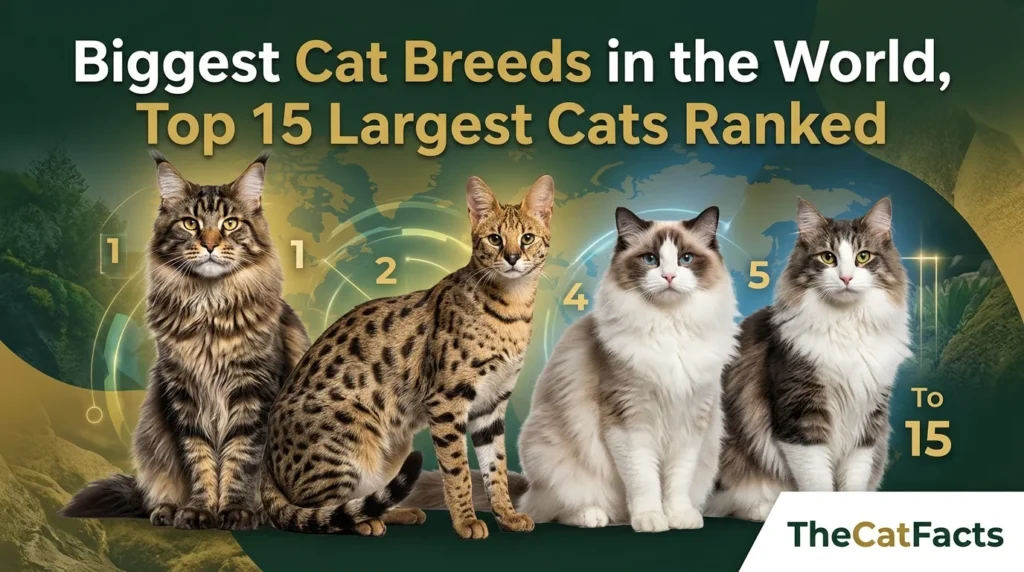
Cats come in an incredible range of sizes, from tiny breeds that weigh only a few pounds to gentle giants that rival small dogs. While every cat has its own unique personality, the world’s biggest cat breeds often stand out for their impressive size, muscular build, and affectionate nature. Many people assume that a larger cat is more difficult to care for, but most giant breeds are calm, social, and well suited to family life when given proper nutrition, exercise, and veterinary care.
If you are considering a large cat, it is important to understand that size is only one part of the equation. Genetics, diet, activity level, and overall health all influence how big a cat becomes. Some breeds grow slowly and may not reach their full size until they are 3 to 5 years old. Others develop quickly but remain lean and athletic rather than bulky.
This guide ranks the 15 biggest domestic cat breeds by their typical size and weight. It also explains their personalities, grooming needs, health concerns, and care requirements, helping you choose the right giant feline companion.
Which Cat Breed Is the Biggest?
The Maine Coon is widely recognized as the biggest domestic cat breed by overall size. Adult males commonly weigh between 13 and 18 pounds (5.9 to 8.2 kg), although some healthy individuals exceed 20 pounds (9 kg). They are also among the longest domestic cats, often measuring over 40 inches (102 cm) from nose to tail tip.
However, size can be measured in different ways:
| Measurement | Breed Often Ranked Highest |
| Overall body size | Maine Coon |
| Average weight | Savannah (especially F1 and F2 generations) |
| Height | Savannah |
| Length | Maine Coon |
| Muscular build | Norwegian Forest Cat and Siberian |
Healthy weight always depends on the individual cat’s body condition rather than a specific number on the scale. A well-conditioned large cat should have a visible waist and easily felt ribs beneath a thin layer of fat.
How Cat Breed Size Is Ranked
Large cat breeds are ranked using several factors instead of weight alone.
Average Adult Weight
Weight is one of the easiest ways to compare breeds. Male cats are usually larger than females, and healthy adults often weigh significantly more than kittens or senior cats.
Body Length
Some breeds have exceptionally long bodies and tails, making them appear much larger even if they are not the heaviest.
Height
Leg length contributes to a cat’s overall size. Savannah cats, for example, have long legs that make them one of the tallest domestic breeds.
Bone Structure
Cats with broad chests, heavy bones, and muscular frames generally appear larger than slender breeds of the same weight.
Growth Rate
Unlike many smaller breeds that mature within one year, giant breeds continue developing for several years.
| Breed Type | Typical Time to Reach Full Size |
| Small breeds | 10 to 15 months |
| Medium breeds | 12 to 18 months |
| Large breeds | 2 to 3 years |
| Giant breeds | 3 to 5 years |
Quick Comparison of the World’s Biggest Cat Breeds
| Rank | Breed | Average Weight | Body Length | Coat Length | Personality |
| 1 | Maine Coon | 13 to 18 lbs | Very long | Long | Friendly |
| 2 | Savannah | 12 to 25 lbs | Very long | Short | Active |
| 3 | Norwegian Forest Cat | 12 to 16 lbs | Long | Long | Calm |
| 4 | Ragdoll | 10 to 20 lbs | Long | Semi-long | Gentle |
| 5 | Siberian | 10 to 17 lbs | Medium to long | Long | Affectionate |
| 6 | Chausie | 15 to 25 lbs | Long | Short | Athletic |
| 7 | Ragamuffin | 10 to 20 lbs | Large | Semi-long | Sweet |
| 8 | Turkish Van | 10 to 20 lbs | Large | Semi-long | Energetic |
| 9 | American Bobtail | 10 to 16 lbs | Medium | Medium | Adaptable |
| 10 | British Shorthair | 9 to 18 lbs | Medium | Short | Easygoing |
| 11 | Bengal | 8 to 15 lbs | Medium | Short | Intelligent |
| 12 | Pixie-Bob | 8 to 17 lbs | Medium | Medium | Loyal |
| 13 | Selkirk Rex | 10 to 16 lbs | Medium | Curly | Relaxed |
| 14 | Highlander | 10 to 20 lbs | Large | Short | Playful |
| 15 | Turkish Angora | 8 to 15 lbs | Medium | Silky | Active |
1. Maine Coon
Average Size
| Characteristic | Measurement |
| Weight | 13 to 18 lbs (5.9 to 8.2 kg), some exceed 20 lbs |
| Length | Up to 40 inches (102 cm) |
| Height | 10 to 16 inches |
| Life expectancy | 12 to 15 years |
Why the Maine Coon Is So Large
The Maine Coon developed naturally in the harsh climate of the northeastern United States. Its large body, dense water-resistant coat, bushy tail, and powerful muscles helped it survive cold winters while hunting rodents.
Unlike many breeds, Maine Coons continue growing until they are around 3 to 5 years old. Their slow development allows them to build substantial muscle and bone density.
Personality
Despite their impressive size, Maine Coons are known as gentle giants. They are:
- Friendly with children
- Social with visitors
- Often comfortable around dogs
- Intelligent and easy to train
- Curious without being overly demanding
Many owners describe them as “dog-like” because they enjoy following family members around the house and learning simple commands.
Grooming Needs
Their thick double coat requires consistent care.
Recommended grooming routine:
- Brush two to three times each week.
- Check behind the ears and under the legs for tangles.
- Trim nails every few weeks.
- Clean ears when needed.
- Brush teeth regularly to reduce dental disease.
Health Considerations
Although generally healthy, Maine Coons have an increased risk of inherited conditions.
Potential health issues include:
- Hypertrophic cardiomyopathy (heart disease)
- Hip dysplasia
- Spinal muscular atrophy
- Obesity in indoor cats
- Dental disease
Responsible breeders perform genetic testing to reduce these risks.
Ideal Home
Maine Coons thrive in homes that provide:
- Plenty of climbing opportunities
- Large scratching posts
- Interactive toys
- Daily play sessions
- High-quality, protein-rich nutrition
2. Savannah
Average Size
| Characteristic | Measurement |
| Weight | 12 to 25 lbs (5.4 to 11.3 kg) |
| Height | Up to 17 inches |
| Coat | Short |
| Life expectancy | 12 to 20 years |
Why Savannah Cats Are So Tall
Savannah cats were developed by crossing domestic cats with the African serval. Early generation Savannahs (F1 and F2) inherit long legs, large ears, and lean athletic bodies from their wild ancestor.
Although they may weigh similarly to some other giant breeds, their height makes them appear significantly larger.
Personality
Savannah cats are energetic, highly intelligent, and extremely curious.
They often enjoy:
- Walking on a harness
- Learning tricks
- Playing fetch
- Solving food puzzles
- Exploring high shelves
Because of their activity level, they are best suited to experienced cat owners who can provide daily mental stimulation.
Exercise Requirements
These cats need much more exercise than average house cats.
Helpful activities include:
- Tall cat trees
- Wall-mounted climbing shelves
- Interactive toys
- Puzzle feeders
- Supervised outdoor walks with a secure harness
Without enough stimulation, Savannah cats may become bored and develop unwanted behaviors.
Nutrition
Their muscular bodies require balanced, protein-rich diets formulated for cats. Fresh water should always be available, and portion control is important to maintain a healthy body condition.
Health Concerns
Savannah cats are generally healthy but may experience:
- Digestive sensitivity
- Dental disease
- Obesity if inactive
- Injuries from excessive jumping
Routine veterinary examinations help detect health problems early.
3. Norwegian Forest Cat
Average Size
| Characteristic | Measurement |
| Weight | 12 to 16 lbs (5.4 to 7.3 kg) |
| Length | Up to 18 inches excluding tail |
| Coat | Thick double coat |
| Life expectancy | 13 to 16 years |
History
The Norwegian Forest Cat evolved naturally in Scandinavia, where cold winters favored cats with dense waterproof coats and powerful climbing abilities.
Their sturdy bodies and strong hind legs make them excellent climbers.
Personality
Norwegian Forest Cats combine independence with affection.
Typical traits include:
- Gentle nature
- Quiet voice
- Excellent climbing ability
- Strong hunting instincts
- Friendly family companion
They usually enjoy spending time with people but appreciate having their own quiet space.
Grooming
Their coat is surprisingly manageable despite its thickness.
Recommended care:
- Brush twice weekly.
- Increase grooming during seasonal shedding.
- Inspect the coat for mats.
- Trim nails routinely.
Health Risks
Potential inherited conditions include:
- Hypertrophic cardiomyopathy
- Hip dysplasia
- Glycogen storage disease type IV (rare)
- Obesity in less active cats
Maintaining an ideal weight helps reduce stress on joints throughout life.
4. Ragdoll
Average Size
| Characteristic | Measurement |
| Weight | 10 to 20 lbs (4.5 to 9 kg) |
| Height | 9 to 11 inches |
| Coat | Semi-long |
| Life expectancy | 13 to 18 years |
Why Ragdolls Become So Large
Ragdolls have a naturally large skeletal frame and continue growing until about four years of age. Their heavy body, broad chest, and strong muscles contribute to their impressive size while maintaining a soft, plush appearance.
Personality
Ragdolls are among the most relaxed and affectionate cat breeds.
They are well known for:
- Enjoying human companionship
- Being patient with children
- Getting along with other pets
- Following owners from room to room
- Adapting well to indoor living
Many Ragdolls become limp and relaxed when gently held, which inspired the breed’s name.
Grooming and Care
Although their coat is silky rather than woolly, regular grooming is still important.
Weekly care should include:
- Brushing at least twice a week
- Checking for knots around the legs and neck
- Cleaning the eyes if discharge develops
- Monitoring body weight to prevent obesity
Health Considerations
Owners should be aware of conditions such as:
- Hypertrophic cardiomyopathy
- Urinary tract disease
- Obesity
- Dental disease
Regular veterinary examinations, a balanced diet, and daily play help support long-term health.
5. Siberian
Average Size
| Characteristic | Measurement |
| Weight | 10 to 17 lbs (4.5 to 7.7 kg) |
| Height | 9 to 11 inches |
| Length | Up to 25 inches |
| Life Expectancy | 12 to 15 years |
Why Siberian Cats Are So Large
The Siberian cat is one of the oldest natural cat breeds, originating in Russia’s harsh forests. Generations of natural selection produced a powerful, muscular cat with a thick triple coat that protected it from freezing temperatures.
Like other giant breeds, Siberians mature slowly and may not reach their full adult size until they are around five years old.
Personality
Siberians are affectionate, playful, and highly intelligent.
They are known for being:
- Friendly with children
- Social with visitors
- Confident around other pets
- Curious and adventurous
- Excellent climbers
Unlike some large breeds, Siberians remain playful well into adulthood.
Grooming Needs
Their luxurious triple coat sheds heavily during seasonal changes.
Recommended grooming includes:
- Brushing two to three times weekly
- Daily brushing during heavy shedding seasons
- Regular nail trimming
- Ear cleaning when necessary
- Routine dental care
Health Concerns
Although generally hardy, Siberians can develop:
- Hypertrophic cardiomyopathy
- Obesity
- Dental disease
- Joint strain in overweight cats
A healthy diet and regular exercise help maintain their athletic build.
Best Home
Siberians enjoy homes with:
- Tall cat trees
- Window perches
- Interactive toys
- Puzzle feeders
- Plenty of opportunities for climbing and exploration
6. Chausie
Average Size
| Characteristic | Measurement |
| Weight | 15 to 25 lbs (6.8 to 11.3 kg) |
| Height | 14 to 18 inches |
| Coat | Short |
| Life Expectancy | 12 to 15 years |
Breed Overview
The Chausie was developed by crossing domestic cats with the jungle cat (Felis chaus). The result is a large, athletic cat with remarkable speed, long legs, and a lean but muscular body.
Although impressive in size, modern Chausies are bred for domestic companionship.
Personality
Chausies are highly active and need constant mental stimulation.
They typically enjoy:
- Climbing
- Running
- Puzzle games
- Water play
- Learning tricks
They form strong bonds with their families and dislike being left alone for long periods.
Exercise Requirements
This breed requires considerably more exercise than average house cats.
Daily enrichment should include:
- Climbing towers
- Interactive wand toys
- Food puzzles
- Safe outdoor enclosures
- Scheduled play sessions
Without enough activity, boredom may lead to destructive behaviors.
Health Concerns
Most Chausies are healthy, but owners should monitor for:
- Digestive sensitivities
- Obesity from inactivity
- Dental disease
- Stress-related behavioral problems
Annual veterinary wellness visits are especially important for active breeds.
7. Ragamuffin
Average Size
| Characteristic | Measurement |
| Weight | 10 to 20 lbs (4.5 to 9 kg) |
| Height | 10 to 15 inches |
| Coat | Semi-long |
| Life Expectancy | 12 to 16 years |
Breed Characteristics
The Ragamuffin shares ancestry with the Ragdoll and is known for its large frame, plush coat, and exceptionally gentle temperament.
They grow slowly and often continue developing until four years of age.
Personality
Ragamuffins are famous for their affectionate nature.
Common personality traits include:
- Calm temperament
- Patient with children
- Friendly toward strangers
- Enjoys cuddling
- Adaptable to apartment living
They thrive on companionship and generally dislike isolation.
Grooming
Their silky coat is less prone to matting than many long-haired breeds.
Routine care includes:
- Brushing twice weekly
- Nail trimming
- Ear cleaning
- Dental hygiene
- Weight monitoring
Health Concerns
Potential concerns include:
- Hypertrophic cardiomyopathy
- Obesity
- Gum disease
- Bladder problems
Preventive veterinary care greatly improves long-term health.
8. Turkish Van
Average Size
| Characteristic | Measurement |
| Weight | 10 to 20 lbs (4.5 to 9 kg) |
| Height | 10 to 14 inches |
| Coat | Semi-long |
| Life Expectancy | 12 to 17 years |
What Makes the Turkish Van Unique?
The Turkish Van is often called the “swimming cat” because many individuals naturally enjoy playing with water.
Their long, athletic bodies and powerful muscles contribute to their large appearance.
Personality
Turkish Vans are energetic and independent.
They are known for:
- High intelligence
- Curiosity
- Athletic ability
- Strong family bonds
- Love of interactive games
Unlike lap cats, many Turkish Vans prefer playing nearby instead of sitting for long periods.
Grooming
Their water-resistant coat requires relatively little maintenance.
Owners should:
- Brush once or twice weekly
- Increase brushing during shedding seasons
- Keep nails trimmed
- Monitor ear health
- Maintain dental care
Health Considerations
Possible health issues include:
- Obesity
- Dental disease
- Age-related arthritis
- Heart disease in some bloodlines
9. American Bobtail
Average Size
| Characteristic | Measurement |
| Weight | 10 to 16 lbs (4.5 to 7.3 kg) |
| Height | 9 to 10 inches |
| Coat | Short or long |
| Life Expectancy | 13 to 15 years |
Breed Overview
The American Bobtail is instantly recognizable by its naturally short tail. Despite this feature, it has a sturdy body, broad chest, and muscular legs that place it among the larger domestic cat breeds.
Personality
American Bobtails are intelligent and adaptable.
They often display:
- Dog-like loyalty
- Strong family attachment
- Good travel adaptability
- Playful behavior
- Excellent problem-solving skills
They are commonly recommended for families because of their balanced temperament.
Grooming
Maintenance is straightforward.
Routine care includes:
- Weekly brushing
- Nail trimming
- Ear checks
- Dental brushing
- Regular weight assessments
Health Risks
Although relatively healthy, they may develop:
- Hip dysplasia
- Obesity
- Dental disease
- Spinal issues in cats with extremely short tails
10. British Shorthair
Average Size
| Characteristic | Measurement |
| Weight | 9 to 18 lbs (4 to 8.2 kg) |
| Height | 12 to 14 inches |
| Coat | Short and dense |
| Life Expectancy | 12 to 20 years |
Why British Shorthairs Feel So Heavy
British Shorthairs have dense muscles, thick bones, and broad chests. Even though they are not as tall as some giant breeds, their stocky build gives them impressive weight.
Personality
These cats are calm and independent.
Owners appreciate them because they are:
- Quiet
- Gentle
- Loyal
- Patient
- Easygoing
They are excellent companions for busy households because they tolerate alone time better than many breeds.
Grooming
Their plush coat is easy to maintain.
Recommended routine:
- Brush weekly
- Trim nails regularly
- Monitor dental health
- Check ears monthly
Health Concerns
Common concerns include:
- Obesity
- Hypertrophic cardiomyopathy
- Polycystic kidney disease in some bloodlines
- Arthritis in senior cats
Maintaining an ideal body weight is particularly important because excess weight increases joint stress.
11. Bengal
Average Size
| Characteristic | Measurement |
| Weight | 8 to 15 lbs (3.6 to 6.8 kg) |
| Height | 10 to 16 inches |
| Coat | Short |
| Life Expectancy | 12 to 16 years |
Why Bengals Look Bigger Than They Are
Although Bengals are not the heaviest domestic cats, their athletic build, long bodies, and powerful muscles create the appearance of a much larger cat.
Their striking spotted or marbled coat resembles that of wild leopards.
Personality
Bengals are among the most active domestic breeds.
They enjoy:
- Climbing
- Running
- Water play
- Interactive toys
- Learning tricks
- Exploring every part of the home
This breed is best suited for owners who can provide plenty of daily exercise and mental stimulation.
Grooming
Their short coat is easy to care for.
Routine maintenance includes:
- Weekly brushing
- Nail trimming
- Ear cleaning
- Dental care
- Regular parasite prevention
Health Concerns
Potential issues include:
- Progressive retinal atrophy
- Hypertrophic cardiomyopathy
- Patellar luxation
- Obesity in inactive indoor cats
Keeping Bengals mentally engaged is just as important as meeting their physical exercise needs.
12. Pixie-Bob
Average Size
| Characteristic | Measurement |
| Weight | 8 to 17 lbs (3.6 to 7.7 kg) |
| Height | 9 to 13 inches |
| Coat | Short or long |
| Life Expectancy | 13 to 15 years |
Breed Overview
Despite their wild appearance, Pixie-Bobs are fully domestic cats. They are known for their muscular bodies, broad shoulders, tufted ears, and naturally short tails. Some individuals are also born with extra toes (polydactyl paws), which is an accepted trait in certain breed standards.
Their sturdy frame makes them appear larger than many cats with a similar weight.
Personality
Pixie-Bobs are loyal, intelligent, and devoted to their families.
Many owners describe them as having dog-like qualities because they often:
- Follow their owners around the house
- Learn simple commands
- Enjoy interactive play
- Travel well
- Form strong family bonds
Although affectionate, they are usually calm rather than overly demanding.
Grooming
Pixie-Bobs have relatively low grooming needs.
A healthy grooming routine includes:
- Brushing once or twice each week
- Trimming nails every few weeks
- Cleaning ears as needed
- Brushing teeth regularly
- Monitoring body condition
Health Concerns
Pixie-Bobs are generally healthy, but they may develop:
- Obesity
- Dental disease
- Hip problems in older cats
- Arthritis during senior years
Routine wellness examinations help detect age-related conditions early.
13. Selkirk Rex
Average Size
| Characteristic | Measurement |
| Weight | 10 to 16 lbs (4.5 to 7.3 kg) |
| Height | 9 to 11 inches |
| Coat | Curly |
| Life Expectancy | 12 to 15 years |
What Makes the Selkirk Rex Special?
The Selkirk Rex is famous for its naturally curly coat, including curly whiskers. Combined with its stocky body and solid bone structure, this gives the breed a unique teddy bear appearance.
Personality
Selkirk Rex cats are affectionate and easygoing.
They usually:
- Enjoy family life
- Get along with children
- Adapt well to other pets
- Like interactive games
- Balance playfulness with relaxation
Grooming
Although their curls are beautiful, they require gentle care.
Owners should:
- Brush carefully once or twice weekly
- Avoid excessive brushing that may damage curls
- Clean ears routinely
- Maintain regular dental care
- Trim nails regularly
Health Concerns
Potential inherited conditions include:
- Polycystic kidney disease
- Hypertrophic cardiomyopathy
- Obesity
- Dental disease
Responsible breeding programs reduce the likelihood of inherited disorders.
14. Highlander
Average Size
| Characteristic | Measurement |
| Weight | 10 to 20 lbs (4.5 to 9 kg) |
| Height | 10 to 16 inches |
| Coat | Short or long |
| Life Expectancy | 10 to 15 years |
Breed Overview
The Highlander is a relatively modern breed developed for its wild appearance while maintaining a gentle domestic temperament.
It is recognized by:
- Curled ears
- Muscular body
- Strong legs
- Large paws
- Thick neck
Although impressive in appearance, Highlanders are affectionate family companions.
Personality
Highlanders are playful throughout adulthood.
They enjoy:
- Puzzle toys
- Climbing furniture
- Chasing interactive toys
- Meeting new people
- Learning tricks
Many also enjoy playing with water.
Grooming
Routine care is simple.
Recommended grooming includes:
- Weekly brushing
- Nail trimming
- Ear cleaning
- Dental hygiene
- Coat inspection during shedding
Health Concerns
Owners should monitor for:
- Obesity
- Joint problems
- Dental disease
- Arthritis later in life
Providing daily exercise helps maintain healthy muscles and joints.
15. Turkish Angora
Average Size
| Characteristic | Measurement |
| Weight | 8 to 15 lbs (3.6 to 6.8 kg) |
| Height | 9 to 12 inches |
| Coat | Silky, medium-long |
| Life Expectancy | 12 to 18 years |
Breed Overview
The Turkish Angora is one of the oldest natural cat breeds. Although it is lighter than several other cats on this list, its elegant body, long legs, and flowing coat create the appearance of a much larger feline.
Personality
Turkish Angoras are intelligent, curious, and highly interactive.
Typical personality traits include:
- Affectionate with family
- Active and playful
- Excellent climbers
- Quick learners
- Enjoy mental challenges
They appreciate environments that provide opportunities for exploration.
Grooming
Their silky coat rarely mats.
Routine maintenance includes:
- Weekly brushing
- Nail trimming
- Ear cleaning
- Dental care
- Regular parasite prevention
Health Concerns
Possible health conditions include:
- Hypertrophic cardiomyopathy
- Deafness in some white cats with blue eyes
- Dental disease
- Obesity in inactive cats
Regular veterinary examinations help identify health issues before they become serious.
Comparison of the Biggest Cat Breeds
| Breed | Average Weight | Grooming Needs | Energy Level | Good With Children | Good With Other Pets |
| Maine Coon | 13 to 18 lbs | Moderate | Moderate | Excellent | Excellent |
| Savannah | 12 to 25 lbs | Low | Very High | Good | Good |
| Norwegian Forest Cat | 12 to 16 lbs | Moderate | Moderate | Excellent | Excellent |
| Ragdoll | 10 to 20 lbs | Moderate | Low | Excellent | Excellent |
| Siberian | 10 to 17 lbs | High | Moderate | Excellent | Excellent |
| Chausie | 15 to 25 lbs | Low | Very High | Good | Fair |
| Ragamuffin | 10 to 20 lbs | Moderate | Low | Excellent | Excellent |
| Turkish Van | 10 to 20 lbs | Moderate | High | Good | Good |
| American Bobtail | 10 to 16 lbs | Low | Moderate | Excellent | Excellent |
| British Shorthair | 9 to 18 lbs | Low | Low | Excellent | Excellent |
| Bengal | 8 to 15 lbs | Low | Very High | Good | Good |
| Pixie-Bob | 8 to 17 lbs | Low | Moderate | Excellent | Excellent |
| Selkirk Rex | 10 to 16 lbs | Moderate | Moderate | Excellent | Excellent |
| Highlander | 10 to 20 lbs | Low | High | Excellent | Good |
| Turkish Angora | 8 to 15 lbs | Low | High | Good | Good |
What Makes Some Cat Breeds Grow Larger?
Large cat breeds inherit genes that influence bone growth, muscle development, and overall body size. However, genetics alone does not determine how big a cat becomes.
Several factors influence adult size.
Genetics
Breed genetics play the biggest role in determining maximum size. Purebred giant cats inherit traits such as large bones, broad chests, and slow growth.
Nutrition
Growing kittens need complete and balanced nutrition with high-quality animal protein, healthy fats, vitamins, and minerals. Poor nutrition during kittenhood can limit healthy growth.
Neutering and Spaying
Cats that are neutered or spayed before reaching maturity may develop slightly different body proportions, although the procedure does not dramatically increase overall size. Maintaining a healthy weight after surgery is more important than the timing alone.
Exercise
Daily activity helps build strong muscles while preventing obesity. Active cats generally have better body condition than inactive indoor cats.
Overall Health
Parasites, chronic illness, or untreated medical conditions can slow growth in kittens. Regular veterinary checkups help ensure healthy development.
How to Care for a Large Cat Breed
Large cats have unique needs compared to average-sized domestic cats.
Choose the Right Diet
Feed a complete and balanced diet that matches your cat’s life stage.
Look for foods that contain:
- High-quality animal protein
- Essential fatty acids
- Taurine
- Vitamins and minerals
- Controlled calorie levels
Avoid overfeeding simply because your cat is large.
Provide Strong Furniture
Large breeds require sturdy equipment.
Choose:
- Heavy-duty cat trees
- Wide scratching posts
- Large litter boxes
- Spacious cat beds
- Durable carriers
Standard accessories may be too small for giant breeds.
Encourage Daily Exercise
Aim for at least 20 to 30 minutes of interactive play each day.
Good activities include:
- Feather wand toys
- Laser toys (always finish with a toy they can catch)
- Puzzle feeders
- Climbing shelves
- Fetch games for breeds that enjoy retrieving
Schedule Regular Veterinary Visits
Large cats can be prone to joint disease, obesity, and heart conditions.
Routine veterinary care should include:
- Annual wellness exams
- Weight monitoring
- Dental examinations
- Vaccinations
- Parasite prevention
- Blood tests for senior cats
Common Health Problems in Large Cat Breeds
Although many giant breeds are healthy, their size increases the risk of certain medical conditions.
| Health Problem | Common Symptoms | Veterinary Care |
| Obesity | Weight gain, low activity | Weight management plan |
| Hip dysplasia | Limping, stiffness | Imaging and pain management |
| Arthritis | Difficulty jumping | Pain control and lifestyle changes |
| Hypertrophic cardiomyopathy | Breathing changes, lethargy | Cardiac evaluation |
| Dental disease | Bad breath, difficulty eating | Professional dental cleaning |
| Urinary disease | Straining to urinate | Immediate veterinary assessment |
Never ignore sudden weakness, collapse, breathing difficulty, or an inability to urinate. These signs require emergency veterinary attention.
Signs Your Large Cat Is Overweight
Many owners mistake obesity for a naturally large body frame.
Watch for these warning signs:
- No visible waist
- Thick fat deposits around the ribs
- Difficulty grooming
- Reduced activity
- Heavy breathing after light exercise
- Trouble jumping onto furniture
A veterinarian can assess your cat’s Body Condition Score (BCS) and recommend a safe weight management plan.
Tips for Choosing the Right Large Cat Breed
Choosing a large cat breed involves more than picking the biggest or fluffiest cat. Consider your lifestyle, home, and experience with pets before making a decision.
Best for Families
If you have children or multiple pets, these breeds are excellent choices:
- Maine Coon
- Ragdoll
- Ragamuffin
- Siberian
- American Bobtail
- British Shorthair
These breeds are generally patient, gentle, and adaptable.
Best for Active Owners
If you enjoy interactive play and training, consider:
- Savannah
- Bengal
- Chausie
- Turkish Van
- Highlander
These cats require plenty of physical activity and mental enrichment.
Best for Apartment Living
Some large breeds adapt surprisingly well to smaller homes if they receive enough daily exercise.
Suitable breeds include:
- British Shorthair
- Ragdoll
- Ragamuffin
- Maine Coon
- Selkirk Rex
Best for First-Time Cat Owners
If you are new to cat ownership, these breeds are often easier to manage:
- Maine Coon
- British Shorthair
- Ragdoll
- American Bobtail
- Ragamuffin
They typically have calm personalities and adapt well to family routines.
Myths vs Facts About Large Cat Breeds
| Myth | Fact |
| Large cats are aggressive. | Most giant breeds are gentle and affectionate. |
| Bigger cats always eat much more. | They eat more than small cats, but portion size should be based on body condition, not size alone. |
| Large cats need outdoor access. | Many thrive indoors with climbing structures and daily play. |
| Giant breeds cannot live in apartments. | Several large breeds adapt well if given enough enrichment. |
| All large cats are closely related to wild cats. | Most are fully domestic breeds developed through selective breeding. |
| Bigger cats are healthier. | Excess weight increases the risk of arthritis, diabetes, and heart disease. |
Veterinary Advice for Raising a Healthy Large Cat
Veterinarians recommend focusing on overall body condition rather than simply achieving a high body weight.
To keep your cat healthy:
- Feed a complete and balanced diet approved for cats.
- Avoid frequent table scraps and high-calorie treats.
- Keep fresh water available at all times.
- Encourage daily exercise with interactive toys.
- Schedule annual wellness examinations.
- Brush your cat’s teeth several times each week.
- Monitor changes in appetite, weight, or behavior.
- Keep vaccinations and parasite prevention up to date.
For giant breeds, joint health is especially important. Maintaining a lean body condition reduces stress on the hips, knees, and spine throughout life.
Common Mistakes Owners Make
Avoid these common mistakes when caring for a large cat.
Overfeeding
Large cats should not be allowed to become overweight. Excess body fat increases the risk of arthritis, diabetes, urinary disease, and heart problems.
Buying Small Cat Accessories
Large breeds often outgrow standard cat furniture.
Instead, invest in:
- Oversized litter boxes
- Heavy-duty scratching posts
- Large carriers
- Strong cat trees
- Wide sleeping beds
Skipping Exercise
Even calm breeds need regular activity.
Interactive play helps:
- Maintain muscle mass
- Prevent obesity
- Reduce boredom
- Improve mental health
- Strengthen your bond
Ignoring Grooming
Long-haired giant breeds require consistent coat maintenance to prevent mats, hairballs, and skin problems.
Large Cat Breed Care Checklist
Use this checklist to keep your giant feline healthy and happy.
Daily
- Provide fresh water.
- Feed measured meals.
- Spend 20 to 30 minutes playing.
- Scoop the litter box.
- Observe appetite and behavior.
Weekly
- Brush the coat.
- Check ears and eyes.
- Brush teeth if possible.
- Clean food and water bowls thoroughly.
- Inspect claws.
Monthly
- Trim nails.
- Weigh your cat if possible.
- Check for fleas or ticks.
- Wash bedding.
- Inspect scratching posts for wear.
Yearly
- Schedule a veterinary wellness examination.
- Update vaccinations if recommended.
- Complete parasite screening.
- Discuss nutrition and weight.
- Consider blood work for senior cats.
Quick Summary of the Biggest Cat Breeds
| Rank | Breed | Average Weight | Best Known For |
| 1 | Maine Coon | 13 to 18 lbs | Largest domestic cat overall |
| 2 | Savannah | 12 to 25 lbs | Tallest domestic breed |
| 3 | Norwegian Forest Cat | 12 to 16 lbs | Powerful climber |
| 4 | Ragdoll | 10 to 20 lbs | Gentle temperament |
| 5 | Siberian | 10 to 17 lbs | Thick triple coat |
| 6 | Chausie | 15 to 25 lbs | Athletic body |
| 7 | Ragamuffin | 10 to 20 lbs | Friendly companion |
| 8 | Turkish Van | 10 to 20 lbs | Loves water |
| 9 | American Bobtail | 10 to 16 lbs | Dog-like personality |
| 10 | British Shorthair | 9 to 18 lbs | Stocky build |
| 11 | Bengal | 8 to 15 lbs | Wild appearance |
| 12 | Pixie-Bob | 8 to 17 lbs | Short tail |
| 13 | Selkirk Rex | 10 to 16 lbs | Curly coat |
| 14 | Highlander | 10 to 20 lbs | Curled ears |
| 15 | Turkish Angora | 8 to 15 lbs | Elegant build |
Expert Tips Before Bringing Home a Giant Cat
- Research the breed thoroughly before making a commitment.
- Buy from responsible breeders who perform health testing, or adopt from a reputable rescue organization.
- Ask for veterinary records before bringing a cat home.
- Prepare your home with large-sized supplies.
- Introduce new pets slowly.
- Feed a veterinarian-recommended diet.
- Monitor weight throughout your cat’s life.
- Provide climbing opportunities and mental stimulation every day.
- Never assume a large cat should be overweight.
- Schedule routine veterinary care even if your cat appears healthy.
Conclusion
Large cat breeds combine impressive size with affectionate personalities, making them wonderful companions for the right households. While the Maine Coon remains the largest domestic cat breed overall, every breed on this list has its own unique appearance, temperament, and care requirements.
Whether you prefer the gentle nature of a Ragdoll, the playful intelligence of a Bengal, the athletic elegance of a Savannah, or the fluffy charm of a Norwegian Forest Cat, responsible ownership is the key to helping your cat live a long, healthy, and happy life.
Before choosing any breed, consider your available space, grooming commitment, activity level, and budget for lifelong veterinary care. A well-cared-for giant cat can become a loyal companion for many years.
FAQs
Which is the biggest domestic cat breed?
The Maine Coon is widely considered the biggest domestic cat breed based on its overall body size and length. Healthy adult males typically weigh between 13 and 18 pounds, and some exceed 20 pounds. They also continue growing until about 3 to 5 years of age.
What is the heaviest cat breed?
The Savannah and Chausie can be among the heaviest domestic breeds, with some individuals weighing up to 25 pounds. However, early-generation Savannah cats inherit genes from the African serval, making them taller and leaner than many other large breeds.
Are large cat breeds good family pets?
Yes. Many large breeds, including the Maine Coon, Ragdoll, Siberian, Ragamuffin, and American Bobtail, are known for their gentle, affectionate personalities. They often get along well with children and other pets when properly socialized.
Do big cats eat more food?
Large cats generally require more calories than smaller breeds, but they should still be fed measured portions based on their age, activity level, and body condition. Overfeeding can lead to obesity and related health problems.
At what age do giant cat breeds stop growing?
Unlike many domestic cats that mature within one year, giant breeds often continue growing until they are between 3 and 5 years old. Their bones and muscles develop gradually during this extended growth period.
Which large cat breed sheds the most?
Long-haired breeds such as the Maine Coon, Siberian, and Norwegian Forest Cat typically shed more than short-haired breeds, especially during seasonal coat changes. Regular brushing helps reduce loose hair and prevents matting.
Are large cat breeds healthier than smaller cats?
Not necessarily. Large cats can be prone to obesity, joint disorders, and certain inherited heart conditions. Maintaining a healthy weight, feeding a balanced diet, and scheduling routine veterinary checkups are essential for long-term health.
Can large cat breeds live in apartments?
Yes. Many large breeds, including the British Shorthair, Ragdoll, Maine Coon, and Ragamuffin, adapt well to apartment living if they receive enough exercise, climbing opportunities, and daily interaction.
Which giant cat breed is easiest to groom?
The British Shorthair, Bengal, and Chausie have short coats that require minimal grooming. Weekly brushing is usually enough to remove loose hair and keep their coats healthy.
Are large domestic cats related to wild cats?
Most large domestic cat breeds are fully domestic and have been selectively bred over many generations. Savannah and Chausie cats have wild ancestry, but reputable breeders focus on producing healthy domestic companions with predictable temperaments.

Benjamin Hayes is a Senior Cat Behavior Researcher with more than 15 years of experience studying feline behavior, companion animal welfare, and human cat interactions. He specializes in translating scientific research into practical, easy to understand guidance that helps cat owners better understand their pets’ behavior, communication, health, and daily care.