
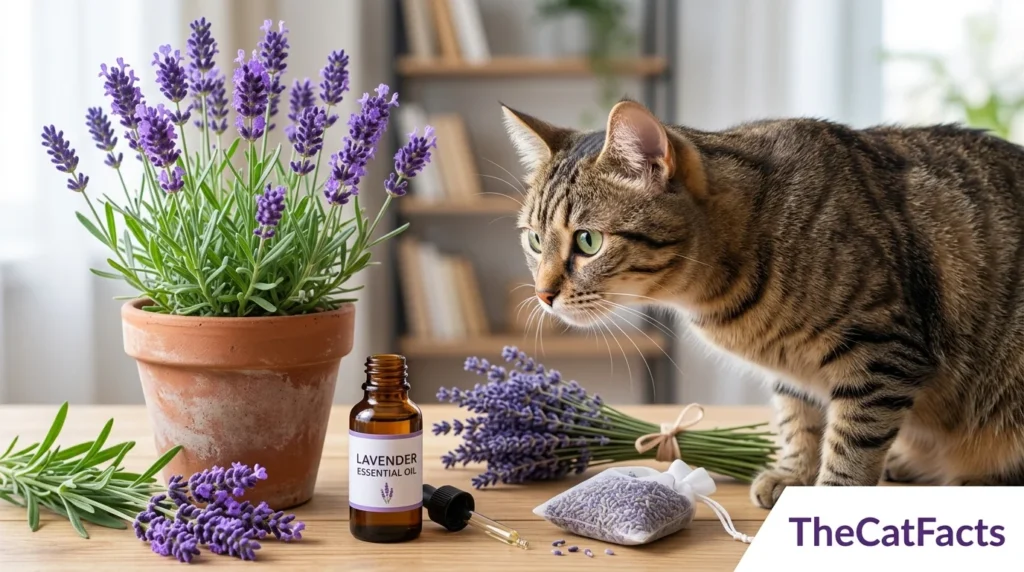
Lavender is one of the world’s most popular plants. It is found in gardens, homes, cleaning products, essential oils, perfumes, candles, and cosmetics. While many people associate its scent with relaxation and wellness, the same cannot be said for cats.
No, lavender is not considered safe for cats. Although simply walking past a lavender plant may not immediately harm a healthy cat, every form of lavender has the potential to be toxic if ingested or heavily inhaled, especially concentrated products like essential oils. Cats lack key liver enzymes needed to break down certain plant compounds, making them much more sensitive than humans or even dogs.
Understanding which forms are most dangerous, recognizing the early signs of poisoning, and knowing what to do in an emergency can help protect your cat from serious illness.
This guide explains veterinary recommendations, compares different lavender products, discusses symptoms of poisoning, and provides practical advice for keeping your feline companion safe.
Is Lavender Safe for Cats?
No. Veterinarians do not consider lavender safe for cats because it contains naturally occurring compounds that cats cannot efficiently metabolize. Concentrated lavender products pose the highest risk.
Many pet owners assume that because lavender is natural, it must also be harmless. Unfortunately, natural does not always mean safe. Lavender contains chemicals called linalool and linalyl acetate, which give the plant its pleasant fragrance but can cause poisoning in cats.
The level of risk depends on several factors:
- The form of lavender
- The amount of exposure
- The cat’s age and health
- Whether the exposure was by eating, skin contact, or inhalation
Healthy adult cats may experience only mild stomach upset after nibbling a small amount of fresh lavender, while exposure to concentrated essential oils can quickly become a veterinary emergency.
Quick Answer
| Lavender Product | Safe for Cats? | Risk Level |
| Fresh lavender plant | No | Moderate |
| Dried lavender | No | Moderate |
| Lavender flowers | No | Moderate |
| Lavender leaves | No | Moderate |
| Lavender essential oil | No | Very High |
| Diffused lavender oil | Not Recommended | High |
| Lavender potpourri | No | Moderate to High |
| Lavender candles | Use with caution | Low to Moderate |
| Lavender cleaning products | No | High |
| Lavender sprays | No | High |
Why Lavender Is Toxic to Cats
Lavender contains compounds that a cat’s liver cannot process effectively. As these chemicals build up in the body, they can affect the digestive system, nervous system, and liver.
Unlike humans, cats have a unique metabolism. Their liver lacks sufficient amounts of an enzyme family called glucuronyl transferases, which helps process many plant oils, medications, and essential oil compounds.
This means substances that seem harmless to people may remain in a cat’s body much longer, increasing the risk of toxicity.
The Toxic Compounds in Lavender
The main chemicals responsible include:
- Linalool
- Linalyl acetate
- Camphor (present in some lavender varieties)
- Various volatile essential oils
These substances become much more concentrated when lavender is processed into oils.
For example:
A handful of lavender flowers contains far less linalool than a single drop of concentrated essential oil.
That is why veterinarians are much more concerned about oils than the plant itself.
Why Essential Oils Are More Dangerous
Essential oils are created by extracting the plant’s volatile compounds into a highly concentrated liquid.
One bottle may contain the equivalent of hundreds of lavender flowers.
As a result:
- Cats absorb the chemicals rapidly.
- The liver becomes overwhelmed.
- Toxicity develops faster.
- Smaller amounts can cause illness.
Even a few drops on a cat’s fur may become dangerous because cats groom themselves and swallow the oil.
Which Forms of Lavender Are Dangerous?
All forms of lavender carry some level of risk, but concentrated products are significantly more hazardous than the fresh plant.
Many owners only think about the garden plant, yet lavender appears in dozens of household products.
Fresh Lavender Plants
Fresh lavender plants are mildly toxic.
A curious cat may chew leaves or flowers, leading to:
- Drooling
- Vomiting
- Mild diarrhea
- Temporary loss of appetite
Fortunately, most cats dislike the strong taste and stop eating after only a small amount.
Dried Lavender
Drying lavender does not remove its toxic compounds.
Dried flowers remain dangerous because they still contain:
- Linalool
- Linalyl acetate
- Essential oil residues
Cats sometimes chew dried flower arrangements or potpourri out of curiosity.
Lavender Essential Oil
Lavender essential oil is the most dangerous form.
Only a tiny amount may produce:
- Severe drooling
- Weakness
- Tremors
- Difficulty breathing
- Liver injury
Cats can be exposed by:
- Grooming oil from their fur
- Walking through spilled oil
- Licking treated surfaces
- Direct skin contact
- Accidental ingestion
Lavender Diffusers
Oil diffusers are often marketed as safe home fragrances, but they are not recommended around cats.
Diffusers release microscopic oil droplets into the air.
These droplets may:
- Land on a cat’s coat
- Be inhaled into the lungs
- Settle onto furniture where cats later groom themselves
Cats spending many hours in a room with continuous diffusion face greater exposure than owners often realize.
Lavender Candles
Lavender candles are generally less risky than essential oils because they contain much lower concentrations of fragrance compounds.
However, concerns still exist.
Potential risks include:
- Smoke irritation
- Fragrance exposure
- Burns from open flames
- Melted wax ingestion
Never allow cats near burning candles.
Lavender Sprays
Room sprays, pillow sprays, linen sprays, and furniture sprays frequently contain essential oils.
Cats may ingest these chemicals after grooming surfaces they have walked across.
Lavender Cleaning Products
Household cleaners often combine lavender fragrance with detergents and disinfectants.
These products may irritate:
- Mouth
- Stomach
- Eyes
- Skin
Cats should never walk across freshly cleaned floors until completely dry.
How Cats Are Exposed to Lavender
Cats do not have to eat lavender to become sick. Exposure can occur through ingestion, skin contact, inhalation, or grooming contaminated fur.
Many poisoning cases happen without owners realizing lavender was involved.
Eating the Plant
This is the most common exposure.
Young cats and kittens often investigate houseplants by chewing leaves.
Grooming After Contact
Cats spend several hours each day grooming.
If lavender oil gets onto their fur, they almost always swallow it during grooming.
Even a small spill can therefore become much more dangerous.
Walking Through Spills
Cats are naturally curious.
A spilled diffuser or essential oil bottle may coat their paws.
As they clean themselves, they ingest the concentrated oil.
Inhaling Diffused Oils
Breathing airborne oil particles may irritate:
- Nose
- Throat
- Airways
- Lungs
Cats with asthma or chronic respiratory disease are especially vulnerable.
Contact With Treated Fabrics
Owners sometimes spray:
- Bedding
- Sofas
- Pillows
- Blankets
- Pet beds
Cats resting on these fabrics can absorb oils through their skin and coat.
Accidental Ingestion of Household Products
Lavender appears in many unexpected items:
- Air fresheners
- Potpourri
- Hand lotions
- Soaps
- Shampoos
- Cleaning wipes
- Carpet fresheners
- Scented sachets
Keep these products well out of reach.
Signs and Symptoms of Lavender Poisoning
Symptoms vary depending on the amount and type of exposure. Essential oil poisoning usually causes faster and more severe signs than eating the plant.
Some cats show symptoms within minutes, while others may become ill several hours later.
Early Signs
Watch for:
- Excessive drooling
- Lip smacking
- Pawing at the mouth
- Vomiting
- Nausea
- Refusing food
- Hiding
- Mild lethargy
These symptoms often appear first after ingestion.
Digestive Symptoms
Cats commonly develop gastrointestinal upset.
Signs include:
- Vomiting
- Diarrhea
- Abdominal discomfort
- Reduced appetite
- Dehydration
Repeated vomiting should never be ignored.
Nervous System Symptoms
Higher doses may affect the brain and nervous system.
Possible symptoms include:
- Weakness
- Poor coordination
- Muscle tremors
- Disorientation
- Depression
- Difficulty standing
- Collapse
These signs require immediate veterinary care.
Breathing Problems
Cats exposed to concentrated oils may develop:
- Rapid breathing
- Wheezing
- Coughing
- Open-mouth breathing
- Respiratory distress
Breathing difficulties should always be treated as an emergency.
Liver Damage
Although uncommon after minor exposure, larger amounts may injure the liver.
Possible signs include:
- Extreme tiredness
- Poor appetite
- Vomiting
- Yellow gums
- Yellow eyes
- Weight loss
Liver injury may not become obvious until several days after exposure.
Symptoms by Exposure Type
| Exposure | Common Symptoms |
| Eating lavender | Vomiting, drooling, diarrhea |
| Essential oil ingestion | Severe vomiting, tremors, weakness |
| Skin exposure | Redness, irritation, grooming excessively |
| Inhalation | Sneezing, coughing, breathing difficulty |
| Large exposure | Collapse, seizures, liver damage |
What to Do if Your Cat Is Exposed to Lavender
Stay calm, remove your cat from the source, and contact a veterinarian as soon as possible. Do not wait for symptoms to become severe.
Quick action can significantly improve your cat’s chances of a full recovery.
Step 1. Remove the Source
Take your cat away from:
- Essential oil diffusers
- Spilled oils
- Lavender plants
- Cleaning products
- Sprays
Prevent any further contact.
Step 2. Check for Oil on the Fur
If oil is present:
- Prevent grooming immediately.
- Place an Elizabethan collar (cone) if available.
- Keep the cat warm and calm while arranging veterinary care.
Do not use essential oils or alcohol-based products to clean the fur.
Step 3. Rinse Skin if Directed
If your veterinarian advises it, wash the affected area using a mild pet-safe dish detergent and plenty of lukewarm water to remove oily residue. Avoid harsh soaps or human shampoos unless specifically instructed.
Step 4. Never Make Your Cat Vomit
Do not try to induce vomiting at home.
Some essential oils can be inhaled into the lungs during vomiting, increasing the risk of aspiration pneumonia and making the situation more dangerous.
Step 5. Contact Your Veterinarian Immediately
Have the following information ready:
- The lavender product involved
- Estimated amount of exposure
- Time since exposure
- Your cat’s age and weight
- Any symptoms already present
If possible, bring the product packaging with you to the clinic so the veterinary team can identify the ingredients.
Diagnosis of Lavender Poisoning in Cats
Veterinarians diagnose lavender poisoning by combining your cat’s history, symptoms, physical examination, and laboratory tests. There is no single test that confirms lavender toxicity, so providing accurate information about the exposure is extremely important.
If you suspect your cat has come into contact with lavender, tell your veterinarian:
- Which lavender product was involved
- Whether it was a plant, essential oil, diffuser, candle, spray, or cleaner
- Approximately how much your cat was exposed to
- When the exposure happened
- Whether your cat has vomited or shown other symptoms
If possible, bring the product packaging or a photo of the ingredient list.
Physical Examination
Your veterinarian will perform a thorough examination to check for signs of poisoning.
They may evaluate:
- Heart rate
- Respiratory rate
- Body temperature
- Hydration status
- Gum color
- Neurological function
- Skin irritation
- Mouth ulcers
- Abdominal pain
Blood Tests
Blood work helps assess how the body is responding to the toxin.
Common tests include:
| Test | Purpose |
| Complete blood count (CBC) | Checks for infection and overall health |
| Blood chemistry panel | Evaluates liver, kidneys, and electrolytes |
| Liver enzyme tests | Detects liver injury |
| Blood glucose | Monitors energy balance |
| Electrolyte panel | Identifies dehydration and imbalances |
Additional Diagnostic Tests
Depending on your cat’s condition, the veterinarian may also recommend:
- Urinalysis
- Blood pressure measurement
- Oxygen level monitoring
- Chest X-rays if aspiration pneumonia is suspected
- Ultrasound in severe cases involving liver damage
Treatment for Lavender Poisoning
Treatment depends on the type of exposure, the amount involved, and how quickly veterinary care begins. Early treatment often leads to a much better outcome.
There is no specific antidote for lavender poisoning. Instead, veterinarians focus on removing the toxin, controlling symptoms, and supporting affected organs.
Decontamination
If exposure occurred recently, your veterinarian may recommend methods to reduce further absorption.
Treatment may include:
- Washing the skin with pet-safe detergent
- Flushing the eyes if irritation is present
- Removing contaminated fur in severe cases
- Cleaning paws after contact with spilled oils
Never attempt aggressive washing if your cat is struggling or showing breathing problems.
Intravenous Fluids
Many poisoned cats receive IV fluids to:
- Prevent dehydration
- Support blood circulation
- Protect kidney function
- Help the liver process toxins
Fluid therapy is especially important if vomiting or diarrhea is severe.
Medications
Your veterinarian may prescribe medications such as:
- Anti-nausea drugs
- Stomach protectants
- Pain relief when appropriate
- Anti-seizure medication if tremors develop
- Liver support supplements in some cases
Always use medications exactly as prescribed.
Oxygen Therapy
Cats with respiratory distress may require oxygen therapy.
This treatment improves oxygen delivery while reducing the effort needed to breathe.
Hospitalization
Some cats only need outpatient treatment, while others require hospitalization for monitoring.
Hospital care may include:
- Continuous observation
- Repeat blood tests
- IV medications
- Nutritional support
- Neurological monitoring
Recovery and Prognosis
Most cats recover well after mild lavender exposure if they receive prompt veterinary care. Recovery may take several hours to several days, depending on the severity of poisoning.
The outlook depends on:
- Type of lavender product
- Amount of exposure
- Time before treatment
- Overall health of the cat
- Presence of liver or neurological complications
Mild Cases
Cats that only chewed a small amount of fresh lavender often recover within:
- 24 to 48 hours
These cats may only need supportive care and monitoring.
Moderate Cases
Cats exposed to larger amounts or concentrated products may require:
- Several days of treatment
- Repeat veterinary examinations
- Follow-up blood tests
Severe Cases
Cats with liver injury, seizures, or breathing problems may need:
- Intensive hospitalization
- Long-term monitoring
- Extended recovery periods
Although severe poisoning is less common, delayed treatment increases the risk of complications.
Possible Long-Term Effects
Most cats recover completely, but severe poisoning can occasionally leave lasting health problems.
Potential complications include:
- Chronic liver disease
- Reduced appetite
- Ongoing digestive sensitivity
- Neurological deficits after severe tremors or seizures
- Respiratory complications following aspiration pneumonia
Fortunately, these long-term effects are uncommon when treatment begins early.
How to Prevent Lavender Poisoning
Prevention is far easier and safer than treating poisoning. Keeping lavender products away from your cat greatly reduces the risk of accidental exposure.
Keep Essential Oils Out of Reach
Store oils:
- Inside closed cabinets
- In sealed containers
- Away from countertops
- Away from curious pets
Even a small spill can expose a cat to dangerous amounts.
Avoid Diffusing Lavender Around Cats
Many veterinarians recommend avoiding essential oil diffusers in homes with cats.
If you choose to use one:
- Keep your cat out of the room
- Ensure excellent ventilation
- Never run the diffuser continuously
- Stop immediately if your cat shows any signs of discomfort
Choose Pet-Safe Cleaning Products
Many household cleaners advertise natural fragrances.
Read labels carefully and avoid products containing concentrated essential oils when possible.
Protect Indoor Plants
If you grow lavender:
- Place it outside
- Fence off garden areas
- Prevent chewing
- Remove fallen flowers
Indoor potted lavender should not be accessible to cats.
Educate Family Members
Everyone in the household should understand that:
- Natural does not always mean safe.
- Essential oils are highly concentrated.
- Cats process toxins differently than people.
Safe Alternatives to Lavender
If you want a pleasant-smelling home without risking your cat’s health, choose non-toxic options and focus on good ventilation rather than strong fragrances.
Pet-Safe Ways to Freshen Your Home
Consider:
- Opening windows when weather permits
- Using HEPA air purifiers
- Cleaning litter boxes daily
- Washing pet bedding regularly
- Using fragrance-free cleaning products
These methods improve indoor air quality without exposing your cat to potentially harmful compounds.
Cat-Friendly Plants
If you enjoy indoor plants, safer options include:
| Plant | Generally Considered Cat Friendly |
| Cat grass | Yes |
| Spider plant | Yes |
| Boston fern | Yes |
| Areca palm | Yes |
| Catnip | Yes |
| Valerian (grown for cats) | Yes |
Always verify a plant’s safety before bringing it home, as common names can be confusing.
Common Mistakes Cat Owners Make
Many lavender poisoning cases happen because owners do not realize everyday products contain concentrated essential oils.
Avoid these common mistakes:
- Assuming natural products are harmless
- Applying essential oils directly to a cat
- Using homemade flea remedies with lavender oil
- Diffusing oils in small, poorly ventilated rooms
- Spraying bedding with lavender linen spray
- Ignoring mild vomiting after exposure
- Waiting several hours before calling a veterinarian
Early action can prevent a minor exposure from becoming a serious emergency.
Myths vs Facts
| Myth | Fact |
| Lavender is completely safe because it is natural. | Natural products can still be toxic to cats. |
| A small amount of essential oil cannot hurt a cat. | Even tiny amounts of concentrated oil can cause poisoning. |
| Cats avoid toxic plants automatically. | Curious cats, especially kittens, may chew harmful plants. |
| Diffusers are harmless because cats are not touching the oil. | Airborne oil droplets can settle on fur and be swallowed during grooming. |
| Only eating lavender is dangerous. | Skin contact and inhalation can also cause health problems. |
Veterinary Advice
If your cat is exposed to lavender, contact your veterinarian promptly instead of waiting for symptoms to worsen.
Veterinarians commonly recommend:
- Removing the source immediately
- Preventing additional exposure
- Monitoring for vomiting or breathing changes
- Seeking immediate care after essential oil exposure
- Following all treatment instructions carefully
- Returning for follow-up testing if liver injury is suspected
Do not rely on internet home remedies, as some can make poisoning worse.
Emergency Warning Signs
Seek emergency veterinary care immediately if your cat develops any of the following signs after lavender exposure.
Severe Symptoms Checklist
- Difficulty breathing
- Open-mouth breathing
- Continuous vomiting
- Repeated diarrhea with weakness
- Tremors
- Muscle twitching
- Seizures
- Collapse
- Extreme lethargy
- Inability to walk normally
- Blue or pale gums
- Yellow eyes or gums
- Loss of consciousness
These symptoms indicate potentially serious poisoning that requires immediate medical attention.
Lavender Safety Checklist
Use this checklist to reduce your cat’s risk at home.
✔ Store essential oils in closed cabinets.
✔ Keep lavender plants out of reach.
✔ Avoid using essential oil diffusers around cats.
✔ Read ingredient labels on cleaning products.
✔ Never apply lavender oil directly to your cat.
✔ Clean spills immediately.
✔ Keep scented sprays away from pet bedding.
✔ Monitor kittens closely around houseplants.
✔ Contact your veterinarian if exposure occurs.
Expert Tips for Cat Owners
- Remember that cats have unique liver metabolism and cannot process many plant oils like humans can.
- Kittens, senior cats, and cats with liver disease may be more vulnerable to poisoning.
- If you enjoy scented products, choose fragrance-free alternatives whenever possible in rooms where your cat spends time.
- Keep the phone number of your regular veterinarian and the nearest emergency clinic readily available.
- Review household products periodically to identify hidden sources of essential oils.
Conclusion
Lavender may smell pleasant and offer relaxation for people, but it is not considered safe for cats. Every form of lavender, including fresh plants, dried flowers, essential oils, diffusers, sprays, and cleaning products, carries some level of risk. Concentrated lavender essential oils are by far the most dangerous because cats cannot efficiently break down compounds such as linalool and linalyl acetate.
Most mild exposures cause digestive upset, including drooling, vomiting, and diarrhea. However, larger exposures can affect the nervous system, liver, and respiratory system, making prompt veterinary care essential. Never assume that a product labeled “natural” is automatically safe for your pet.
The best way to protect your cat is through prevention. Keep lavender products out of reach, avoid using essential oil diffusers around cats, choose pet-safe household products, and watch for early signs of poisoning if accidental exposure occurs. If you suspect your cat has come into contact with lavender, contact your veterinarian immediately. Fast treatment can make a significant difference in your cat’s recovery and long-term health.
Responsible pet ownership means creating a home that is both comfortable for you and safe for your feline companion. When in doubt, always choose products that are specifically designed to be pet friendly.
FAQs
Can cats smell lavender safely?
Cats can smell lavender, but that does not mean it is safe. Strong lavender scents, especially from essential oils or diffusers, may irritate a cat’s sensitive respiratory system. Repeated exposure can also allow oil particles to settle on the fur, where they may be swallowed during grooming.
What happens if my cat eats a lavender leaf?
A cat that eats a small amount of a lavender leaf may develop mild symptoms such as drooling, vomiting, or diarrhea. Larger amounts can cause more serious poisoning. Contact your veterinarian for advice, especially if your cat is a kitten, senior, or has underlying health conditions.
Is lavender essential oil more dangerous than the plant?
Yes. Lavender essential oil is much more concentrated than the fresh plant. Even a few drops contain large amounts of toxic compounds that cats cannot efficiently metabolize. Essential oil exposure should always be treated more seriously than chewing a small piece of the plant.
Are lavender diffusers safe for cats?
Most veterinarians recommend avoiding lavender essential oil diffusers around cats. Diffusers release tiny oil droplets into the air, which can be inhaled or settle on your cat’s coat and later be ingested during grooming.
Can lavender poisoning be fatal in cats?
Severe lavender poisoning can become life threatening, particularly after exposure to concentrated essential oils. Complications may include seizures, breathing difficulties, or liver damage. Prompt veterinary treatment greatly improves the chances of a full recovery.
How long does lavender poisoning last in cats?
Recovery depends on the amount of exposure and how quickly treatment begins. Mild cases often improve within 24 to 48 hours, while severe cases may require several days of hospitalization and ongoing monitoring.
Should I make my cat vomit after eating lavender?
No. Never try to make your cat vomit unless your veterinarian specifically instructs you to do so. Inducing vomiting at home can increase the risk of aspiration, especially if essential oils are involved.
Can I grow lavender in a garden if I have cats?
You can grow lavender outdoors, but it should be planted where your cat cannot easily access or chew it. Indoor lavender plants should be kept completely out of reach, and cats should always be supervised if they spend time in the garden.
Are lavender-scented candles safe for cats?
Lavender-scented candles are generally less risky than essential oils because they contain lower concentrations of lavender compounds. However, they can still expose cats to fragrance and smoke, and open flames present a burn hazard. Keep candles out of your cat’s reach and use them only in well-ventilated areas.
What plants are safer alternatives to lavender for cat owners?
Cat grass, catnip, spider plants, Boston ferns, and areca palms are commonly considered safer choices for homes with cats. Always verify a plant’s safety before bringing it home, as plant names can vary and some look similar to toxic species

Benjamin Hayes is a Senior Cat Behavior Researcher with more than 15 years of experience studying feline behavior, companion animal welfare, and human cat interactions. He specializes in translating scientific research into practical, easy to understand guidance that helps cat owners better understand their pets’ behavior, communication, health, and daily care.
2 thoughts on “Is Lavender Safe for Cats? Vet Guide to Every Form”