
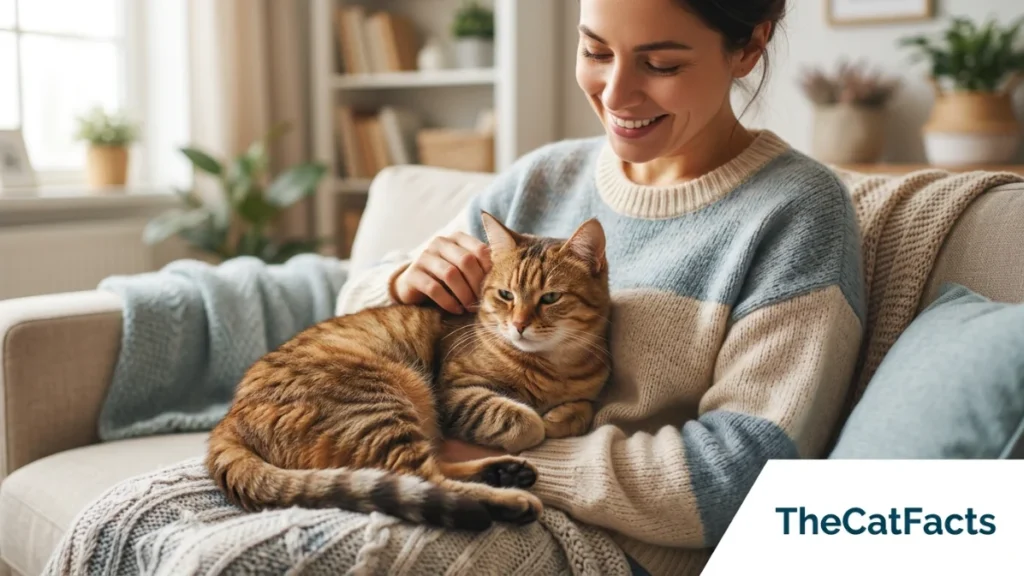
Cats sit on their owners for many reasons, including affection, trust, warmth, security, attention-seeking, and territorial behavior. In most cases, a cat sitting on you is a positive sign that your pet feels comfortable and safe in your presence.
Many cat owners wonder why their cat chooses their lap, chest, shoulders, or even their face as a favorite resting spot. While the behavior may seem simple, it can reveal a lot about your cat’s emotions, health, and relationship with you.
Understanding why your cat sits on you can help strengthen your bond and identify when the behavior is completely normal or when it may indicate a problem that needs attention.
Large feline enthusiasts can compare impressive species using biggest cat breeds in the world by size.
Why Do Cats Sit on Their Owners?
Cats often sit on their owners because they feel secure, comfortable, and emotionally connected to them.
Unlike dogs, cats tend to be selective about physical contact. When a cat chooses to sit on you, it is usually a deliberate decision rather than random behavior.
Common reasons include:
- Seeking warmth
- Showing affection
- Marking territory
- Feeling safe
- Looking for attention
- Establishing social bonds
- Seeking comfort during stress
- Enjoying your scent
How Common Is This Behavior?
Very common.
Many domestic cats regularly sit on family members, especially those who provide food, playtime, grooming, and daily care.
Some breeds are naturally more affectionate and lap-oriented than others.
What Does It Mean When a Cat Sits on You?
A cat sitting on you usually means it trusts you and enjoys being near you.
The exact meaning depends on your cat’s personality, body language, and the situation.
Signs Your Cat Is Comfortable
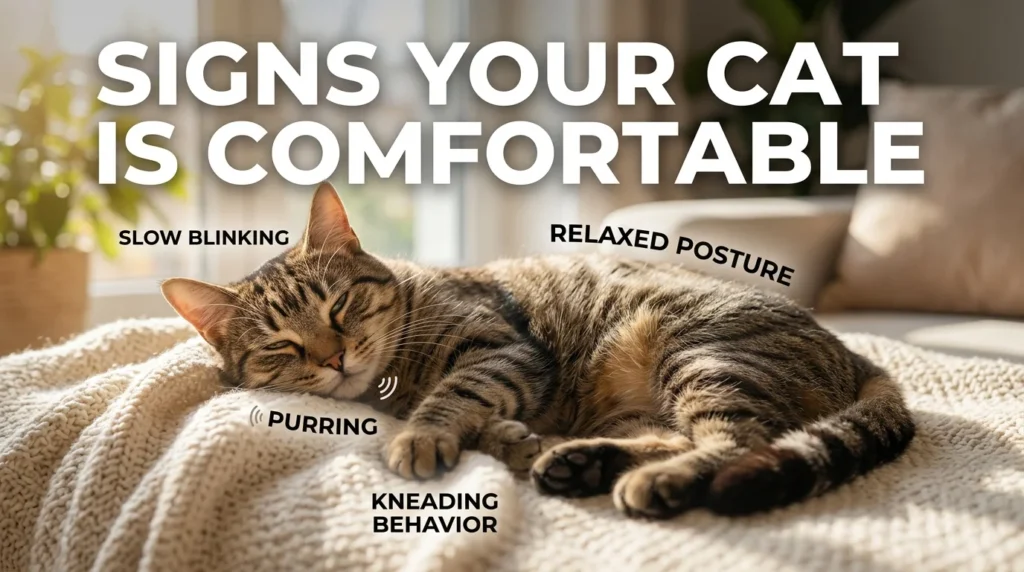
Look for these positive signals:
- Slow blinking
- Purring
- Kneading paws
- Relaxed ears
- Loose body posture
- Tail wrapped around the body
- Sleeping while on you
These behaviors typically indicate contentment and trust.
Signs Your Cat May Be Anxious
Sometimes cats sit on owners because they are seeking reassurance.
Watch for:
- Dilated pupils
- Excessive vocalization
- Restlessness
- Hiding afterward
- Clinginess that suddenly develops
If these signs appear together, stress may be involved.
Cats Sit on You Because They Trust You
Trust is one of the biggest reasons cats choose human laps.
Cats are naturally cautious animals. In the wild, resting makes them vulnerable to predators. When a cat sleeps or relaxes on you, it is demonstrating confidence that you are not a threat.
Why Trust Matters
A trusting cat may:
- Sleep deeply on you
- Expose its belly
- Purr frequently
- Follow you around the house
- Seek physical contact
These behaviors indicate a strong human-animal bond.
From balance to spatial awareness, cat whiskers and their functions explained can clarify this fascinating feline adaptation.
Your Cat Loves Your Body Heat
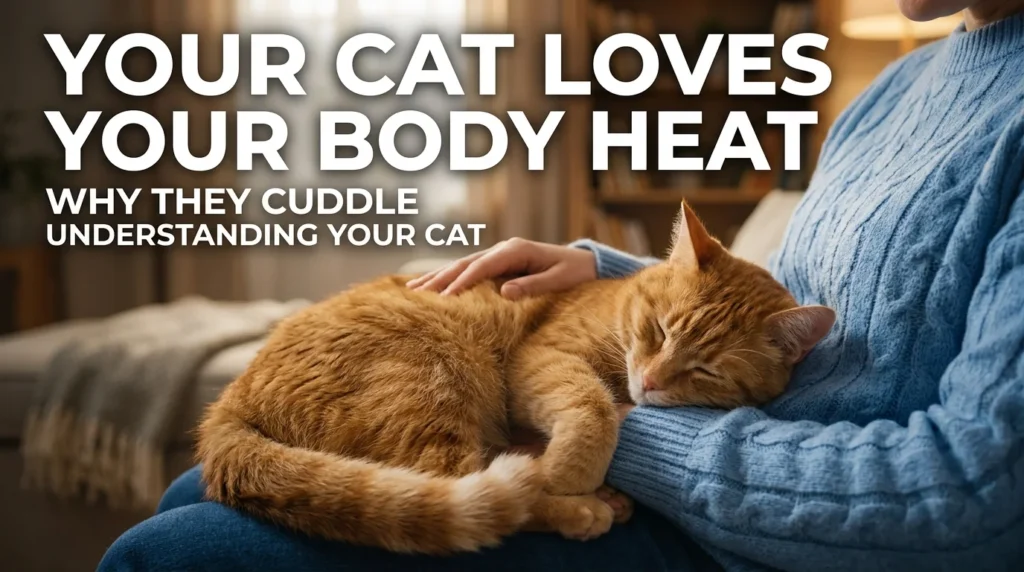
Cats naturally seek warm places.
The average cat’s normal body temperature ranges from approximately 100.5°F to 102.5°F (38.1°C to 39.2°C), which is higher than that of humans.
Because cats enjoy warmth, your lap, chest, or legs become attractive resting spots.
Favorite Warm Places Cats Choose
| Location | Why Cats Like It |
| Human lap | Warm and soft |
| Chest | Heat plus heartbeat |
| Blankets | Retain warmth |
| Sunny windows | Natural heat source |
| Electronics | Generate warmth |
During colder months, lap-sitting behavior often increases.
Cats Sit on You to Show Affection
Many cats express affection through physical closeness.
While some cats prefer sitting nearby, others prefer direct contact.
Affection Behaviors That Often Occur Together
- Sitting on your lap
- Head bunting
- Rubbing cheeks
- Slow blinking
- Purring
- Sleeping next to you
These actions are similar to social bonding behaviors seen among cats living together.
Your Cat May Be Marking You as Part of Its Territory
Cats possess scent glands on several parts of their bodies.
These glands are located around the:
- Cheeks
- Chin
- Forehead
- Tail base
- Paws
When a cat sits on you, rubs against you, or kneads your clothing, it deposits scent markers.
Is Territorial Marking a Bad Thing?
No.
In this context, scent marking is usually positive.
It means your cat considers you part of its social group and safe environment.
Why Does My Cat Sit on My Chest?
Cats often sit on chests because they enjoy the warmth, movement, and heartbeat.
Your heartbeat and breathing create rhythmic sensations that many cats find comforting.
Additional Reasons
- Elevated position
- Closer access to your face
- Increased feeling of security
- Attention-seeking behavior
Many cats choose the chest while owners are resting or sleeping.
Why Does My Cat Sit on My Lap?
Your lap provides warmth, comfort, and direct interaction.
Lap sitting is one of the strongest signs that a cat enjoys your company.
Why Some Cats Prefer Laps
- Soft surface
- Familiar scent
- Gentle petting opportunities
- Reduced environmental stress
Some cats become dedicated “lap cats” and seek laps daily.
Why Does My Cat Sit on My Head or Face?
This unusual behavior often surprises owners.
In most cases, cats sit near the head because:
- Body heat escapes from the head
- Your scent is strongest there
- The pillow is comfortable
- They feel close to you
A balanced diet becomes easier to plan with homemade food guidelines for Scottish Fold cats tailored to their nutritional needs.
When Face-Sitting Becomes Excessive
If your cat repeatedly blocks breathing or disturbs sleep, gently redirect it to a nearby bed or blanket.
Never punish the behavior.
Why Does My Cat Sit on Me While I Work?
Cats often seek attention when owners focus on something else.
Laptops, books, and keyboards can become competition for your attention.
Possible Reasons
- Seeking interaction
- Wanting petting
- Curiosity
- Boredom
- Desire for warmth
Interactive play sessions can help reduce interruptions.
Why Does My Cat Sit on Me and Knead?
Kneading is a comforting behavior that starts during kittenhood.
Kittens knead their mother’s abdomen while nursing.
Many adult cats continue this behavior throughout life.
What Kneading Means
- Relaxation
- Contentment
- Affection
- Comfort seeking
- Territory marking
Cats that knead while sitting on you usually feel extremely comfortable.
Why Does My Cat Sit on Me and Purr?
Purring often indicates happiness and relaxation.
When combined with sitting on you, it typically reflects a positive emotional state.
Other Reasons Cats Purr
Cats may also purr when:
- Nervous
- Recovering from illness
- Seeking comfort
- Experiencing mild discomfort
Body language helps determine the true meaning.
Why Does My Cat Suddenly Start Sitting on Me More Often?
A sudden increase in clingy behavior may have several explanations.
Normal Causes
- Colder weather
- Changes in routine
- New family members
- Increased bonding
Medical Causes
- Pain
- Illness
- Cognitive decline in senior cats
- Vision loss
- Hearing loss
If behavior changes dramatically and persists, a veterinary examination is recommended.
Can Sitting on You Be a Sign of Illness?
Sometimes.
A cat that suddenly becomes unusually clingy may be trying to seek comfort.
Warning Signs That Require Veterinary Attention
| Sign | Possible Concern |
| Loss of appetite | Illness |
| Weight loss | Medical condition |
| Lethargy | Pain or disease |
| Hiding frequently | Stress or illness |
| Breathing difficulties | Emergency |
| Sudden behavior changes | Medical issue |
Contact a veterinarian if these symptoms accompany clinginess.
Do Certain Cat Breeds Sit on People More Often?
Yes.
Some breeds are known for being highly social and affectionate.
Common Lap Cat Breeds
| Breed | Typical Personality |
| Ragdoll | Gentle and affectionate |
| Maine Coon | Friendly and social |
| Birman | People-oriented |
| Siamese | Highly interactive |
| Sphynx | Extremely affectionate |
Individual personality remains more important than breed.
Why Does My Cat Sit on One Person More Than Others?
Cats often develop preferences for specific individuals.
Factors That Influence Preference
- Feeding routines
- Daily interaction
- Gentle handling
- Consistent schedules
- Voice familiarity
- Respect for boundaries
The favored person is often the one who provides the most positive experiences.
What Should You Do When Your Cat Sits on You?
Enjoy the moment.
This behavior is usually a sign of a healthy bond.
Best Practices
- Pet your cat gently if it enjoys touch
- Allow it to relax
- Avoid sudden movements
- Respect signs that it wants space
- Provide comfortable resting areas nearby
Positive interactions help strengthen trust.
Common Myths About Cats Sitting on People
Myth: Cats Only Sit on People for Food
Fact: Food can influence attachment, but trust and comfort are usually stronger motivations.
Myth: Cats Sit on You to Dominate You
Fact: Most cats sit on owners because they feel safe, not because they are trying to establish dominance.
Myth: A Cat That Sits on You Is Always Happy
Fact: While often true, some cats seek comfort when stressed or unwell.
Myth: Independent Cats Never Sit on People
Fact: Even independent cats may occasionally seek physical closeness.
Expert Tips for Building a Stronger Bond
Create Positive Interactions
- Schedule daily play sessions
- Use reward-based training
- Offer puzzle feeders
- Maintain consistent routines
Respect Your Cat’s Preferences
Not every cat enjoys long cuddle sessions.
Allow your cat to choose when interaction occurs.
Provide Safe Resting Areas
Offer:
- Cat trees
- Window perches
- Soft beds
- Heated cat beds during winter
A secure cat is more likely to seek healthy social interaction.
Quick Checklist: Why Is My Cat Sitting on Me?
✔ Feels safe
✔ Trusts you
✔ Wants warmth
✔ Seeks affection
✔ Wants attention
✔ Is marking you with scent
✔ Feels stressed and seeks comfort
✔ Enjoys your company
✔ Wants to sleep peacefully
✔ May need a veterinary checkup if behavior changes suddenly
When Should You Be Concerned?
Most cats sitting on owners is completely normal.
However, schedule a veterinary visit if the behavior is accompanied by:
- Appetite loss
- Weight loss
- Breathing problems
- Excessive lethargy
- Pain signs
- Sudden personality changes
- Confusion in senior cats
These symptoms may indicate an underlying medical issue rather than simple affection.
Conclusion
When your cat sits on you, it is usually expressing trust, comfort, affection, and a desire for closeness. Cats are selective about where they rest, so choosing your lap, chest, or shoulder often reflects a strong bond. Warmth, security, scent marking, and attention-seeking can also play important roles.
Pay attention to your cat’s body language and overall health. In most cases, this behavior is a positive sign that your cat feels safe and happy with you. If the behavior suddenly changes or is accompanied by signs of illness, consult a veterinarian to rule out medical concerns.
FAQs
Why does my cat sit on me all the time?
Cats often sit on their owners because they feel safe, comfortable, and emotionally connected. Your body provides warmth, security, and companionship. Some cats are naturally more affectionate and may seek frequent physical contact throughout the day.
Is it a good sign when my cat sits on me?
Yes. In most cases, it is a positive sign that your cat trusts you and enjoys your company. Relaxed body language, purring, and sleeping while sitting on you are additional indicators of comfort and affection.
Why does my cat sit on my chest instead of my lap?
Your chest offers warmth, a steady heartbeat, and close proximity to your face. Many cats find these sensations soothing and may feel more secure resting on your chest than on your lap.
Why does my cat sit on me and knead?
Kneading is a comforting behavior that begins during kittenhood. Adult cats often knead when they feel relaxed, secure, and happy. Sitting on you while kneading is usually a sign of trust and contentment.
Why does my cat suddenly want to sit on me more?
Changes in weather, routine, household dynamics, or stress levels can increase clingy behavior. In some cases, illness or discomfort may also cause a cat to seek extra comfort from its owner.
Do cats sit on people to show love?
Many cats use physical closeness to express affection. Sitting on you, purring, rubbing against you, and sleeping nearby are all common ways cats strengthen social bonds with trusted humans.
Why does my cat sit on me while I am sleeping?
Your body provides warmth, comfort, and security throughout the night. Cats may also enjoy the predictable environment and feel safe sleeping near a trusted person.
Can a cat sitting on me mean it is sick?
Sometimes. If your cat suddenly becomes unusually clingy and also shows signs such as lethargy, appetite loss, weight loss, or behavioral changes, a veterinary examination is recommended.
Why does my cat choose me instead of other family members?
Cats often favor individuals who provide food, playtime, grooming, and positive interactions. Consistency and trust are major factors in forming strong feline-human bonds.
Do all cats like sitting on people?
No. Every cat has a unique personality. Some enjoy sitting directly on people, while others prefer staying nearby without physical contact. Both behaviors can indicate affection and trust.

Benjamin Hayes is a Senior Cat Behavior Researcher with more than 15 years of experience studying feline behavior, companion animal welfare, and human cat interactions. He specializes in translating scientific research into practical, easy to understand guidance that helps cat owners better understand their pets’ behavior, communication, health, and daily care.