
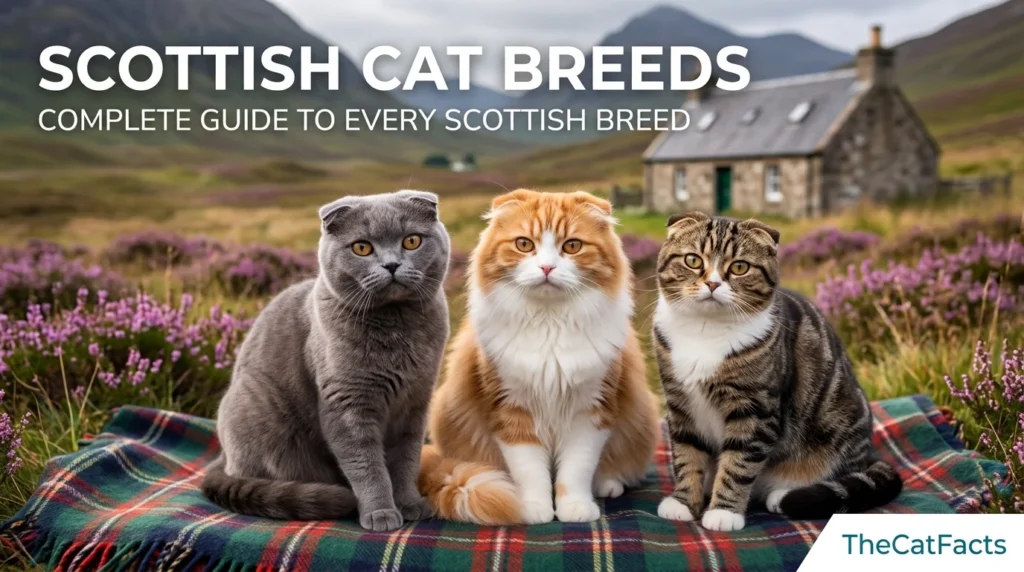
Scotland has given the world one of the most recognizable cat breeds, the Scottish Fold. Its distinctive folded ears and affectionate personality have made it a favorite among cat lovers worldwide. However, many people are surprised to learn that Scotland is also associated with other closely related breeds, including the Scottish Straight, Highland Fold, and Highland Straight.
If you are considering adopting a Scottish cat or simply want to learn more about these fascinating felines, understanding their history, physical traits, personalities, and health needs is essential. While these breeds share common ancestry, they differ in appearance, grooming requirements, and genetic considerations.
This guide explains every Scottish cat breed, how they developed, their similarities and differences, common health concerns, and what potential owners should know before bringing one home.
Quick Summary
Scottish cat breeds are a group of closely related breeds that originated from the famous Scottish Fold. They include the Scottish Fold, Scottish Straight, Highland Fold, and Highland Straight. These cats are known for their gentle personalities, round faces, large eyes, and strong bonds with their families. While they make wonderful companions, responsible breeding and awareness of inherited health issues are essential.
Scottish Cat Breeds at a Glance
| Breed | Ear Type | Coat Length | Personality | Grooming Needs |
| Scottish Fold | Folded | Short | Gentle, affectionate, quiet | Low |
| Scottish Straight | Upright | Short | Friendly, playful, adaptable | Low |
| Highland Fold | Folded | Long | Calm, loyal, loving | Moderate |
| Highland Straight | Upright | Long | Curious, social, intelligent | Moderate |
What Are Scottish Cat Breeds?
Scottish cat breeds are domestic cat breeds that trace their origins to Scotland, specifically to the Scottish Fold bloodline. Although only one naturally occurring genetic mutation created folded ears, selective breeding produced several recognized varieties.
All Scottish breeds share many features, including:
- Rounded faces
- Large, expressive eyes
- Medium-sized muscular bodies
- Sweet temperaments
- Strong attachment to their owners
- Calm indoor personalities
The primary differences lie in their ear shape and coat length.
Today, these breeds are popular worldwide because they combine an adorable appearance with easygoing personalities that fit well into many households.
History of Scottish Cat Breeds
The Origin of the Scottish Fold
The story of Scottish cat breeds began in 1961 on a farm near Coupar Angus in Perthshire, Scotland. A white barn cat named Susie was born with an unusual genetic mutation that caused her ears to fold forward instead of standing upright.
A local shepherd noticed Susie’s unique appearance, and breeders soon became interested in preserving this rare characteristic. Carefully planned breeding programs began using Susie’s descendants to establish what became the Scottish Fold breed.
Not every kitten inherited folded ears. Some were born with normal upright ears, which later became known as Scottish Straights.
Development of Additional Scottish Breeds
As breeders continued working with Scottish Fold cats, they introduced longhaired cats into breeding programs. This resulted in two additional varieties:
- Highland Fold
- Highland Straight
These longhaired cats share the same ancestry but have luxurious coats that require additional grooming.
Together, these four breeds represent the complete family of Scottish cat breeds recognized by many cat organizations.
Types of Scottish Cat Breeds
Scottish Fold
The Scottish Fold is the best-known Scottish cat breed and is famous for its distinctive folded ears. The ear fold is caused by a dominant genetic mutation that affects cartilage throughout the body.
Despite their unique appearance, not every Scottish Fold kitten is born with folded ears. Kittens are born with straight ears, and if they inherit the fold gene, the ears gradually begin folding between three and five weeks of age.
Appearance
Scottish Folds have a rounded, teddy bear-like appearance.
Typical features include:
- Folded ears
- Round head
- Large round eyes
- Thick neck
- Medium muscular body
- Short dense coat
- Plush texture
They come in nearly every recognized cat color and pattern, including:
- White
- Black
- Blue
- Cream
- Red
- Silver
- Golden
- Tabby
- Tortoiseshell
- Calico
- Bicolor
- Colorpoint
Size
| Characteristic | Average |
| Weight | 6 to 13 pounds |
| Height | 8 to 10 inches |
| Length | 14 to 16 inches |
| Lifespan | 11 to 15 years |
Personality
Scottish Folds are known for their calm and affectionate nature.
Many owners describe them as:
- Quiet
- Gentle
- Patient
- Loyal
- Intelligent
- Family oriented
Unlike some highly energetic breeds, Scottish Folds usually prefer staying close to their owners rather than climbing to the highest shelves.
They enjoy interactive toys, puzzle feeders, and gentle play sessions but are equally happy relaxing beside their favorite person.
Living With Families
Scottish Folds usually adapt well to:
- Families with children
- Seniors
- Single owners
- Apartment living
- Multi-pet households
- Calm dogs introduced properly
Their adaptable personalities make them suitable for many different lifestyles.
Grooming Needs
Shorthaired Scottish Folds require relatively little maintenance.
Weekly brushing usually helps:
- Remove loose hair
- Reduce shedding
- Prevent hairballs
- Keep the coat shiny
Other routine care includes:
- Nail trimming every two to four weeks
- Dental brushing several times weekly
- Ear checks
- Eye cleaning when needed
Exercise Requirements
Although they are not extremely active, Scottish Folds still benefit from daily exercise.
Good activities include:
- Wand toys
- Feather teasers
- Food puzzles
- Cat tunnels
- Climbing trees
- Ball toys
Aim for about 20 to 30 minutes of interactive play each day to help prevent obesity.
Health Considerations
Scottish Folds have a higher risk of inherited skeletal problems due to the same gene responsible for their folded ears.
The most important condition is Scottish Fold osteochondrodysplasia, a disorder affecting cartilage and bone development. It can lead to painful joints, reduced mobility, stiff tails, and arthritis, even in young cats.
Possible signs include:
- Difficulty jumping
- Limping
- Thickened tail
- Reluctance to play
- Stiff walking
- Pain when moving
Veterinarians recommend regular health examinations for Scottish Folds, especially as they age. Responsible breeders reduce risks by mating a folded-ear cat with a straight-ear cat rather than breeding two folded-ear cats together.
If you notice changes in your cat’s movement or activity level, seek veterinary advice promptly.
Scottish Straight
The Scottish Straight is often overshadowed by its folded-ear relative, but it is an equally charming companion. These cats are born from the same breeding lines as Scottish Folds but inherit normal upright ears instead of folded ones.
Because they do not display the folded-ear trait, many Scottish Straights have a lower risk of severe cartilage-related problems associated with the Fold gene, although careful breeding and routine veterinary care remain important.
Appearance
Scottish Straights closely resemble Scottish Folds except for their ears.
Their features include:
- Upright ears
- Round face
- Large expressive eyes
- Plush short coat
- Medium-sized muscular build
- Thick, soft fur
At first glance, they look like adorable teddy bears with alert expressions.
Size
| Characteristic | Average |
| Weight | 6 to 13 pounds |
| Height | 8 to 10 inches |
| Length | 14 to 16 inches |
| Lifespan | 12 to 16 years |
Personality
Scottish Straights are friendly, curious, and adaptable.
Many owners appreciate their balance between playfulness and relaxation.
Common personality traits include:
- Affectionate
- Intelligent
- Gentle
- Social
- Curious
- Calm indoors
They usually enjoy spending time with their family but are also content entertaining themselves with toys while their owners are away.
Grooming Needs
Shorthaired Scottish Straights have easy-care coats.
Weekly grooming helps:
- Control shedding
- Remove dead fur
- Keep skin healthy
- Reduce hairballs
Regular dental care, nail trimming, and routine veterinary checkups should also be part of their healthcare routine.
Exercise and Mental Stimulation
Scottish Straights enjoy moderate daily activity.
Keep them engaged with:
- Interactive toys
- Puzzle feeders
- Scratching posts
- Window perches
- Cat trees
- Hide-and-seek games
Providing enrichment helps prevent boredom and supports both physical and mental well-being.
Health Considerations
Scottish Straights are generally healthy cats when responsibly bred. Like many pedigreed breeds, they may still be prone to common feline conditions such as obesity, dental disease, and age-related arthritis.
Maintaining a healthy weight, feeding a balanced diet, encouraging regular exercise, and scheduling routine veterinary visits can help them enjoy a long, comfortable life.
Regular monitoring also allows veterinarians to detect potential health issues early, improving treatment outcomes and overall quality of life.
Highland Fold
The Highland Fold is the longhaired version of the Scottish Fold. It shares the same folded ears, rounded face, and sweet personality but has a luxurious, silky coat that gives it an elegant appearance.
Although less common than the shorthaired Scottish Fold, the Highland Fold is highly valued by cat enthusiasts who enjoy longhaired breeds with calm, affectionate temperaments.
Like the Scottish Fold, the Highland Fold carries the folded-ear gene, making responsible breeding and regular veterinary care especially important.
Appearance
Highland Folds have a soft, fluffy appearance with a thick double coat.
Common features include:
- Folded ears
- Round head
- Large round eyes
- Medium muscular body
- Feathered tail
- Long fur around the neck, chest, and legs
- Soft, silky coat
Their luxurious fur gives them a gentle, teddy bear-like appearance while still maintaining an athletic body underneath.
Size
| Characteristic | Average |
| Weight | 6 to 13 pounds |
| Height | 8 to 10 inches |
| Length | 14 to 16 inches |
| Lifespan | 11 to 15 years |
Personality
Highland Folds are known for being affectionate without being demanding.
They often enjoy:
- Sitting beside their owners
- Following family members around the house
- Quiet play sessions
- Gentle interaction with children
- Relaxing in sunny windows
- Spending time with other friendly pets
They are intelligent cats that appreciate routine and usually adapt well to indoor living.
Grooming Needs
Unlike their shorthaired relatives, Highland Folds require more frequent coat maintenance.
A grooming routine should include:
- Brushing three to four times each week
- Daily brushing during seasonal shedding
- Checking for tangles behind the ears and under the legs
- Regular nail trimming
- Dental care
- Ear inspections
Frequent grooming helps prevent mats, reduces loose hair, and minimizes hairballs.
Exercise Requirements
Highland Folds are moderately active.
Daily activities may include:
- Wand toy sessions
- Puzzle feeders
- Cat climbing furniture
- Interactive laser games
- Chasing lightweight balls
Around 20 to 30 minutes of play each day helps maintain a healthy weight.
Health Considerations
Highland Folds share the same inherited cartilage disorder risk as Scottish Folds because both possess the folded-ear gene.
Potential health concerns include:
- Osteochondrodysplasia
- Arthritis
- Joint stiffness
- Thickened tail
- Reduced mobility
- Obesity if exercise is limited
Owners should monitor any signs of discomfort and arrange veterinary examinations if movement becomes difficult or painful.
Highland Straight
The Highland Straight is the longhaired counterpart to the Scottish Straight. It combines upright ears with a beautiful semi-long coat, creating a graceful and elegant appearance.
Because Highland Straights do not possess folded ears, they generally avoid the skeletal issues directly associated with the Fold mutation, although they still benefit from careful breeding and regular veterinary care.
Appearance
Highland Straights have a balanced, rounded appearance with flowing fur.
Typical features include:
- Upright ears
- Thick feathered tail
- Large round eyes
- Full neck ruff
- Soft double coat
- Medium muscular frame
Their expressive faces and fluffy coats make them one of the most attractive members of the Scottish breed family.
Size
| Characteristic | Average |
| Weight | 6 to 13 pounds |
| Height | 8 to 10 inches |
| Length | 14 to 16 inches |
| Lifespan | 12 to 16 years |
Personality
Highland Straights are gentle, intelligent, and sociable.
Many owners describe them as:
- Curious
- Friendly
- Calm
- Loyal
- Playful
- Adaptable
They enjoy family interaction but are usually not overly vocal or demanding.
Grooming Needs
The long coat requires consistent maintenance.
Recommended grooming includes:
- Brushing three to five times weekly
- Removing loose undercoat during shedding seasons
- Checking for knots around the tail and belly
- Routine dental care
- Nail trimming
- Ear cleaning when necessary
Early grooming training helps kittens become comfortable with regular brushing.
Exercise and Enrichment
Highland Straights enjoy mental stimulation as much as physical activity.
Provide:
- Cat trees
- Puzzle toys
- Scratching posts
- Food enrichment games
- Interactive play sessions
- Window viewing areas
These activities help prevent boredom and encourage healthy exercise.
Health Considerations
Highland Straights are generally healthy when responsibly bred.
Common health concerns may include:
- Dental disease
- Obesity
- Hairballs
- Age-related arthritis
- Polycystic kidney disease in certain bloodlines (depending on breeding history)
Annual veterinary examinations and preventive healthcare remain the best way to support long-term health.
Are There Any Other Scottish Cat Breeds?
No officially recognized cat breeds originated naturally in Scotland beyond the Scottish Fold family.
The four commonly recognized Scottish varieties are:
- Scottish Fold
- Scottish Straight
- Highland Fold
- Highland Straight
Some people mistakenly believe breeds such as the British Shorthair or British Longhair are Scottish because they have been used in Scottish Fold breeding programs. However, these breeds originated elsewhere and are not Scottish breeds.
Likewise, the Highland Fold and Highland Straight are not entirely separate genetic breeds. They are longhaired varieties within the Scottish Fold family that differ mainly in coat length and ear shape.
Scottish Fold vs Scottish Straight
Many prospective owners struggle to decide between these two closely related cats.
The most noticeable difference is the ears, but there are important health considerations as well.
| Feature | Scottish Fold | Scottish Straight |
| Ear shape | Folded | Upright |
| Coat | Short | Short |
| Temperament | Calm and affectionate | Friendly and playful |
| Grooming | Low | Low |
| Activity level | Moderate | Moderate |
| Genetic fold mutation | Yes | No |
| Risk of cartilage disorder | Higher | Lower |
| Family friendly | Excellent | Excellent |
| Good for apartments | Yes | Yes |
For many families, the Scottish Straight offers a similar personality with fewer concerns related to inherited cartilage disorders.
Personality Comparison of Scottish Cat Breeds
Although every cat has its own personality, these breeds tend to share several behavioral traits.
| Trait | Fold | Straight | Highland Fold | Highland Straight |
| Affection | High | High | High | High |
| Intelligence | High | High | High | High |
| Vocalization | Low | Low | Low | Low |
| Playfulness | Moderate | Moderate to High | Moderate | Moderate |
| Child Friendly | Excellent | Excellent | Excellent | Excellent |
| Apartment Living | Excellent | Excellent | Excellent | Excellent |
| Grooming Needs | Low | Low | Moderate | Moderate |
Which Scottish Cat Breed Is Right for You?
The best Scottish cat breed depends on your lifestyle, grooming preferences, and willingness to manage potential health concerns.
Choose a Scottish Fold if you:
- Love the iconic folded ears.
- Want a calm indoor companion.
- Are prepared for regular veterinary monitoring.
- Understand the genetic health risks.
Choose a Scottish Straight if you:
- Prefer upright ears.
- Want a similar personality with a lower risk of cartilage-related disease.
- Prefer an easy-care short coat.
Choose a Highland Fold if you:
- Enjoy longhaired cats.
- Have time for frequent brushing.
- Understand the importance of responsible breeding and health monitoring.
Choose a Highland Straight if you:
- Like fluffy coats without folded ears.
- Can commit to regular grooming.
- Want a gentle, family-oriented companion.
Health Considerations for All Scottish Cat Breeds
Most Scottish cat breeds are healthy with proper care, but genetics play an important role in long-term wellbeing.
Responsible breeders screen breeding cats, avoid harmful pairings, and prioritize healthy bloodlines over appearance.
Routine preventive care should include:
- Annual veterinary examinations
- Vaccinations
- Parasite prevention
- Dental cleanings as recommended
- Weight management
- Balanced nutrition
- Daily exercise
- Early treatment of any mobility changes
Signs That Need Veterinary Attention
Seek veterinary care if your Scottish cat shows:
- Limping
- Difficulty jumping
- Stiff walking
- Swollen joints
- Thick or inflexible tail
- Sudden weight loss
- Loss of appetite
- Persistent vomiting
- Trouble breathing
- Significant behavior changes
Prompt evaluation often leads to earlier diagnosis and better management of health conditions.
Veterinary Advice for Prospective Owners
Before purchasing or adopting any Scottish cat, ask about its breeding history and health screening.
A responsible breeder should:
- Never breed two folded-ear cats together.
- Provide health records.
- Allow you to meet the kittens and, when possible, the parents.
- Discuss inherited health risks openly.
- Prioritize temperament and health over appearance.
If adopting from a rescue, schedule a complete veterinary examination soon after bringing your new cat home. This helps identify any underlying health issues early and establishes a preventive care plan tailored to your cat’s age and needs.
Grooming and Coat Care
Scottish cat breeds are generally easy to groom, but longhaired varieties need more frequent brushing to prevent mats and hairballs.
A regular grooming routine keeps the coat healthy, reduces shedding, and gives you an opportunity to check your cat for skin problems, parasites, or lumps.
Grooming Schedule
| Grooming Task | Scottish Fold | Scottish Straight | Highland Fold | Highland Straight |
| Brushing | Once weekly | Once weekly | 3 to 5 times weekly | 3 to 5 times weekly |
| Nail trimming | Every 2 to 4 weeks | Every 2 to 4 weeks | Every 2 to 4 weeks | Every 2 to 4 weeks |
| Ear check | Weekly | Weekly | Weekly | Weekly |
| Teeth brushing | 3 to 7 times weekly | 3 to 7 times weekly | 3 to 7 times weekly | 3 to 7 times weekly |
| Bathing | Only when necessary | Only when necessary | Occasionally | Occasionally |
Coat Care Tips
Keep your Scottish cat comfortable by following these simple tips:
- Use a soft slicker brush or metal comb.
- Brush gently to avoid pulling the fur.
- Pay attention to the belly, armpits, and behind the ears.
- Remove small tangles before they become mats.
- Reward your cat after each grooming session.
Starting grooming when your cat is a kitten helps build positive habits for life.
Nutrition for Scottish Cat Breeds
A complete and balanced diet supports healthy joints, muscles, skin, and coat while helping prevent obesity.
Scottish cats are not known for being extremely active, so portion control is important. Extra weight places additional stress on the joints, especially in Scottish Folds that may already be prone to skeletal issues.
What Should Scottish Cats Eat?
Choose a high-quality cat food that contains:
- Animal-based protein
- Healthy fats
- Essential vitamins and minerals
- Taurine
- Omega 3 and Omega 6 fatty acids
Fresh, clean water should always be available.
Foods to Avoid
Never intentionally feed your cat:
- Chocolate
- Onions
- Garlic
- Grapes
- Raisins
- Alcohol
- Caffeine
- Cooked bones
- Raw bread dough
- Foods containing xylitol
If your cat eats a potentially toxic food, contact your veterinarian immediately.
Feeding Guide
| Life Stage | Meals Per Day |
| Kitten | 3 to 4 |
| Adult | 2 |
| Senior | 2 to 3 (as advised by your veterinarian) |
Individual feeding needs vary based on age, activity level, body condition, and medical history.
Exercise and Mental Stimulation
Scottish cats benefit from daily play, even though they are generally calm and relaxed.
Exercise helps prevent obesity, supports joint health, and provides important mental stimulation.
Aim for about 20 to 30 minutes of interactive play each day.
Good enrichment ideas include:
- Feather wands
- Puzzle feeders
- Ball toys
- Cat tunnels
- Scratching posts
- Climbing trees
- Window perches
- Treat-dispensing toys
Rotating toys every few days keeps them interesting and encourages natural hunting behaviors.
Training Scottish Cat Breeds
Scottish cats are intelligent and respond well to positive reinforcement.
Although they are not as demanding as some highly active breeds, they enjoy learning simple routines.
Easy Behaviors to Teach
You can train your Scottish cat to:
- Come when called
- Use a scratching post
- Enter a carrier calmly
- Sit on command
- High five
- Accept grooming
- Walk with a harness (some cats)
Reward desired behavior with treats, praise, or play.
Avoid punishment, as it may increase fear and reduce trust.
Living With Children and Other Pets
Most Scottish cat breeds adapt well to family life when introductions are handled carefully.
Their gentle personalities make them suitable companions for respectful children and many other household pets.
Children
Teach children to:
- Handle cats gently.
- Avoid pulling ears or tails.
- Let the cat rest when it wants quiet time.
- Supervise interactions with young children.
Dogs
Scottish cats often live peacefully with calm, cat-friendly dogs if introductions are gradual.
Allow both animals to adjust at their own pace.
Other Cats
Many Scottish breeds enjoy feline companionship, especially when introduced slowly and given separate resources such as litter boxes, food bowls, and resting areas.
Common Myths vs Facts
Many misconceptions surround Scottish cat breeds, particularly the Scottish Fold.
| Myth | Fact |
| Folded ears improve hearing. | Ear shape does not improve hearing ability. |
| Every Scottish kitten has folded ears. | Many kittens develop upright ears and become Scottish Straights. |
| Scottish Folds never develop health problems. | Folded-ear cats have an increased risk of inherited cartilage disorders. |
| Longhaired Scottish cats are different species. | Highland varieties are longhaired forms of Scottish breeds. |
| Scottish cats do not need exercise. | Daily play helps maintain a healthy weight and supports joint health. |
| Folded ears should be cleaned aggressively. | Gentle weekly checks are usually sufficient unless your veterinarian recommends otherwise. |
Buying vs Adopting a Scottish Cat
Both purchasing from a responsible breeder and adopting from a rescue organization can be excellent options.
Buying From a Breeder
Look for breeders who:
- Perform health testing.
- Share veterinary records.
- Raise kittens in a clean environment.
- Socialize kittens early.
- Answer questions honestly.
- Avoid breeding two folded-ear cats together.
Avoid purchasing kittens from pet stores or online sellers who cannot provide health documentation.
Adopting
Adoption offers many benefits:
- Gives a cat a second chance.
- May cost less than buying from a breeder.
- Adult personalities are already established.
- Many rescue cats become wonderful family companions.
Ask the shelter about the cat’s health, behavior, and medical history whenever possible.
Choosing a Responsible Breeder
Selecting the right breeder is one of the most important decisions you’ll make.
A responsible breeder should:
- Prioritize health over appearance.
- Screen breeding cats for inherited conditions.
- Provide vaccination records.
- Offer a written health guarantee when appropriate.
- Encourage veterinary examinations after adoption.
- Be willing to answer questions throughout the cat’s life.
Warning signs include:
- Selling kittens that are too young.
- Refusing to show health records.
- Breeding folded-ear cats together.
- Poor living conditions.
- Pressure to purchase immediately.
Cost of Owning a Scottish Cat
The purchase price is only one part of ownership. Ongoing expenses continue throughout your cat’s life.
Estimated Annual Costs
| Expense | Estimated Cost |
| Food | Moderate |
| Routine veterinary care | Moderate |
| Pet insurance | Optional but recommended |
| Grooming supplies | Low to Moderate |
| Toys and enrichment | Low |
| Litter | Moderate |
| Emergency veterinary care | Variable |
Longhaired varieties may require additional grooming tools or occasional professional grooming if matting becomes a problem.
Common Mistakes New Owners Make
Avoid these common errors when caring for Scottish cat breeds:
- Choosing appearance over health.
- Purchasing from irresponsible breeders.
- Allowing excessive weight gain.
- Skipping regular veterinary visits.
- Ignoring early signs of joint discomfort.
- Neglecting dental care.
- Providing too little mental stimulation.
- Overfeeding treats.
- Not grooming longhaired varieties regularly.
- Assuming folded ears require special cleaning without veterinary advice.
Being proactive about healthcare, nutrition, and enrichment helps your Scottish cat enjoy a healthier and happier life.
Expert Tips for Caring for Scottish Cat Breeds
Scottish cats thrive when their physical health, emotional needs, and environment are given equal attention. Small daily habits can make a significant difference in their long-term well-being.
Keep Them at a Healthy Weight
Extra body weight increases stress on joints, especially in Scottish Folds that may already have cartilage abnormalities. Measure food portions, avoid excessive treats, and encourage daily play.
Schedule Regular Veterinary Checkups
Even healthy cats benefit from routine wellness exams. Your veterinarian can detect dental disease, arthritis, obesity, and other health issues before they become serious.
Create an Enriched Indoor Environment
Scottish cats are happiest when they have opportunities to explore and play.
Provide:
- Cat trees
- Window perches
- Puzzle feeders
- Scratching posts
- Interactive toys
- Cozy sleeping areas
Brush Teeth Regularly
Dental disease is one of the most common health problems in cats. Regular tooth brushing and professional dental cleanings, when recommended, help protect your cat’s oral health.
Watch for Changes in Mobility
If your cat suddenly hesitates to jump, becomes less active, or appears stiff after resting, schedule a veterinary examination. Early diagnosis can improve comfort and quality of life.
Scottish Cat Breed Care Checklist
Use this checklist to stay on top of your cat’s daily and routine care.
Daily
- Feed a balanced diet.
- Provide fresh drinking water.
- Scoop the litter box.
- Play for 20 to 30 minutes.
- Check for changes in appetite or behavior.
Weekly
- Brush the coat.
- Inspect ears.
- Trim nails if needed.
- Clean food and water bowls thoroughly.
- Check for skin issues or parasites.
Monthly
- Weigh your cat.
- Inspect teeth and gums.
- Replace worn toys.
- Review parasite prevention if recommended.
Yearly
- Schedule a veterinary wellness exam.
- Update vaccinations if needed.
- Discuss nutrition and weight.
- Arrange professional dental care when appropriate.
Conclusion
Scottish cat breeds are admired around the world for their adorable appearance, gentle personalities, and strong bonds with their families. Whether you choose a Scottish Fold, Scottish Straight, Highland Fold, or Highland Straight, each breed offers a loving and loyal companion that fits well into many homes.
While these cats are generally affectionate and adaptable, responsible ownership is essential. Understanding the differences between the breeds, maintaining a healthy weight, providing regular grooming, and scheduling routine veterinary care all contribute to a longer, healthier life.
If you are considering a Scottish Fold, remember that its unique folded ears are linked to an inherited cartilage disorder. Choosing a kitten from a responsible breeder who follows ethical breeding practices can help reduce health risks. For families who love the Scottish look but prefer fewer genetic concerns, the Scottish Straight or Highland Straight can be excellent alternatives.
With proper care, enrichment, and preventive healthcare, Scottish cat breeds can become cherished members of the family for many years.
FAQs
Are Scottish Fold and Scottish Straight the same breed?
They are closely related and come from the same breeding lines. The main difference is that Scottish Folds have folded ears caused by a genetic mutation, while Scottish Straights have normal upright ears. They share many physical and personality traits, but Scottish Straights generally have a lower risk of cartilage-related disorders.
Which Scottish cat breed is the healthiest?
Scottish Straights and Highland Straights are generally considered healthier because they do not have the folded-ear mutation associated with osteochondrodysplasia. Regardless of breed, responsible breeding, proper nutrition, and regular veterinary care play major roles in maintaining good health.
Do all Scottish Fold kittens have folded ears?
No. All Scottish Fold kittens are born with straight ears. If they inherit the fold gene, their ears usually begin folding between three and five weeks of age. Kittens whose ears remain upright become Scottish Straights.
Are Scottish cat breeds good for first-time owners?
Yes. Most Scottish cat breeds are affectionate, adaptable, and relatively easy to care for. Their calm temperament makes them suitable for beginners, provided owners understand their grooming needs and potential health concerns, especially for Scottish Folds.
Are Highland Fold cats different from Scottish Folds?
Highland Folds are the longhaired variety of the Scottish Fold. They have the same folded ears and similar personality but require more frequent grooming because of their longer coat.
How much exercise do Scottish cats need?
Most Scottish cat breeds benefit from about 20 to 30 minutes of interactive play each day. Regular exercise helps prevent obesity, supports joint health, and provides mental stimulation.
Can Scottish cat breeds live with dogs?
Yes. Scottish cat breeds usually adapt well to calm, well-socialized dogs when introductions are gradual and supervised. Providing separate resting areas and allowing both pets to adjust at their own pace improves the chances of a successful relationship.
Are Scottish cat breeds affectionate?
Yes. They are known for being loyal, gentle, and people-oriented. Many enjoy following their owners around the home, relaxing nearby, and participating in quiet family activities without being overly demanding.
How often should I groom a Scottish cat?
Shorthaired Scottish Folds and Scottish Straights typically need brushing once a week. Highland Fold and Highland Straight cats should be brushed three to five times weekly to prevent tangles and reduce hairballs.
What is the average lifespan of Scottish cat breeds?
Most Scottish cat breeds live between 11 and 16 years, depending on genetics, healthcare, diet, and lifestyle. Preventive veterinary care, a healthy weight, and quality nutrition can help support a longer life.

Isabella Morgan is a Veterinary Content Researcher with more than 12 years of experience researching companion animal health, preventive veterinary care, pet nutrition, and animal welfare. She specializes in translating complex veterinary information into clear, accurate, and reader friendly content that helps pet owners make informed decisions about the health and well being of their animals.