
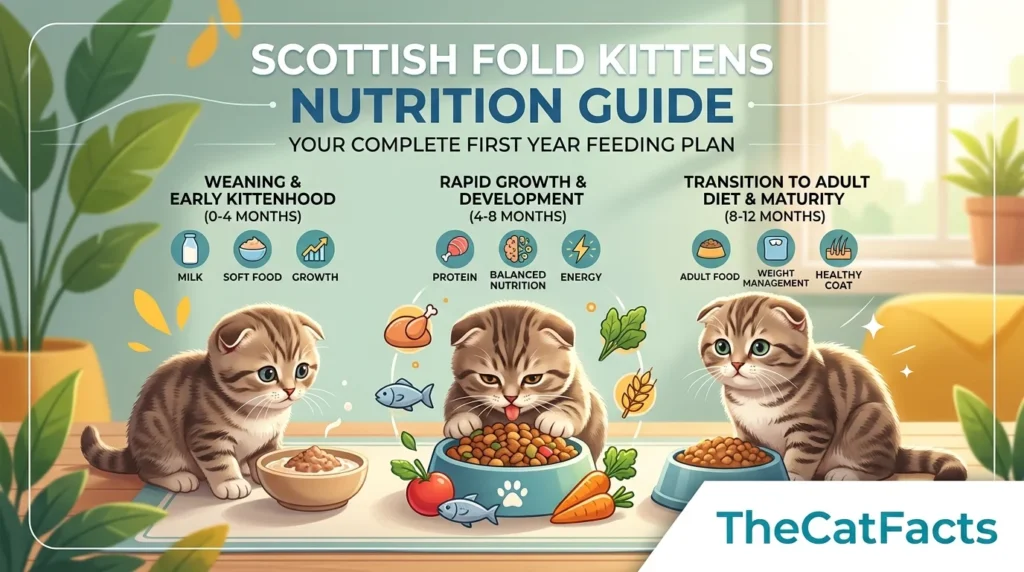
Scottish Fold kittens grow rapidly during their first year, making proper nutrition one of the most important parts of raising a healthy cat. Their bodies need the right balance of protein, healthy fats, vitamins, and minerals to support strong bones, healthy muscles, brain development, and a resilient immune system. A well-planned diet during kittenhood also helps reduce the risk of obesity and nutritional deficiencies later in life.
Unlike adult cats, kittens require more calories relative to their body weight because they are constantly growing, playing, and developing. Scottish Fold kittens also deserve special attention because the breed carries a genetic mutation that affects cartilage. While nutrition cannot prevent inherited bone and joint conditions, a balanced diet helps maintain a healthy body weight, reducing unnecessary stress on developing joints.
This comprehensive guide explains everything you need to know about feeding a Scottish Fold kitten during the first year. You’ll learn what nutrients matter most, how feeding needs change with age, how often to feed, and practical tips recommended by veterinarians to help your kitten thrive.
Why Nutrition Matters During Your Scottish Fold Kitten’s First Year
A Scottish Fold kitten’s first year is the foundation for lifelong health. Proper nutrition supports growth, strengthens the immune system, promotes healthy digestion, and helps muscles, bones, and organs develop correctly.
During the first twelve months, your kitten experiences rapid physical and mental changes. Every meal contributes to building tissues, maintaining energy levels, and supporting normal development.
Good nutrition helps:
- Build lean muscle mass
- Support healthy brain development
- Strengthen the immune system
- Maintain healthy skin and a shiny coat
- Encourage proper digestive function
- Support healthy teeth and gums
- Promote appropriate bone growth
- Maintain ideal body condition
Poor nutrition during this critical period may contribute to:
- Slow or uneven growth
- Weak immunity
- Poor muscle development
- Digestive upset
- Nutrient deficiencies
- Delayed development
- Increased risk of obesity from overfeeding
Because Scottish Fold kittens may develop joint-related issues later in life, maintaining an ideal body weight from the beginning is especially important.
Understanding Scottish Fold Kitten Growth
Scottish Fold kittens grow quickly during their first few months before their growth gradually slows. Feeding plans should evolve alongside these developmental stages.
Birth to Four Weeks
Newborn kittens rely entirely on their mother’s milk or a veterinarian-approved kitten milk replacer if orphaned.
Mother’s milk provides:
- Complete nutrition
- Protective antibodies
- Essential fats
- Easily digestible protein
- Proper hydration
Cow’s milk should never be given because kittens cannot digest it properly and it often causes diarrhea.
Four to Eight Weeks
Around four weeks of age, kittens gradually begin weaning.
This stage introduces:
- Soft kitten food
- Wet kitten food
- Gruel made from kitten food mixed with warm water
- Frequent small meals
Although kittens begin eating solid food, they usually continue nursing until approximately eight weeks.
Two to Four Months
Growth becomes extremely rapid.
Scottish Fold kittens at this stage need:
- High-quality kitten food
- Frequent meals
- Plenty of fresh water
- Consistent feeding routines
Most kittens are energetic and burn calories quickly through exploration and play.
Four to Six Months
Growth continues steadily while muscles become stronger.
Many kittens:
- Become more active
- Gain weight consistently
- Develop adult teeth
- Eat larger meals
Owners should avoid overfeeding simply because kittens seem hungry all the time.
Six to Twelve Months
Growth gradually slows.
Although your kitten may appear nearly adult-sized, important internal development continues, including:
- Muscle maturation
- Skeletal growth
- Brain development
- Immune system strengthening
Many Scottish Fold kittens remain on kitten food until around twelve months of age unless a veterinarian recommends otherwise.
Scottish Fold Kitten Growth Timeline
| Age | Development Stage | Feeding Focus |
| Birth to 4 weeks | Nursing | Mother’s milk or kitten milk replacer |
| 4 to 8 weeks | Weaning | Soft kitten food with milk replacer |
| 2 to 3 months | Rapid growth | High-protein kitten diet |
| 3 to 6 months | Active development | Frequent balanced meals |
| 6 to 9 months | Slower growth | Portion control and healthy weight |
| 9 to 12 months | Approaching adulthood | Continue kitten food unless advised otherwise |
Nutritional Needs of Scottish Fold Kittens
Scottish Fold kittens require complete and balanced nutrition formulated specifically for growing cats. Kitten diets contain higher levels of protein, fat, and essential nutrients than adult cat food.
Protein Is the Most Important Nutrient
Protein should be the foundation of every kitten’s diet.
Cats are obligate carnivores, meaning they depend on nutrients found in animal tissues.
High-quality animal protein supports:
- Muscle growth
- Organ development
- Immune health
- Tissue repair
- Healthy metabolism
Look for named animal proteins such as:
- Chicken
- Turkey
- Salmon
- Duck
- Rabbit
- Lamb
Protein should appear among the first ingredients on the food label.
Healthy Fats Provide Energy
Fat supplies concentrated energy for growing kittens.
Healthy fats also support:
- Brain development
- Eye health
- Healthy skin
- Soft coat
- Vitamin absorption
Important fatty acids include:
- Omega 3 fatty acids
- Omega 6 fatty acids
- DHA for brain development
- EPA for healthy inflammation response
Calcium and Phosphorus Support Bone Development
Balanced minerals help develop strong bones and teeth.
Too little or too much calcium can interfere with healthy skeletal growth.
A complete commercial kitten food already provides appropriate mineral levels, making additional supplementation unnecessary unless prescribed by a veterinarian.
Taurine Is Essential
Taurine is an amino acid that cats cannot produce in adequate amounts.
Without enough taurine, kittens can develop serious health problems involving:
- Vision
- Heart function
- Growth
- Reproduction later in life
Commercial kitten foods include taurine because it is essential for feline health.
Vitamins and Trace Minerals
Growing kittens need many vitamins and minerals, including:
- Vitamin A
- Vitamin D
- Vitamin E
- Vitamin B complex
- Zinc
- Iron
- Copper
- Selenium
These nutrients support hundreds of normal body functions, including immune health, metabolism, and tissue repair.
Feeding Timeline During the First Year
A kitten’s feeding schedule changes as it grows. Younger kittens have tiny stomachs and need frequent meals, while older kittens can gradually eat fewer, larger meals.
Birth to Four Weeks
Primary food:
- Mother’s milk
- Kitten milk replacer if necessary
Meal frequency:
- Nursing throughout the day
Four to Eight Weeks
Primary food:
- Wet kitten food
- Softened dry kitten food
- Kitten gruel
Meal frequency:
- Four to six small meals daily
Eight to Twelve Weeks
Primary food:
- Complete kitten diet
- Mostly wet food or a combination of wet and dry food
Meal frequency:
- Four meals each day
Three to Six Months
Primary food:
- High-quality kitten food
Meal frequency:
- Three to four meals daily
Six to Twelve Months
Primary food:
- Kitten food
Meal frequency:
- Two to three meals daily
Avoid free-feeding throughout the day unless specifically recommended by your veterinarian, especially if your kitten gains weight too quickly.
Scottish Fold Kitten Feeding Schedule
| Kitten Age | Meals Per Day | Food Type |
| Birth to 4 weeks | Nursing on demand | Mother’s milk |
| 4 to 8 weeks | 4 to 6 | Soft kitten food |
| 8 to 12 weeks | 4 | Wet and dry kitten food |
| 3 to 6 months | 3 to 4 | Complete kitten diet |
| 6 to 12 months | 2 to 3 | High-quality kitten food |
How Much Should a Scottish Fold Kitten Eat?
There is no single serving size that fits every kitten. The correct amount depends on age, body weight, activity level, body condition, and the calorie content of the food.
Instead of measuring food by guesswork, use the feeding guide provided by the manufacturer as a starting point and adjust based on your kitten’s growth. Your veterinarian can help determine whether your kitten is gaining weight appropriately during routine wellness visits.
General factors that increase calorie needs include:
- Rapid growth
- High activity levels
- Cold environments
- Recovery from illness (under veterinary supervision)
Factors that may reduce calorie needs include:
- Lower activity
- Slower growth after six months
- Early neutering or spaying, which may require closer portion monitoring
Regularly monitor your kitten’s body condition rather than relying only on the number on the scale. A healthy kitten should have a visible waist when viewed from above, with ribs that can be felt easily but are not prominently visible.
Estimated Daily Feeding Guide
The following table provides general guidance. Actual feeding amounts vary by food brand and calorie density.
| Age | Meals Daily | General Feeding Goal |
| 4 to 8 weeks | 4 to 6 | Begin gradual weaning with soft foods |
| 2 to 3 months | 4 | Support rapid growth with nutrient-rich kitten food |
| 3 to 6 months | 3 to 4 | Maintain steady growth and healthy weight |
| 6 to 9 months | 3 | Adjust portions as growth slows |
| 9 to 12 months | 2 to 3 | Prepare for transition to adult feeding after one year |
Choosing Food Based on Life Stage
Always select food labeled for growth or all life stages that meets recognized nutritional standards for kittens. Foods formulated specifically for kittens provide higher protein, energy, and essential nutrients than diets intended only for adult cats.
When comparing products, consider:
- Animal protein as the primary ingredient
- Complete and balanced nutrition for kittens
- Appropriate calorie density for growth
- High digestibility
- Clearly listed ingredients
- Reputable manufacturer with quality control standards
Avoid choosing food based only on marketing claims or attractive packaging. Reading the nutrition label is far more important than focusing on breed-specific advertising.
Practical Tips for Feeding Scottish Fold Kittens
- Feed meals at consistent times every day.
- Introduce dietary changes gradually over 7 to 10 days.
- Always provide clean, fresh drinking water.
- Wash food and water bowls daily.
- Use shallow bowls that are easy for kittens to access.
- Keep feeding areas clean and quiet.
- Monitor your kitten’s weight every two to four weeks during the first year.
- Schedule regular veterinary wellness examinations to ensure healthy growth.
Expert Veterinary Advice
Most veterinarians recommend feeding a complete commercial kitten food during the entire first year rather than preparing homemade diets without professional guidance. Even small nutritional imbalances can affect a growing kitten’s bones, muscles, and overall development. For Scottish Fold kittens, maintaining a lean body condition is especially valuable because excess weight places additional strain on joints that may already be genetically vulnerable.
Best Food for Scottish Fold Kittens
The best food for a Scottish Fold kitten is a complete and balanced kitten formula made with high-quality animal protein, healthy fats, essential vitamins, and minerals. Choose food that supports healthy growth rather than focusing on breed-specific marketing claims.
A kitten’s nutritional needs are much higher than an adult cat’s. During the first year, they require more calories, protein, and fat to fuel rapid development.
Look for foods that:
- Are labeled for kittens or growth.
- Meet recognized nutritional standards for complete and balanced nutrition.
- Contain real animal protein as the first ingredient.
- Include DHA for brain and eye development.
- Contain taurine for heart and eye health.
- Avoid excessive fillers and artificial additives.
Wet Food for Scottish Fold Kittens
Wet food is an excellent option because it provides hydration while delivering high-quality nutrition.
Benefits include:
- Higher moisture content
- Soft texture for young kittens
- Easier chewing during teething
- Often highly palatable
- May help support urinary tract health
Potential drawbacks:
- More expensive than dry food
- Must be refrigerated after opening
- Spoils quickly if left out
Dry Food for Scottish Fold Kittens
Dry kitten food is convenient and can contribute to dental health by encouraging chewing.
Advantages include:
- Easy to measure portions
- Longer shelf life
- Convenient storage
- Less waste
- Can be used in food puzzles
Possible disadvantages:
- Lower moisture content
- Some kittens drink too little water
- Certain brands may contain excessive carbohydrates
Should You Feed Wet, Dry, or Both?
A combination of wet and dry food often provides the best balance of nutrition, hydration, and convenience.
Many veterinarians recommend mixed feeding because it offers:
- Increased water intake
- Dietary variety
- Different textures
- Flexible meal planning
- Better acceptance if one food becomes unavailable
Wet Food vs. Dry Food Comparison
| Feature | Wet Food | Dry Food |
| Moisture | Very high | Low |
| Protein | Usually high | Varies by brand |
| Hydration | Excellent | Limited |
| Storage | Refrigerate after opening | Easy to store |
| Cost | Higher | Lower |
| Dental chewing | Limited | Moderate |
| Portion control | Easy | Easy |
Essential Nutrients Scottish Fold Kittens Need
Growing kittens require dozens of nutrients working together. Missing even one essential nutrient can interfere with healthy development.
Animal Protein
Animal protein supplies amino acids that kittens cannot make themselves.
Protein supports:
- Muscle growth
- Organ development
- Healthy skin
- Strong immune function
- Tissue repair
Good protein sources include:
- Chicken
- Turkey
- Salmon
- Tuna (occasionally)
- Rabbit
- Duck
- Lamb
Healthy Fat
Fat is the primary energy source for active kittens.
Healthy fats help support:
- Brain growth
- Healthy skin
- Soft coat
- Nervous system development
- Vitamin absorption
DHA
Docosahexaenoic acid (DHA) is an omega 3 fatty acid that supports:
- Brain development
- Learning ability
- Vision
- Nervous system maturation
Many premium kitten foods naturally include DHA from fish oil.
Taurine
Cats must obtain taurine from their food.
Adequate taurine supports:
- Healthy vision
- Heart function
- Nervous system
- Immune health
A taurine deficiency can become serious, which is why homemade diets without veterinary guidance are risky.
Calcium and Phosphorus
These minerals work together to build:
- Bones
- Teeth
- Joints
- Skeleton
The correct balance is more important than simply providing larger amounts.
Vitamins
Important vitamins include:
- Vitamin A
- Vitamin D
- Vitamin E
- Vitamin K
- B vitamins
These nutrients support growth, metabolism, immunity, and healthy organs.
Trace Minerals
Growing kittens also require:
- Zinc
- Copper
- Iron
- Manganese
- Selenium
- Iodine
These nutrients are needed in small amounts but play major roles in overall health.
Reading a Kitten Food Label
Understanding labels helps you choose better nutrition instead of relying on advertising.
Look for:
- Named meat listed first
- Complete and balanced kitten nutrition
- Animal fat instead of unidentified fat
- Clearly listed ingredients
- Feeding guidelines
- Expiration date
- Quality manufacturing information
Avoid foods that rely heavily on vague ingredients such as:
- Meat by-products without identification
- Artificial colors
- Excessive sugars
- Numerous unnecessary fillers
Water Requirements
Fresh water should always be available.
Even kittens eating wet food still need access to clean water.
Encourage drinking by:
- Using wide, shallow bowls
- Changing water daily
- Washing bowls regularly
- Placing multiple water stations around the home
- Considering a pet water fountain if your kitten prefers running water
Signs your kitten may not be drinking enough include:
- Dry gums
- Reduced activity
- Sunken eyes
- Constipation
- Concentrated urine
Contact your veterinarian promptly if dehydration is suspected.
Safe Treats for Scottish Fold Kittens
Treats should only make up a small portion of the daily diet.
Suitable treats include:
- Commercial kitten treats
- Small pieces of cooked chicken
- Cooked turkey
- Freeze-dried meat treats
Limit treats to about 10 percent or less of daily calorie intake.
Avoid rewarding with treats too frequently, as this can encourage overeating.
Foods Scottish Fold Kittens Should Never Eat
Some foods that are safe for humans can be dangerous or even life-threatening for kittens.
Toxic Foods
Never feed:
- Chocolate
- Onions
- Garlic
- Grapes
- Raisins
- Alcohol
- Coffee
- Tea
- Caffeine
- Xylitol
- Macadamia nuts
Unsafe Human Foods
Avoid giving:
- Fat trimmings
- Fried foods
- Spicy foods
- Salty snacks
- Processed meats
- Raw bread dough
Raw Meat and Raw Eggs
Although some owners choose raw diets, they carry risks.
Potential concerns include:
- Salmonella
- E. coli
- Nutritional imbalance
- Bone injuries
- Parasites
Growing kittens are especially vulnerable because their immune systems are still developing.
Consult a veterinarian or board-certified veterinary nutritionist before feeding a raw or homemade diet.
Can Scottish Fold Kittens Drink Milk?
Most kittens lose the ability to digest lactose after weaning.
Regular cow’s milk may cause:
- Diarrhea
- Gas
- Stomach upset
- Abdominal discomfort
Fresh water is always the safest drink.
If supplemental feeding is necessary for orphaned kittens, only use a veterinarian-approved kitten milk replacer.
Do Scottish Fold Kittens Need Supplements?
Healthy kittens eating a complete commercial kitten diet usually do not need supplements.
Adding vitamins or minerals unnecessarily may actually create nutritional imbalances.
Supplements should only be given when recommended by a veterinarian.
Situations where supplements may be considered include:
- Confirmed deficiencies
- Certain medical conditions
- Recovery from illness
- Veterinary therapeutic diets
Transitioning to a New Food
Changing foods suddenly often causes digestive upset.
Instead, transition gradually over 7 to 10 days.
| Days | Current Food | New Food |
| 1 to 2 | 75% | 25% |
| 3 to 4 | 50% | 50% |
| 5 to 6 | 25% | 75% |
| 7 to 10 | 0% | 100% |
Slow transitions reduce the risk of:
- Vomiting
- Diarrhea
- Refusing food
- Digestive stress
If stomach upset develops, slow the transition further and consult your veterinarian if symptoms persist.
Practical Feeding Tips
- Measure meals instead of guessing portions.
- Feed in a quiet location away from household stress.
- Store dry food in a cool, dry place.
- Refrigerate opened canned food promptly.
- Discard uneaten wet food after one to two hours.
- Wash food bowls with hot, soapy water every day.
- Monitor appetite and water intake.
- Weigh your kitten monthly during the first year.
- Avoid frequent diet changes unless necessary.
- Schedule regular veterinary wellness visits to monitor healthy growth.
Expert Veterinary Advice
Scottish Fold kittens should remain lean throughout growth rather than becoming chubby. Excess body weight increases stress on developing joints and may worsen mobility issues later in life for cats with inherited cartilage abnormalities. Focus on steady, controlled growth instead of rapid weight gain, and discuss any concerns about appetite, body condition, or diet with your veterinarian before making significant feeding changes.
Monitoring Your Scottish Fold Kitten’s Growth
Healthy growth is one of the best signs that your kitten is receiving proper nutrition. Instead of focusing only on weight, monitor body condition, energy levels, appetite, and overall development.
A kitten should steadily gain weight throughout the first year without becoming overweight.
Healthy Growth Signs
A well-nourished Scottish Fold kitten should:
- Maintain a healthy appetite
- Gain weight consistently
- Have bright, clear eyes
- Display a soft, shiny coat
- Be active and playful
- Produce normal, well-formed stools
- Reach developmental milestones on time
Signs Your Kitten May Not Be Getting Enough Nutrition
Poor nutrition may appear gradually.
Watch for:
- Poor weight gain
- Weight loss
- Dull or rough coat
- Frequent illness
- Low energy
- Muscle loss
- Slow growth
- Persistent diarrhea
- Vomiting
- Poor appetite
If these signs continue for more than a day or two, schedule a veterinary examination.
Body Condition Score
Body condition is often more important than body weight.
Use this simple guide.
| Body Condition | What You See | Recommended Action |
| Too Thin | Ribs easily visible, little body fat | Veterinary evaluation and diet adjustment |
| Ideal | Waist visible, ribs easily felt but not seen | Continue current feeding plan |
| Overweight | Waist difficult to see, ribs hard to feel | Reduce calories under veterinary guidance |
Scottish Fold kittens should remain lean as they grow because extra weight places additional pressure on developing joints.
Common Feeding Mistakes
Many feeding problems happen with the best intentions.
Avoid these common mistakes.
Feeding Adult Cat Food Too Early
Adult food lacks the calorie density and nutrient balance growing kittens need.
Continue feeding kitten food until about 12 months of age unless your veterinarian recommends otherwise.
Overfeeding
Many owners assume a growing kitten should eat unlimited amounts.
While kittens need more calories than adult cats, excessive feeding may lead to:
- Rapid weight gain
- Obesity
- Joint stress
- Digestive upset
Giving Too Many Treats
Treats should never replace balanced meals.
Too many treats may:
- Reduce appetite for complete food
- Cause weight gain
- Create nutritional imbalances
Frequent Food Changes
Constantly switching foods can upset the digestive system.
Choose a quality kitten diet and remain consistent unless there is a medical reason to change.
Ignoring Water Intake
Some kittens naturally drink less.
Always monitor water consumption, especially if feeding mostly dry food.
Digestive Problems Related to Diet
Mild digestive upset occasionally occurs when kittens experience stress or dietary changes.
Mild Digestive Upset
Common symptoms include:
- Soft stool
- Temporary diarrhea
- Mild vomiting
- Reduced appetite
Possible causes include:
- Sudden food changes
- Eating too quickly
- New treats
- Minor stress
When Digestive Problems Become Serious
Seek veterinary care immediately if your kitten has:
- Bloody diarrhea
- Repeated vomiting
- Severe lethargy
- Refuses food for more than 24 hours
- Signs of dehydration
- Swollen abdomen
- Difficulty breathing
Young kittens can become dehydrated much faster than adult cats.
Nutritional Deficiencies
Commercial kitten diets are formulated to prevent deficiencies, but problems may develop if kittens eat incomplete homemade diets or inappropriate foods.
Possible deficiencies include:
Protein Deficiency
Signs may include:
- Poor growth
- Muscle loss
- Weakness
- Poor coat quality
Calcium Imbalance
Too much or too little calcium may contribute to:
- Bone abnormalities
- Poor skeletal development
- Lameness
Taurine Deficiency
Although uncommon with complete commercial foods, taurine deficiency can affect:
- Vision
- Heart function
- Growth
Vitamin Deficiencies
Poor-quality diets may contribute to:
- Reduced immunity
- Poor coat quality
- Slow healing
- Weak growth
Never add vitamin supplements without veterinary advice.
Veterinary Advice for Scottish Fold Kittens
Routine veterinary visits are just as important as proper nutrition.
Your veterinarian will:
- Monitor growth
- Assess body condition
- Check teeth
- Evaluate joints
- Recommend parasite prevention
- Discuss vaccination schedules
- Answer nutrition questions
Discuss any planned diet changes before making them.
Emergency Warning Signs
Some symptoms require immediate veterinary attention regardless of diet.
Seek emergency care if your kitten:
- Cannot stand
- Stops eating completely
- Has repeated vomiting
- Has severe diarrhea
- Shows difficulty breathing
- Experiences seizures
- Becomes extremely weak
- Has pale gums
- Cannot urinate
- Appears severely dehydrated
Prompt treatment greatly improves the chance of recovery.
Scottish Fold Kitten Nutrition Checklist
Use this checklist to ensure you’re meeting your kitten’s nutritional needs.
✔ Feed a complete kitten diet.
✔ Provide fresh water every day.
✔ Feed age-appropriate portions.
✔ Monitor weight monthly.
✔ Keep treats under 10 percent of daily calories.
✔ Introduce food changes gradually.
✔ Avoid toxic human foods.
✔ Schedule regular veterinary examinations.
✔ Keep feeding times consistent.
✔ Maintain a healthy body condition.
First-Year Feeding Timeline
| Age | Nutrition Goal | Owner Focus |
| Birth to 4 weeks | Nursing | Monitor healthy nursing |
| 4 to 8 weeks | Weaning | Introduce soft foods gradually |
| 2 to 3 months | Rapid growth | Feed four meals daily |
| 3 to 6 months | Muscle development | Monitor body condition |
| 6 to 9 months | Controlled growth | Prevent excess weight gain |
| 9 to 12 months | Prepare for adulthood | Continue balanced kitten nutrition |
Myths vs. Facts
| Myth | Fact |
| Scottish Fold kittens need breed-specific food. | Any high-quality complete kitten food that meets nutritional standards can support healthy growth. |
| Milk is good for kittens after weaning. | Most kittens become lactose intolerant after weaning. Fresh water is the healthiest choice. |
| Bigger kittens are healthier. | Healthy growth is more important than rapid weight gain. |
| Supplements make kittens grow faster. | Unnecessary supplements can create nutritional imbalances. |
| Dry food cleans teeth completely. | Dry food may encourage chewing, but regular dental care is still important. |
Expert Tips
- Feed meals at the same times each day to establish a routine.
- Store food according to the manufacturer’s instructions to preserve freshness.
- Use puzzle feeders for older kittens to encourage mental stimulation.
- Introduce new proteins gradually if changing diets.
- Record your kitten’s weight every month.
- Encourage play after meals to support healthy muscle development.
- Avoid table scraps, even as occasional treats.
- Ask your veterinarian before starting any supplements or homemade diet.
Conclusion
Feeding a Scottish Fold kitten properly during the first year lays the foundation for a healthy and active life. A complete, balanced kitten diet provides the protein, healthy fats, vitamins, and minerals needed for steady growth, brain development, and a strong immune system. Consistent feeding routines, portion control, fresh water, and regular veterinary checkups are just as important as choosing a quality food.
Although Scottish Fold cats have unique genetic traits that can affect their joints, maintaining a lean body condition and providing excellent nutrition can help support lifelong mobility and overall well-being. By monitoring your kitten’s growth, avoiding common feeding mistakes, and seeking veterinary advice when needed, you can give your new companion the best possible start.
FAQs
What is the best food for a Scottish Fold kitten?
A complete and balanced kitten food made with high-quality animal protein is the best choice. Look for diets formulated specifically for growth that contain taurine, DHA, healthy fats, vitamins, and minerals. Wet food, dry food, or a combination of both can work well when the diet meets kitten nutritional requirements.
How many times a day should I feed my Scottish Fold kitten?
Young kittens usually need four to six small meals each day. As they grow, feeding frequency gradually decreases to three meals and eventually two to three meals daily by the end of the first year. Follow your veterinarian’s recommendations based on your kitten’s age and body condition.
When should I switch my Scottish Fold kitten to adult cat food?
Most Scottish Fold kittens can transition to adult cat food at around 12 months of age. Some kittens with specific health conditions or slower growth may require a different schedule, so consult your veterinarian before making the change.
Can Scottish Fold kittens eat homemade food?
Homemade diets should only be fed if they are formulated by a board-certified veterinary nutritionist. Improperly balanced homemade meals may lack essential nutrients needed for healthy growth and can lead to nutritional deficiencies.
Is wet food better than dry food for Scottish Fold kittens?
Both have advantages. Wet food provides extra moisture, while dry food is convenient and easy to measure. Many veterinarians recommend feeding a combination of both to provide balanced nutrition and encourage hydration.
Should I give my kitten vitamin supplements?
Most healthy kittens eating a complete commercial kitten food do not need additional supplements. Giving vitamins or minerals without veterinary advice can upset nutritional balance and may even be harmful.
Why is my Scottish Fold kitten always hungry?
Growing kittens burn a great deal of energy and often have healthy appetites. However, excessive hunger may also indicate parasites, illness, or an inappropriate feeding plan. If your kitten seems constantly hungry despite adequate meals, consult your veterinarian.
What foods are toxic to Scottish Fold kittens?
Avoid chocolate, onions, garlic, grapes, raisins, alcohol, caffeine, xylitol, macadamia nuts, and highly processed human foods. These items can cause serious illness and should never be offered to kittens.
How can I tell if my kitten is overweight?
An overweight kitten may have no visible waist, and its ribs become difficult to feel beneath body fat. Your veterinarian can evaluate your kitten’s body condition score and recommend portion adjustments if necessary.
How much water should a Scottish Fold kitten drink?
Water needs vary depending on age, diet, and activity level. Always provide fresh, clean water. Kittens eating mostly dry food generally drink more water than those eating wet food, but all kittens should have constant access to drinking water.

Isabella Morgan is a Veterinary Content Researcher with more than 12 years of experience researching companion animal health, preventive veterinary care, pet nutrition, and animal welfare. She specializes in translating complex veterinary information into clear, accurate, and reader friendly content that helps pet owners make informed decisions about the health and well being of their animals.