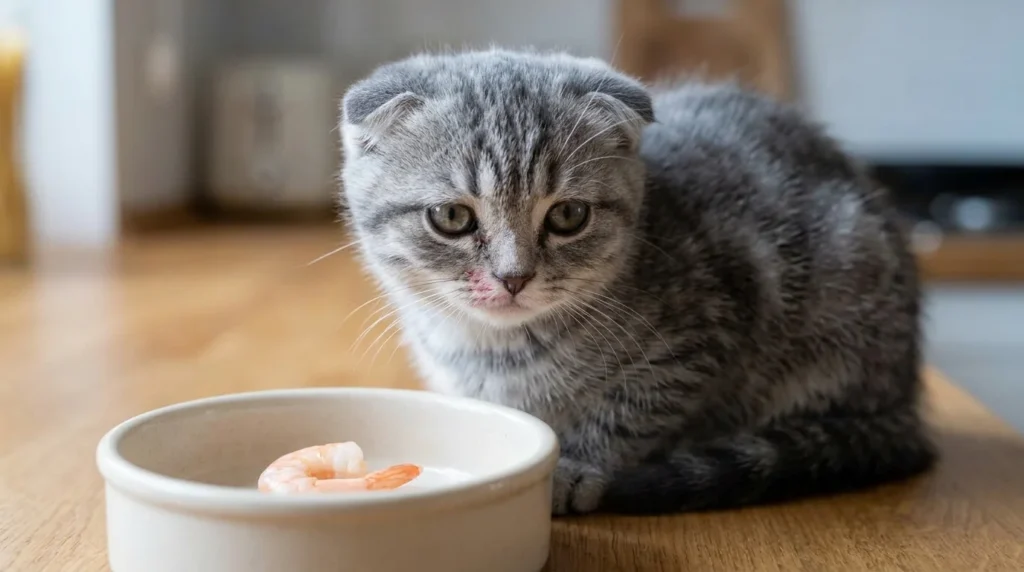
Scottish Fold cats can eat shrimp in moderation, provided it is fully cooked, plain, and served without shells, tails, butter, garlic, onions, or seasonings. Shrimp is rich in high quality protein, vitamin B12, selenium, phosphorus, and omega 3 fatty acids, making it an occasional healthy treat. However, it should never replace a complete and balanced cat food because it does not provide all the nutrients cats need every day.
If you are wondering whether shrimp is safe for your Scottish Fold, the short answer is yes, but only when prepared correctly. Their folded ears do not affect digestion, but Scottish Folds are prone to inherited joint problems that benefit from a balanced diet and healthy body weight. Feeding shrimp occasionally can add variety, but too much may contribute to excess sodium intake, digestive upset, or unnecessary calories.
This guide explains the benefits and risks of feeding shrimp to Scottish Fold cats, how much is safe, how to prepare it properly, warning signs to watch for, and when to contact your veterinarian.
Regular veterinary checks can help detect high blood pressure in cats and treatment options before serious complications occur.
Can Scottish Fold Cats Eat Shrimp?
Yes, Scottish Fold cats can safely eat cooked shrimp as an occasional treat.
Cats are obligate carnivores, which means they rely on animal protein for essential nutrients. Shrimp is a lean seafood that provides many nutrients cats can use, but it should make up no more than about 10 percent of your cat’s daily calorie intake. The remaining diet should come from a complete commercial cat food that meets nutritional standards.
Before offering shrimp, make sure it is:
- Fully cooked
- Plain, with no seasoning
- Peeled
- Deveined
- Free of shells and tails
- Cut into bite sized pieces
Avoid giving shrimp that has been fried, smoked, breaded, marinated, or cooked with sauces. Ingredients that are safe for humans may be harmful to cats.
Is Shrimp Healthy for Scottish Fold Cats?
Shrimp can be a nutritious treat because it contains protein, vitamins, and minerals that support overall feline health.
Although shrimp is not a complete meal for cats, it offers several nutritional benefits when fed in small amounts.
Nutritional Value of Cooked Shrimp
| Nutrient | Benefit for Scottish Fold Cats |
| Protein | Supports muscles, skin, and body tissues |
| Vitamin B12 | Helps maintain healthy nerves and red blood cells |
| Selenium | Supports immune function and acts as an antioxidant |
| Phosphorus | Helps maintain strong bones and teeth |
| Zinc | Supports skin health and wound healing |
| Omega 3 fatty acids | May support skin, coat, and joint health |
These nutrients can complement a healthy diet, but they cannot replace the balanced nutrition found in complete cat food.
Why Protein Matters for Scottish Folds
Scottish Fold cats require high quality animal protein throughout life. Protein helps:
- Maintain lean muscle mass
- Support healthy growth in kittens
- Repair body tissues
- Produce enzymes and hormones
- Strengthen the immune system
Because shrimp is naturally rich in protein while relatively low in fat, it can be a satisfying occasional reward.
Can Omega 3 Fatty Acids Help Scottish Fold Cats?
Omega 3 fatty acids found in seafood may support:
- Healthy skin
- A shiny coat
- Normal inflammatory responses
- Joint comfort
- Brain function
This is especially relevant because many Scottish Fold cats develop joint problems caused by osteochondrodysplasia, an inherited condition affecting cartilage and bone development. While shrimp cannot prevent this disease, including small amounts of omega 3 rich foods within a veterinarian approved diet may support overall joint health.
Nutritional Breakdown of Shrimp
The following table shows the approximate nutritional content of 100 grams of cooked shrimp.
| Nutrient | Approximate Amount |
| Calories | 99 |
| Protein | 24 grams |
| Fat | 0.3 grams |
| Carbohydrates | 0.2 grams |
| Selenium | Very high |
| Vitamin B12 | High |
| Phosphorus | High |
| Sodium | Moderate |
Remember that cats only need a tiny serving, so they receive only a small portion of these nutrients from shrimp.
Benefits of Feeding Shrimp to Scottish Fold Cats
When fed correctly, shrimp offers several potential health benefits without adding excessive fat.
High Quality Animal Protein
Protein is essential for every stage of a cat’s life. Shrimp contains easily digestible protein that supports:
- Muscle maintenance
- Tissue repair
- Healthy metabolism
- Immune health
Low Fat Treat Option
Compared with many meats, shrimp is naturally low in fat.
This makes it a reasonable occasional snack for indoor Scottish Fold cats that may gain weight easily if overfed.
Rich in Antioxidants
Shrimp contains selenium, an important antioxidant mineral.
Antioxidants help protect cells from damage caused by normal metabolism and environmental stress.
Supports Healthy Skin and Coat
The combination of protein, zinc, and omega 3 fatty acids may contribute to:
- Softer fur
- Healthier skin
- Reduced dryness
- Improved coat appearance
These benefits are most noticeable when shrimp is part of an already balanced diet.
Are There Any Risks?
Yes, shrimp can become unsafe if served incorrectly or fed too often.
Understanding the risks helps you avoid preventable health problems.
High Sodium Content
Some shrimp naturally contains moderate sodium levels.
Processed shrimp may contain even more because manufacturers sometimes add salt during preparation.
Too much sodium can contribute to:
- Increased thirst
- Dehydration
- Digestive upset
Always choose plain shrimp without added salt.
Digestive Upset
Introducing any new food too quickly may cause:
- Vomiting
- Soft stools
- Diarrhea
- Gas
- Reduced appetite
Offer only a tiny amount the first time and observe your cat for the next 24 hours.
Choking Hazards
Shrimp shells and tails can:
- Cause choking
- Scratch the digestive tract
- Create intestinal blockage risks
Always remove every hard piece before serving.
Allergic Reactions
Although uncommon, some cats may develop seafood allergies.
Possible signs include:
- Itchy skin
- Facial swelling
- Excessive scratching
- Vomiting
- Diarrhea
- Ear irritation
Stop feeding shrimp immediately if any of these symptoms develop and contact your veterinarian.
Bacterial Contamination
Raw shrimp may carry harmful bacteria or parasites.
Cooking significantly reduces these risks, making cooked shrimp the safest option for cats.
Can Scottish Fold Kittens Eat Shrimp?
Kittens can eat tiny amounts of cooked shrimp after they have transitioned to solid food, but it should not become a regular meal.
Growing kittens have precise nutritional requirements that shrimp alone cannot provide. During the first year of life, they should receive a complete kitten diet formulated for growth and development.
If you want your kitten to try shrimp:
- Wait until the kitten is fully eating solid food.
- Offer a very small cooked piece.
- Ensure it is plain and unseasoned.
- Monitor for digestive upset.
- Feed only occasionally.
Because kittens have smaller digestive systems, even a small amount of rich food may cause stomach upset.
Can Senior Scottish Fold Cats Eat Shrimp?
Older Scottish Fold cats may enjoy shrimp as a soft, high protein treat if they have no medical conditions that restrict seafood.
However, senior cats often develop health problems such as:
- Kidney disease
- Heart disease
- High blood pressure
- Digestive sensitivity
These conditions may require dietary adjustments. Always ask your veterinarian before introducing shrimp to an older cat with chronic illness.
Senior cats may have different dietary needs, so knowing whether senior Scottish Fold cats can eat shrimp safely is important.
How Much Shrimp Can a Scottish Fold Cat Eat?
Moderation is the key to safe feeding.
Use this guide as a general recommendation.
| Cat | Suggested Serving |
| Kitten | Half of a small shrimp occasionally |
| Adult Scottish Fold | One to two small shrimp once or twice weekly |
| Large adult | Two to three small shrimp occasionally |
| Senior cat | Follow veterinary guidance |
Treats, including shrimp, should not exceed approximately 10 percent of your cat’s daily calorie intake.
How to Prepare Shrimp Safely for Your Cat
Preparing shrimp correctly is just as important as choosing the right portion.
Step 1. Buy Fresh or Frozen Plain Shrimp
Choose shrimp without:
- Salt
- Garlic
- Onion
- Butter
- Marinades
- Breading
- Spices
Step 2. Cook Thoroughly
Boil, steam, or bake the shrimp until it is fully cooked.
Never serve raw or undercooked shrimp.
Step 3. Remove the Shell
Carefully peel away:
- Shell
- Tail
- Legs
- Hard outer covering
These parts are difficult to digest and may become choking hazards.
Step 4. Devein the Shrimp
Although the digestive tract is not always dangerous, removing it improves cleanliness and reduces the chance of your cat ingesting unwanted debris.
Step 5. Cut into Small Pieces
Small pieces are easier to chew and reduce the risk of choking, especially for kittens and senior cats.
Can Scottish Fold Cats Eat Raw Shrimp?
No, raw shrimp is not recommended for Scottish Fold cats. While cats are carnivores, raw seafood can expose them to bacteria, parasites, and nutritional problems that outweigh any potential benefits.
Raw shrimp may contain harmful microorganisms such as Salmonella, Vibrio, and Listeria. These bacteria can cause illness in cats and may also pose a risk to people handling contaminated food.
Possible risks of feeding raw shrimp include:
- Food poisoning
- Vomiting and diarrhea
- Loss of appetite
- Fever
- Parasitic infections
- Increased risk for kittens, senior cats, and cats with weakened immune systems
Cooking shrimp thoroughly destroys most harmful bacteria and parasites, making it the safest choice.
Before offering seafood, understand whether Scottish Fold cats can eat raw shrimp safely as part of their diet.
Can Scottish Fold Cats Eat Frozen Shrimp?
Yes, but only after it has been fully thawed and cooked.
Frozen shrimp is often just as nutritious as fresh shrimp because it is typically frozen shortly after being caught.
Before feeding frozen shrimp:
- Thaw it safely in the refrigerator.
- Cook it completely.
- Remove the shell, tail, and vein.
- Let it cool before serving.
- Cut it into bite sized pieces.
Never thaw shrimp at room temperature for long periods, as bacteria can multiply quickly.
Can Cats Eat Different Types of Shrimp?
Not every type of shrimp sold for human consumption is suitable for cats.
| Type of Shrimp | Safe for Scottish Fold Cats? | Notes |
| Plain boiled shrimp | Yes | Best choice |
| Steamed shrimp | Yes | Safe without seasoning |
| Grilled shrimp | Yes | Only if plain |
| Frozen shrimp | Yes | Cook after thawing |
| Raw shrimp | No | Risk of bacteria and parasites |
| Breaded shrimp | No | Too much oil and carbohydrates |
| Fried shrimp | No | High in fat |
| Garlic butter shrimp | No | Garlic is toxic to cats |
| Spicy shrimp | No | Can upset digestion |
| Smoked shrimp | No | Usually high in sodium |
When in doubt, plain cooked shrimp is always the safest option.
Foods You Should Never Serve with Shrimp
Many ingredients commonly paired with shrimp are unsafe for cats.
Avoid shrimp prepared with:
- Garlic
- Onion
- Chives
- Shallots
- Butter in large amounts
- Hot peppers
- Chili powder
- Cajun seasoning
- Lemon pepper seasoning
- Soy sauce
- Barbecue sauce
- Teriyaki sauce
- Heavy cream sauces
Even a small amount of garlic or onion can damage a cat’s red blood cells and may lead to anemia.
Can Shrimp Help Scottish Fold Joint Health?
Shrimp may support overall health, but it cannot prevent the inherited joint disease seen in Scottish Fold cats.
Scottish Folds are predisposed to osteochondrodysplasia, a genetic condition that affects cartilage and bone development. Symptoms may include:
- Stiff walking
- Difficulty jumping
- Thickened tail
- Swollen joints
- Pain during movement
- Reduced activity
Shrimp contains small amounts of omega 3 fatty acids that may support normal joint function as part of a balanced diet. However, shrimp alone is not a treatment for joint disease.
If your Scottish Fold has mobility problems, your veterinarian may recommend:
- Weight management
- Prescription diets
- Joint supplements
- Pain management medications
- Physical rehabilitation
Signs Your Cat Does Not Tolerate Shrimp
Some cats digest shrimp without any problems, while others may experience mild digestive upset or an allergic reaction.
Watch for symptoms such as:
- Vomiting
- Diarrhea
- Excessive drooling
- Gas
- Itching
- Skin redness
- Facial swelling
- Hives
- Difficulty breathing
- Loss of appetite
Mild digestive symptoms often resolve after the food is discontinued. However, facial swelling or breathing problems require immediate veterinary attention.
What Should You Do If Your Cat Eats Too Much Shrimp?
Eating several shrimp at once is not always an emergency, but overeating can lead to digestive discomfort.
Monitor your cat for:
- Vomiting
- Loose stools
- Constipation
- Reduced appetite
- Abdominal discomfort
- Increased thirst
Provide fresh water and avoid offering additional treats for the rest of the day.
Contact your veterinarian if:
- Vomiting continues for more than 24 hours.
- Your cat refuses food.
- Blood appears in vomit or stool.
- Your cat becomes weak or lethargic.
- Breathing becomes difficult.
Emergency Warning Signs
Seek immediate veterinary care if your Scottish Fold experiences any of the following after eating shrimp:
| Emergency Sign | Why It Matters |
| Difficulty breathing | Possible severe allergic reaction |
| Facial swelling | Can indicate anaphylaxis |
| Continuous vomiting | Risk of dehydration |
| Bloody diarrhea | Possible intestinal injury or severe illness |
| Collapse | Medical emergency |
| Severe lethargy | May indicate serious illness |
| Choking | Requires immediate intervention |
Early treatment can significantly improve outcomes.
Common Mistakes Owners Make
Many shrimp related problems happen because of preparation errors rather than the shrimp itself.
Avoid these common mistakes:
- Feeding raw shrimp
- Leaving shells or tails attached
- Offering heavily seasoned seafood
- Giving shrimp every day
- Feeding large portions
- Replacing balanced cat food with shrimp
- Ignoring signs of food intolerance
- Sharing restaurant leftovers
Keeping shrimp as an occasional treat is the safest approach.
Myths vs Facts
| Myth | Fact |
| Cats can safely eat all seafood. | Some seafood is safe, but preparation matters. |
| Raw shrimp is healthier than cooked shrimp. | Cooked shrimp is much safer for cats. |
| Shrimp can replace cat food. | Shrimp lacks complete feline nutrition. |
| More protein is always better. | Cats need balanced nutrition, not just protein. |
| All cats love shrimp. | Taste preferences vary between individual cats. |
Expert Veterinary Tips
Veterinarians generally recommend introducing any new food slowly and in small amounts.
Keep these tips in mind:
- Feed shrimp only as an occasional treat.
- Choose plain, fully cooked shrimp.
- Remove shells, tails, and veins.
- Monitor your cat after trying shrimp for the first time.
- Maintain a healthy body weight to reduce stress on Scottish Fold joints.
- Schedule regular veterinary wellness exams.
- Discuss any dietary changes if your cat has kidney disease, food allergies, diabetes, or digestive disorders.
Quick Feeding Checklist
Before serving shrimp, ask yourself these questions:
- Is the shrimp fully cooked?
- Has it cooled completely?
- Is it free from garlic, onion, butter, and spices?
- Have the shell and tail been removed?
- Is the shrimp cut into small pieces?
- Is this only an occasional treat?
- Does my cat have any medical conditions that require a special diet?
If you answered “yes” to all of these questions, the shrimp is likely safe to offer in moderation.
Quick Summary
Here is a simple overview of what Scottish Fold owners should remember.
| Question | Answer |
| Can Scottish Fold cats eat shrimp? | Yes, in moderation |
| Is cooked shrimp safe? | Yes |
| Is raw shrimp safe? | No |
| Can kittens eat shrimp? | Occasionally, in tiny amounts |
| Are shells safe? | No |
| Can shrimp replace cat food? | No |
| How often should shrimp be fed? | Once or twice weekly as a treat |
| Should shrimp contain seasoning? | Never |
Conclusion
Scottish Fold cats can safely enjoy shrimp as an occasional treat when it is cooked thoroughly, served plain, and prepared correctly. Shrimp provides lean protein, vitamin B12, selenium, phosphorus, and small amounts of omega 3 fatty acids that can complement a balanced feline diet. However, it should never replace a complete and nutritionally balanced cat food.
The biggest risks come from feeding raw shrimp, leaving shells attached, or offering shrimp prepared with garlic, onions, butter, or other seasonings that are harmful to cats. Portion control is equally important, especially for Scottish Folds, which benefit from maintaining a healthy weight to reduce stress on their joints.
Whenever you introduce a new food, start with a small amount and monitor your cat for any signs of digestive upset or an allergic reaction. If your Scottish Fold has an existing medical condition or special dietary needs, consult your veterinarian before making dietary changes. With proper preparation and moderation, shrimp can be a safe and enjoyable addition to your cat’s treat rotation.
FAQs
Can Scottish Fold cats eat shrimp every day?
No. Shrimp should only be given as an occasional treat. Daily feeding may lead to an unbalanced diet and excessive sodium intake. Most veterinarians recommend limiting treats, including shrimp, to no more than 10 percent of your cat’s daily calories while relying on complete cat food for regular nutrition.
Is boiled shrimp better than fried shrimp for cats?
Yes. Plain boiled shrimp is one of the safest ways to serve shrimp to a Scottish Fold cat. Fried shrimp contains excess oil, fat, and often breading or seasonings that can upset your cat’s stomach and contribute to unnecessary weight gain.
Can Scottish Fold cats eat shrimp tails?
No. Shrimp tails are hard, sharp, and difficult to digest. They can become a choking hazard or irritate the digestive tract. Always remove the tail before feeding shrimp to your cat.
Is shrimp good for cats with joint problems?
Shrimp contains small amounts of omega 3 fatty acids and high quality protein, which support overall health. However, it is not a treatment for osteochondrodysplasia or arthritis. Cats with joint disease should follow a veterinarian approved treatment and nutrition plan.
Can cats be allergic to shrimp?
Yes. Although uncommon, some cats develop allergies to seafood, including shrimp. Symptoms may include itching, vomiting, diarrhea, facial swelling, or skin irritation. Stop feeding shrimp and contact your veterinarian if these signs appear.
Can Scottish Fold kittens eat cooked shrimp?
Yes, but only in very small amounts after they are fully eating solid food. Shrimp should be offered occasionally and should never replace a complete kitten diet that provides all the nutrients needed for healthy growth.
What is the safest way to cook shrimp for cats?
Boiling, steaming, or baking plain shrimp without salt, oil, butter, garlic, onions, or spices is the safest preparation method. After cooking, remove the shell, tail, and vein before cutting it into small pieces.
How much shrimp should an adult Scottish Fold cat eat?
One or two small pieces of cooked shrimp once or twice a week is generally enough for most healthy adult Scottish Fold cats. The exact amount depends on your cat’s size, activity level, and overall diet.
Can cats eat shrimp from restaurants?
Restaurant shrimp is usually not recommended because it often contains butter, garlic, salt, spices, or sauces that may be harmful to cats. If you want to share shrimp with your cat, prepare a plain portion separately before adding any seasonings.
What should I do if my cat accidentally eats seasoned shrimp?
Monitor your cat closely for vomiting, diarrhea, drooling, weakness, or unusual behavior. If the shrimp contained garlic, onion, or large amounts of seasoning, contact your veterinarian promptly, even if your cat appears normal, because some toxic effects may not be immediate.

Amelia Scott is a Cat Breed Specialist with more than 12 years of experience researching feline breeds, cat behavior, breed characteristics, and responsible cat ownership. She specializes in studying the history, temperament, appearance, health considerations, and unique traits of different cat breeds to create accurate and informative resources for cat lovers.