Scottish Fold cats are known for their adorable folded ears, gentle personalities, and round faces. However, their unique genetics also make them more vulnerable to certain health conditions, especially joint and cartilage problems. Because of this, nutrition plays a much bigger role in their overall health than many cat owners realize.
A balanced diet helps Scottish Folds maintain a healthy weight, support strong muscles, protect joint function, strengthen the immune system, and reduce the risk of obesity-related diseases. Whether you have a playful kitten, an active adult, or a senior Scottish Fold, choosing the right food and feeding routine can significantly improve your cat’s quality of life.
This comprehensive guide explains everything you need to know about feeding a Scottish Fold. You’ll learn which nutrients matter most, how much to feed at every life stage, foods to avoid, common dietary mistakes, and veterinarian-approved feeding tips to help your folded-ear companion stay healthy for years.
Why Diet Matters for Scottish Fold Cats
A proper diet is one of the most important factors in keeping a Scottish Fold healthy because this breed has unique nutritional needs related to its genetics and body structure.
Unlike many other breeds, Scottish Folds inherit a gene mutation that affects cartilage development. While not every cat develops severe problems, many are prone to joint stiffness, arthritis, reduced mobility, and weight-related stress on their bones.
A nutritious diet cannot cure inherited conditions, but it can help reduce unnecessary strain on the joints by maintaining an ideal body weight and supporting overall health.
Good nutrition also helps:
- Build lean muscle
- Maintain healthy skin and a glossy coat
- Support heart function
- Improve digestion
- Strengthen the immune system
- Promote healthy brain function
- Reduce inflammation
- Support urinary tract health
- Maintain healthy teeth and gums
Feeding a Scottish Fold is about much more than preventing hunger. Every meal contributes to lifelong health.
Scottish Fold Nutritional Requirements
Scottish Fold cats need a high-protein, meat-based diet with moderate fat, limited carbohydrates, essential vitamins, and balanced minerals.
Cats are obligate carnivores, meaning their bodies are designed to obtain nutrients primarily from animal sources rather than plants.
Protein Is the Most Important Nutrient
Protein supports nearly every body function.
It helps with:
- Muscle growth
- Tissue repair
- Immune system function
- Healthy organs
- Enzyme production
- Hormone production
High-quality animal proteins include:
- Chicken
- Turkey
- Duck
- Rabbit
- Beef
- Lamb
- Salmon
- Sardines
- Whitefish
Look for cat foods that list real meat as the first ingredient instead of meat by-products or fillers.
Healthy Fats Support Overall Health
Healthy fats provide energy while supporting:
- Skin health
- Coat shine
- Brain development
- Vision
- Joint comfort
Excellent fat sources include:
- Chicken fat
- Fish oil
- Salmon oil
- Sardine oil
Omega 3 fatty acids, especially EPA and DHA, may help reduce inflammation and support joint health, making them particularly valuable for Scottish Folds.
Carbohydrates Should Be Limited
Cats have little nutritional requirement for carbohydrates.
While small amounts can provide energy and fiber, diets high in corn, wheat, soy, or refined starches may contribute to unnecessary weight gain in less active cats.
Instead, choose foods containing moderate amounts of easily digestible ingredients such as:
- Pumpkin
- Sweet potato
- Peas
- Lentils (in moderation)
- Brown rice (when included in balanced formulations)
Essential Vitamins and Minerals
A complete commercial cat food should provide all essential nutrients, including:
| Nutrient | Why It Matters |
| Taurine | Heart health, eyesight, nervous system |
| Vitamin A | Vision and immunity |
| Vitamin D | Bone health |
| Vitamin E | Antioxidant protection |
| Vitamin B Complex | Energy metabolism |
| Calcium | Bones and teeth |
| Phosphorus | Skeletal development |
| Zinc | Skin and coat health |
| Selenium | Immune support |
| Magnesium | Muscle and nerve function |
Avoid giving vitamin supplements unless recommended by a veterinarian, as excessive amounts can be harmful.
Choosing the Best Food for a Scottish Fold
The best diet is one that is complete, balanced, age appropriate, and made with high-quality animal ingredients.
No single food works for every cat, but the following guidelines can help you choose wisely.
Dry Food
Dry kibble is convenient and often more affordable.
Benefits include:
- Easy storage
- Longer shelf life
- Convenient portion control
- May help reduce plaque buildup when combined with proper dental care
Potential drawbacks:
- Lower moisture content
- Easier to overfeed
- Some formulas contain excessive carbohydrates
Always provide fresh water if feeding dry food.
Wet Food
Wet food offers several important health benefits.
Advantages include:
- High moisture content
- Excellent hydration
- Strong aroma for picky eaters
- Easier to chew
- Often higher in protein
Wet food is particularly beneficial for cats that drink little water or have urinary tract concerns.
Combination Feeding
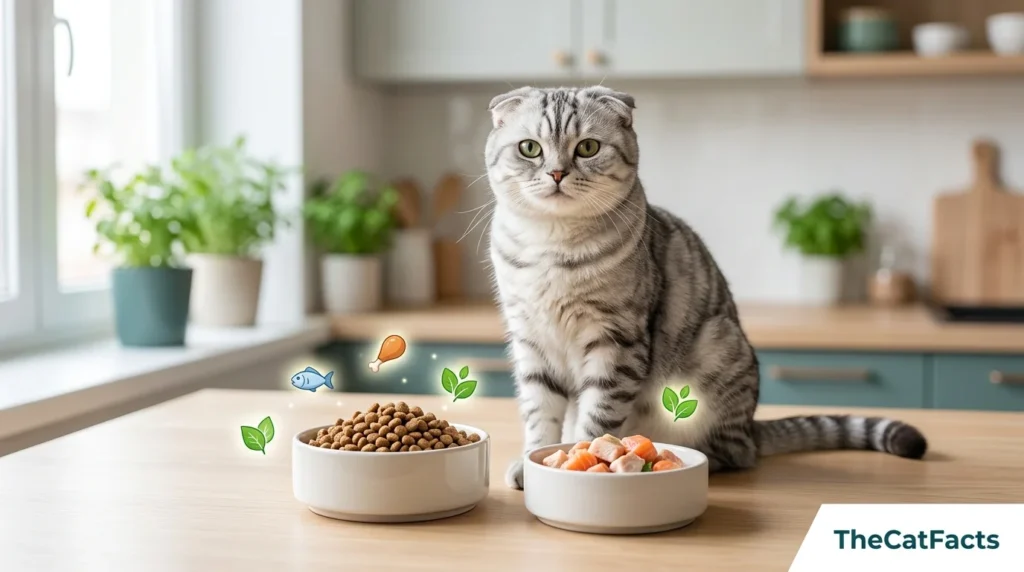
Many veterinarians recommend feeding both wet and dry food to combine the benefits of each.
For example:
- Wet food in the morning
- Dry food later in the day
- Measured portions to prevent overeating
This approach provides dietary variety while supporting hydration and dental health.
Wet Food vs Dry Food
Both wet and dry food can be healthy choices when they are nutritionally complete. The right option depends on your cat’s age, health, activity level, and personal preferences.
| Feature | Wet Food | Dry Food |
| Moisture | Very high | Low |
| Protein | Often higher | Varies |
| Calories | Usually lower per serving | More calorie dense |
| Storage | Refrigeration after opening | Easy storage |
| Hydration | Excellent | Limited |
| Cost | Higher | More affordable |
| Dental Benefits | Minimal | Slight, but brushing remains essential |
Neither type is automatically superior. The most important factor is nutritional quality rather than the form of the food.
Life Stage Feeding Guide
Scottish Fold cats have different nutritional needs as they grow. Feeding according to life stage supports healthy development and helps prevent obesity or nutritional deficiencies.
Feeding Scottish Fold Kittens
Scottish Fold kittens grow rapidly during their first year and require more calories, protein, and healthy fats than adults.
Choose a kitten-specific formula that supports:
- Bone growth
- Brain development
- Muscle formation
- Immune function
Young kittens generally eat several small meals each day because their stomachs are small.
| Kitten Age | Meals Per Day |
| 8 to 12 weeks | 4 to 5 meals |
| 3 to 6 months | 3 to 4 meals |
| 6 to 12 months | 2 to 3 meals |
Fresh water should always be available.
Feeding Adult Scottish Fold Cats
Healthy adults typically do well with two measured meals daily.
An adult diet should focus on:
- High-quality protein
- Moderate fat
- Controlled calorie intake
- Balanced vitamins and minerals
Regular weight monitoring is important because Scottish Folds can become overweight if overfed or inactive.
Feeding Senior Scottish Fold Cats
Senior cats often become less active and may develop arthritis, dental disease, or reduced kidney function.
Their diet may need:
- Easily digestible protein
- Increased moisture
- Joint-supporting nutrients
- Controlled phosphorus when recommended by a veterinarian
- Moderate calorie intake to maintain an ideal body condition
Routine veterinary examinations become increasingly important as cats age because nutritional needs may change based on underlying health conditions.
How Much Should You Feed a Scottish Fold?
Most healthy adult Scottish Fold cats need approximately 20 to 30 calories per pound (44 to 66 calories per kilogram) of ideal body weight each day, but individual needs vary based on age, activity level, body condition, and whether the cat is neutered or spayed.
Always use the feeding guide on your cat’s food as a starting point, then adjust portions according to your veterinarian’s recommendations and your cat’s body condition.
Factors That Affect Portion Size
Several factors influence how much food your Scottish Fold needs.
These include:
- Age
- Body weight
- Activity level
- Indoor or outdoor lifestyle
- Reproductive status
- Health conditions
- Metabolism
- Type of food being fed
A highly active young adult generally requires more calories than a sedentary senior cat.
Body Condition Is More Important Than the Scale
Instead of focusing only on weight, assess your cat’s body condition regularly.
A healthy Scottish Fold should have:
- A visible waist when viewed from above
- Ribs that can be felt without excessive fat covering
- A slight abdominal tuck when viewed from the side
- Good muscle tone
If your cat is gaining weight consistently, consult your veterinarian before making major dietary changes.
Best Ingredients to Look for in Scottish Fold Cat Food
Reading pet food labels can seem confusing, but focusing on ingredient quality makes choosing a nutritious diet much easier.
Look for foods that contain:
- Named animal protein as the first ingredient
- Animal-based fats
- Taurine
- Omega 3 fatty acids
- Essential vitamins and minerals
- Natural antioxidants
- Appropriate fiber sources
- Clearly identified ingredients
Quality ingredients help support healthy digestion, maintain muscle mass, and provide steady energy throughout the day.
Ingredients That Support Joint Health
Because Scottish Folds are genetically predisposed to cartilage and joint problems, some ingredients may help support mobility as part of a complete health plan.
These include:
- Fish oil
- Salmon oil
- Green-lipped mussel extract
- Glucosamine
- Chondroitin sulfate
- Omega 3 fatty acids
- Vitamin E
- Antioxidant-rich ingredients
Although these nutrients may support joint health, they cannot prevent or cure inherited skeletal disorders. Cats showing stiffness, limping, or difficulty jumping should be examined by a veterinarian.
Foods Scottish Fold Cats Should Avoid
Some human foods and household items are toxic or unhealthy for cats. Even small amounts can cause digestive upset, poisoning, or life-threatening complications.
Toxic Foods
Never intentionally feed your Scottish Fold the following foods.
| Food | Why It Is Dangerous |
| Chocolate | Contains theobromine and caffeine, which can affect the heart and nervous system |
| Onions | Damage red blood cells and can cause anemia |
| Garlic | Toxic even in small amounts over time |
| Grapes and raisins | May cause sudden kidney failure |
| Alcohol | Affects the brain, liver, and breathing |
| Caffeine | Can lead to tremors, rapid heart rate, and seizures |
| Xylitol | Can cause severe illness, although toxicity in cats is less common than in dogs |
| Raw bread dough | Expands in the stomach and produces alcohol as it ferments |
| Macadamia nuts | May cause weakness and digestive upset |
| Cooked bones | Can splinter and injure the digestive tract |
If you suspect your cat has eaten a toxic substance, contact your veterinarian or an emergency animal hospital immediately.
Foods That Should Only Be Given Occasionally
Some foods are not toxic but should only be offered as occasional treats.
These include:
- Plain cooked chicken
- Cooked turkey
- Cooked salmon
- Plain scrambled egg
- Small amounts of cooked pumpkin
- Plain green beans
Treats should make up no more than 10 percent of your cat’s daily calorie intake.
Foods That Can Cause Digestive Problems
Certain foods commonly found in homes can upset your Scottish Fold’s stomach.
Examples include:
- Spicy foods
- Fried foods
- Fatty meat scraps
- Dairy products
- Highly salted snacks
- Sugary desserts
- Processed meats
Many adult cats are lactose intolerant, so milk is not recommended as a regular drink.
Homemade Diet vs Commercial Cat Food
A complete commercial diet is usually the safest and most practical choice for Scottish Fold cats.
Homemade diets may seem appealing, but they can easily become unbalanced if not carefully formulated.
Commercial Cat Food
Benefits include:
- Nutritionally complete
- Balanced vitamins and minerals
- Convenient
- Consistent quality
- Easier portion control
Choose products labeled as complete and balanced for your cat’s life stage.
Homemade Diets
Homemade meals should only be prepared using recipes created by a board-certified veterinary nutritionist.
Improper homemade diets often lack:
- Taurine
- Calcium
- Essential fatty acids
- Vitamins
- Trace minerals
Over time, these deficiencies can contribute to serious health problems.
Raw Diets
Raw feeding remains controversial.
Potential concerns include:
- Salmonella contamination
- E. coli infection
- Nutritional imbalance
- Bone injuries
- Food safety risks for people in the household
If you are considering a raw diet, discuss the benefits and risks with your veterinarian before making changes.
Hydration Needs
Fresh water is just as important as nutritious food.
Cats naturally have a low thirst drive because their wild ancestors obtained much of their water from prey. Indoor cats eating mostly dry food may not drink enough unless encouraged.
Signs Your Scottish Fold Is Well Hydrated
A hydrated cat usually has:
- Bright eyes
- Moist gums
- Normal skin elasticity
- Regular urination
- Good energy levels
Tips to Encourage Water Intake
You can help your cat drink more by:
- Providing multiple water bowls
- Cleaning bowls daily
- Offering a pet water fountain
- Feeding wet food regularly
- Placing water away from litter boxes
- Using wide, shallow bowls to reduce whisker stress
Adequate hydration supports kidney function, urinary health, and digestion.
Feeding Schedule for Scottish Fold Cats
A consistent feeding routine helps regulate digestion, maintain a healthy weight, and reduce begging behaviors.
Sample Feeding Schedule
| Life Stage | Suggested Schedule |
| Kitten | Four to five small meals daily |
| Young adult | Two to three meals daily |
| Adult | Two measured meals daily |
| Senior | Two to three smaller meals if recommended |
Avoid leaving unlimited food available throughout the day unless your veterinarian advises otherwise.
Healthy Treats for Scottish Fold Cats
Treats can be useful for training, bonding, and enrichment when given in moderation.
Healthy options include:
- Freeze-dried chicken
- Freeze-dried salmon
- Cooked turkey pieces
- Cooked chicken breast
- Small pieces of cooked whitefish
- Commercial dental treats approved for cats
- Catnip treats with limited ingredients
Always introduce new treats gradually to monitor for digestive upset.
Weight Management for Scottish Fold Cats
Maintaining a healthy weight is especially important because excess body fat places additional stress on joints that may already be affected by inherited cartilage abnormalities.
Signs Your Cat May Be Overweight
Watch for:
- Difficulty jumping
- Reduced activity
- Loss of a visible waist
- Thick fat covering over the ribs
- Heavy breathing after play
- Trouble grooming
Tips to Maintain a Healthy Weight
- Measure food accurately.
- Limit high-calorie treats.
- Encourage daily play sessions.
- Use puzzle feeders.
- Monitor body condition every month.
- Schedule routine veterinary checkups.
Gradual weight loss is safer than rapid dieting. Never place your cat on a crash diet.
Common Feeding Mistakes
Many feeding problems develop gradually and may go unnoticed until weight gain or health issues appear.
Avoid these common mistakes.
Free Feeding All Day
Leaving food available continuously can encourage overeating and obesity, especially in indoor Scottish Folds.
Feeding Too Many Treats
Even healthy treats contain calories. Too many snacks can unbalance the overall diet.
Choosing Food Based Only on Price
The least expensive option is not always the best value if it lacks high-quality ingredients or balanced nutrition.
Ignoring Portion Sizes
Using a measuring cup or kitchen scale helps prevent accidental overfeeding.
Switching Foods Too Quickly
Sudden diet changes can cause vomiting or diarrhea.
Transition gradually over seven to ten days by mixing increasing amounts of the new food with the old food.
| Day | Old Food | New Food |
| 1 to 2 | 75% | 25% |
| 3 to 4 | 50% | 50% |
| 5 to 6 | 25% | 75% |
| 7 onward | 0% | 100% |
Nutrition for Scottish Fold Cats With Health Conditions
Diet often becomes an important part of managing chronic diseases. Your veterinarian may recommend a therapeutic diet depending on your cat’s diagnosis.
Arthritis and Joint Disease
Cats with arthritis may benefit from diets that include:
- Omega 3 fatty acids
- Controlled calorie levels
- Joint-support ingredients
- High-quality protein
Maintaining an ideal weight is one of the most effective ways to reduce stress on painful joints.
Kidney Disease
Cats with kidney disease may require diets containing:
- Controlled phosphorus
- Moderate protein
- Increased moisture
- Balanced electrolytes
Do not start a kidney diet unless recommended by your veterinarian.
Urinary Tract Disease
Veterinary urinary diets are designed to:
- Support healthy urine pH
- Reduce mineral buildup
- Encourage increased water intake
- Lower the risk of certain urinary crystals
Food Allergies
Food allergies may cause:
- Itchy skin
- Ear infections
- Vomiting
- Chronic diarrhea
Your veterinarian may recommend a limited-ingredient or hydrolyzed protein diet to identify and manage food sensitivities.
Should You Give Supplements?
Most healthy Scottish Fold cats eating a complete commercial diet do not need supplements.
However, some cats may benefit from veterinarian-approved supplements based on age or medical conditions.
Possible supplements include:
- Fish oil
- Glucosamine
- Chondroitin
- Probiotics
- Joint-support formulas
Never give human supplements without veterinary guidance, as some ingredients and dosages are unsafe for cats.
Signs Your Scottish Fold Is Eating the Right Diet
A nutritious diet supports overall health and should produce noticeable positive changes.
Healthy signs include:
- Steady energy levels
- Lean body condition
- Bright, clear eyes
- Soft, shiny coat
- Healthy skin
- Normal digestion
- Firm stools
- Strong muscles
- Healthy appetite
- Fresh breath with regular dental care
If your cat develops persistent vomiting, diarrhea, weight loss, poor appetite, excessive thirst, or sudden behavior changes, schedule a veterinary examination promptly.
Veterinary Advice for Feeding Scottish Fold Cats
Regular veterinary checkups are an essential part of maintaining proper nutrition. Your veterinarian can evaluate your cat’s weight, body condition, dental health, and any breed-related concerns, then recommend dietary adjustments as your cat ages.
For Scottish Folds with joint disease or other chronic conditions, nutrition should be considered part of an overall treatment plan that may also include weight management, pain control, physical activity, and routine monitoring.
Practical Feeding Checklist
Use this checklist to make sure your Scottish Fold receives balanced nutrition every day.
Daily Checklist
- Feed a complete and balanced cat food appropriate for your cat’s life stage.
- Measure each meal to avoid overfeeding.
- Provide fresh, clean water at all times.
- Wash food and water bowls daily.
- Remove uneaten wet food after about one to two hours.
- Limit treats to less than 10 percent of daily calories.
- Encourage at least 20 to 30 minutes of interactive play.
- Observe your cat’s appetite, energy level, and litter box habits.
Weekly Checklist
- Check your cat’s body condition.
- Weigh your cat if possible.
- Clean food storage containers.
- Inspect food packaging for expiration dates.
- Rotate toys and puzzle feeders to provide mental stimulation.
Monthly Checklist
- Monitor for gradual weight gain or loss.
- Review feeding portions based on activity level.
- Examine your cat’s coat, skin, teeth, and nails.
- Record any changes to discuss during veterinary visits.
Expert Feeding Tips
Following a few simple habits can make a significant difference in your Scottish Fold’s long-term health.
- Feed meals at the same times every day.
- Store dry food in its original bag inside an airtight container to preserve freshness.
- Introduce new foods gradually over seven to ten days.
- Use puzzle feeders to slow fast eaters and provide enrichment.
- Encourage exercise with interactive toys before meals.
- Read ingredient labels instead of relying only on marketing claims.
- Schedule routine veterinary wellness examinations, even if your cat appears healthy.
- Adjust calorie intake after neutering or spaying if your veterinarian recommends it.
- Choose treats with simple, high-quality ingredients.
- Monitor your cat’s mobility because reduced movement may indicate joint discomfort.
Myths vs Facts About Scottish Fold Cat Diets
| Myth | Fact |
| Scottish Fold cats need a special breed-only food. | Most thrive on any complete, balanced, high-quality cat food that meets their life stage and health needs. |
| Dry food cleans a cat’s teeth completely. | Dry food may provide minimal abrasion, but regular tooth brushing and professional dental care are still necessary. |
| Cats should drink milk every day. | Most adult cats are lactose intolerant and may develop digestive upset after drinking milk. |
| Grain-free diets are always healthier. | Grain-free foods are not automatically better. Nutritional balance and ingredient quality matter more than the presence or absence of grains. |
| Supplements can prevent Scottish Fold joint disease. | Some supplements may support joint health, but they cannot prevent or cure the inherited cartilage disorder associated with the breed. |
| Overweight cats are healthier because they look bigger. | Excess weight increases stress on joints and raises the risk of diabetes, arthritis, and other health problems. |
Conclusion
Feeding a Scottish Fold involves much more than simply filling a food bowl. Because this breed has unique genetic traits that can affect cartilage and joint health, proper nutrition is one of the most valuable investments you can make in your cat’s long-term well-being.
Choose a complete and balanced diet made with high-quality animal protein, healthy fats, essential vitamins, and appropriate minerals. Feed measured portions, maintain a healthy body weight, provide constant access to fresh water, and schedule regular veterinary checkups to ensure your cat’s nutritional needs continue to be met throughout every stage of life.
By combining good nutrition with exercise, preventive healthcare, and plenty of affection, you can help your Scottish Fold enjoy a healthier, happier, and more comfortable life.
FAQs
What is the best food for a Scottish Fold cat?
The best food is a complete and balanced diet that contains high-quality animal protein as the primary ingredient. Choose food appropriate for your cat’s age and health status, whether it is wet food, dry food, or a combination of both. Your veterinarian can help you select the most suitable option.
Can Scottish Fold cats eat only dry food?
Yes, they can eat only dry food if it is nutritionally complete. However, combining dry and wet food often improves hydration and provides dietary variety. Cats that eat mostly dry food should always have access to fresh drinking water.
How often should I feed my Scottish Fold?
Kittens usually need four to five small meals daily, while healthy adults generally do well with two measured meals each day. Senior cats may benefit from smaller, more frequent meals depending on their health and appetite.
Are Scottish Fold cats prone to obesity?
Yes. Scottish Fold cats can gain excess weight if they consume too many calories or do not get enough exercise. Maintaining an ideal body condition is especially important because extra weight places additional strain on their joints.
Can Scottish Fold cats eat homemade food?
Homemade diets should only be fed if they are formulated by a board-certified veterinary nutritionist. Most homemade recipes found online lack essential nutrients and may lead to nutritional deficiencies over time.
Do Scottish Fold cats need joint supplements?
Healthy cats eating a balanced diet do not always require supplements. Cats with arthritis or joint disease may benefit from veterinarian-recommended products containing omega 3 fatty acids, glucosamine, or chondroitin as part of a broader treatment plan.
Is wet food better than dry food for Scottish Fold cats?
Neither is universally better. Wet food provides more moisture and supports hydration, while dry food is convenient and calorie dense. Many veterinarians recommend feeding a combination of both when appropriate.
What foods should Scottish Fold cats never eat?
Avoid chocolate, onions, garlic, grapes, raisins, alcohol, caffeine, xylitol, cooked bones, and other toxic foods. Fatty leftovers, spicy foods, and sugary snacks should also be avoided because they can cause digestive problems or contribute to obesity.
How can I tell if my Scottish Fold is eating the right amount?
A healthy Scottish Fold should have a visible waist, easily felt ribs beneath a thin layer of fat, good muscle tone, and steady energy levels. Regular weight checks and veterinary examinations can help ensure portion sizes remain appropriate.
Do Scottish Fold kittens need different food than adults?
Yes. Kittens require specially formulated kitten food because it contains higher levels of calories, protein, and nutrients needed for rapid growth, brain development, and healthy bones. Most kittens transition to adult food around 12 months of age.

Benjamin Hayes is a Senior Cat Behavior Researcher with more than 15 years of experience studying feline behavior, companion animal welfare, and human cat interactions. He specializes in translating scientific research into practical, easy to understand guidance that helps cat owners better understand their pets’ behavior, communication, health, and daily care.